
Classic paling and hardwood fences, straight and solid, built by a QBCC-licensed team who get the footings right before the first board goes on.
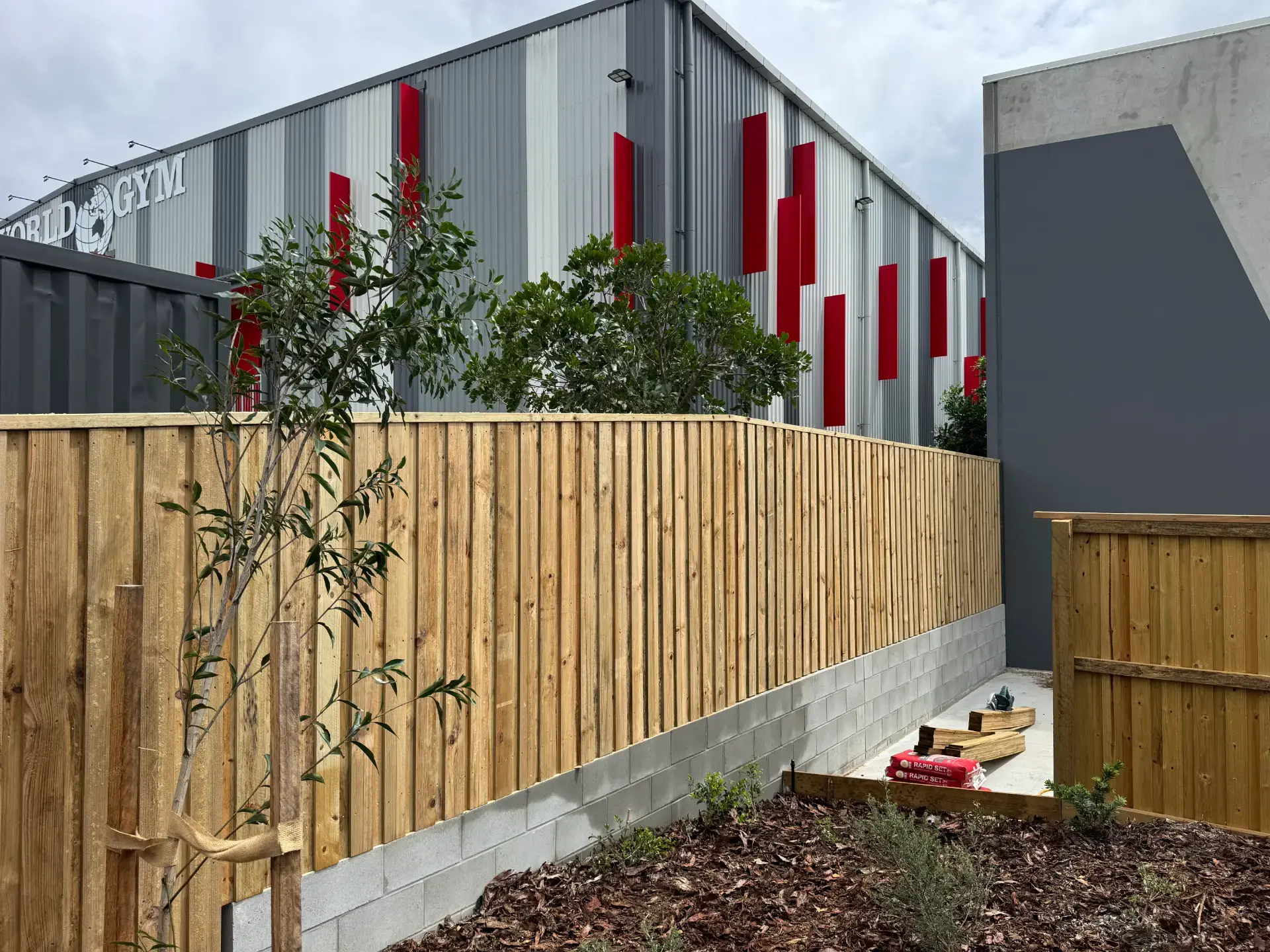
Nothing quite matches the look of real timber — the natural grain, the warmth, the way it suits a Queenslander or a leafy block. Done properly, a timber fence is affordable up front, endlessly customisable, and easy to repair one board at a time down the track.
Timber gives you a natural look and plenty of design options, but knowing how each style performs and what upkeep it needs matters just as much as how it looks. Here are the styles we build most.
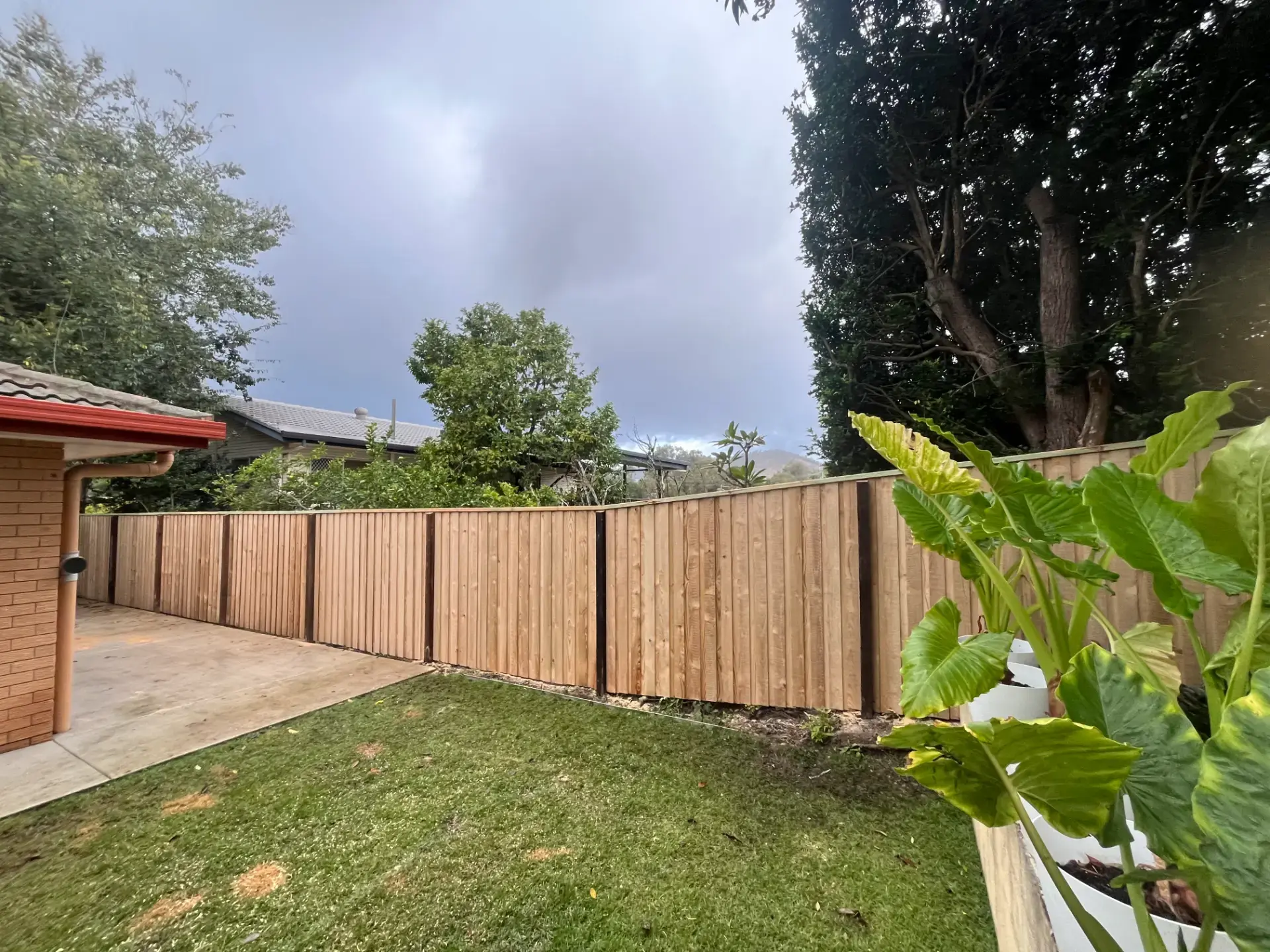
Overlapping palings are fixed between the posts, so each post stays on show and frames the panels. You get a solid, private boundary with a more architectural, feature look.
Best for: privacy with a feature finish
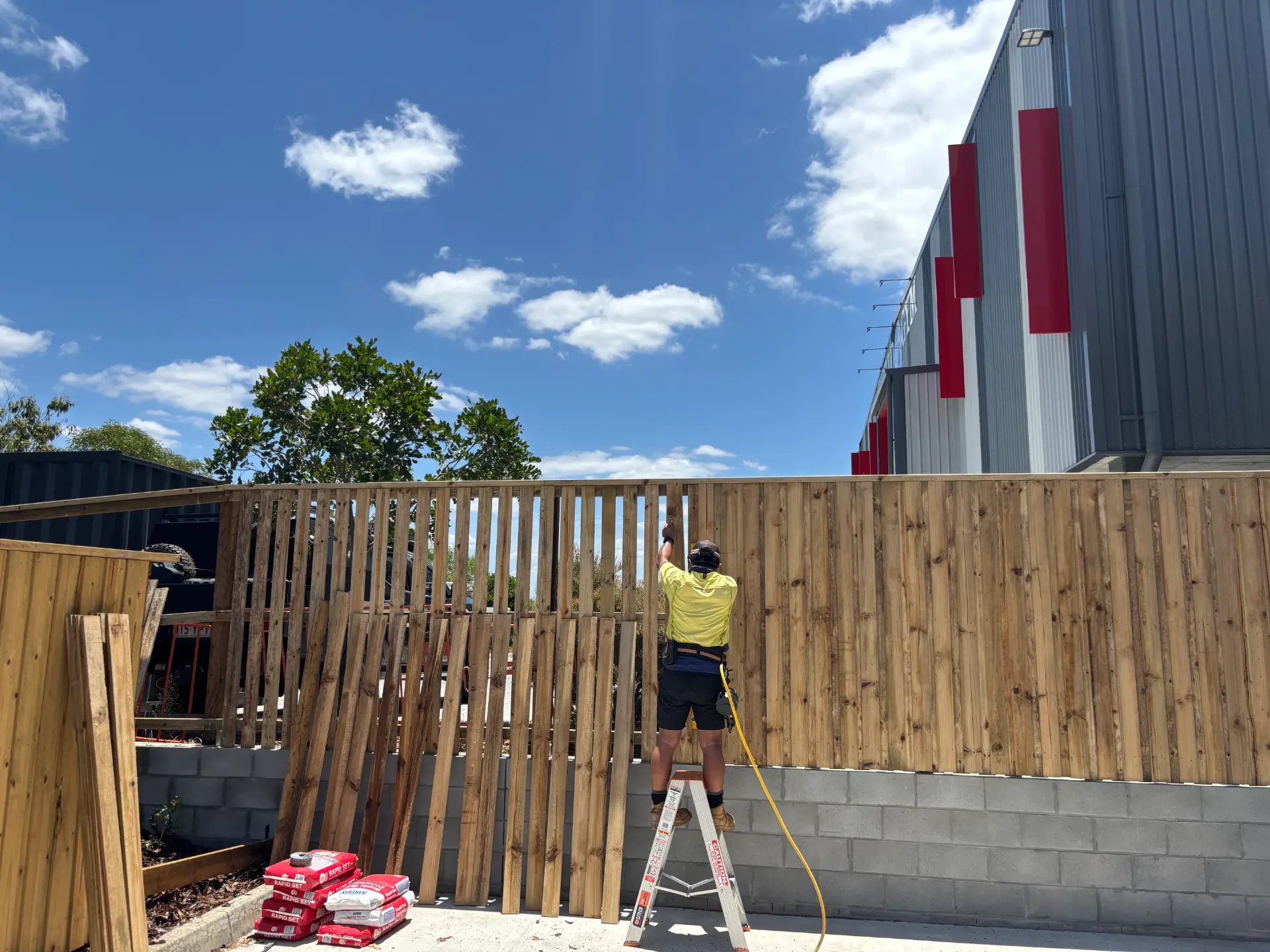
Overlapping palings create a solid boundary with a traditional look. Without the capping it's a simpler finish, but still strong on privacy.
Best for: practical, private boundaries
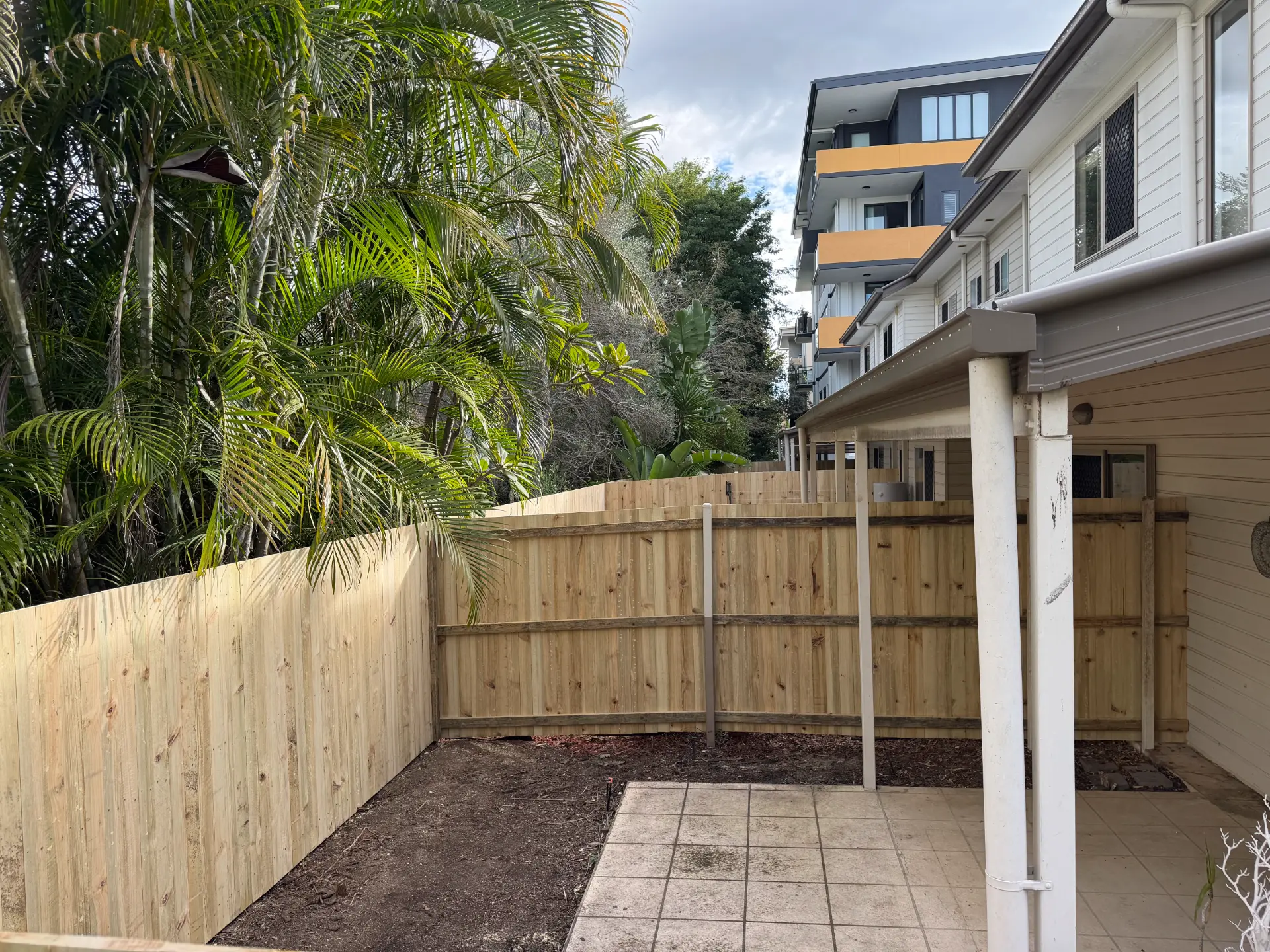
The straightforward timber option for defining a boundary. How much it screens depends on paling spacing, fence height and how it's built.
Best for: everyday residential fencing
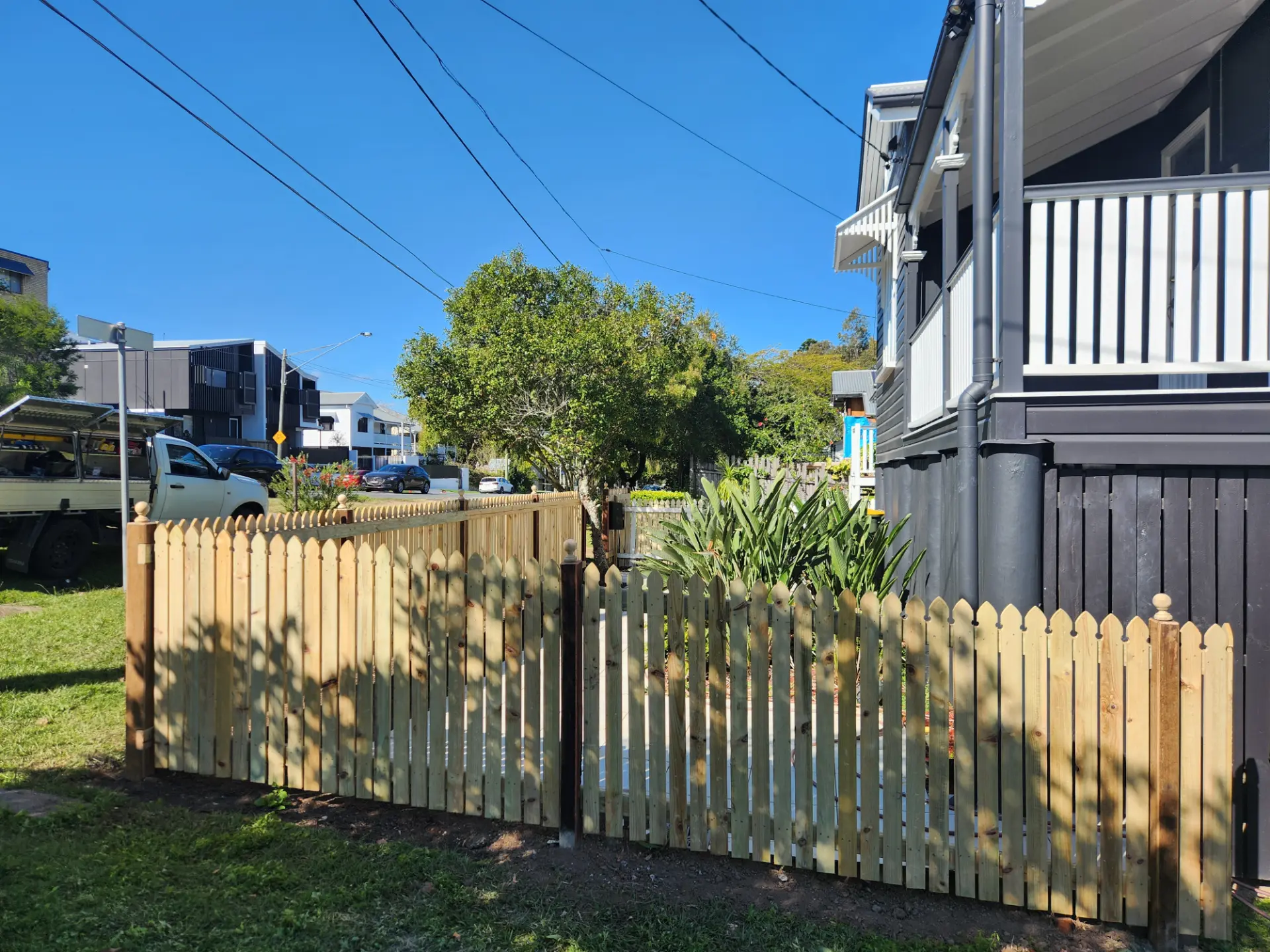
Decorative designs that suit traditional homes, front gardens and street-facing boundaries. Different profiles, colours and post details give you a more distinctive look.
Best for: street appeal and decorative boundaries
We'd rather you know the trade-offs before you commit, not after.
Timber suits a wide range of homes and can be painted, stained or left to weather.
Consider: finishes need refreshing, and untreated timber will weather and discolour over time.
Solid timber designs screen neighbouring properties and make a backyard feel more secluded.
Consider: timber can shrink, warp or open up gaps as it ages, depending on the timber, installation and exposure.
Timber can be stepped or raked to follow sloping blocks and uneven boundaries.
Consider: steep slopes, difficult access and ground movement add complexity and cost.
The right treatment protects timber against termites and fungal decay.
Consider: protection depends on the treatment rating, exposure and ongoing care. Timber is not maintenance-free.
Different profiles and construction styles let you balance looks, privacy and upfront cost.
Consider: repairs, repainting, replacement palings and an eventual rebuild all add to the total cost of ownership.
The budget-friendly favourite. H4-treated against rot and termites, straight, and easy to paint or stain. Great value for a standard boundary.
Denser, heavier and longer-lasting, with richer grain. Costs more up front but rewards you with years and a premium look.
Not sure which suits your block and budget? That’s exactly the kind of thing we’ll talk through, honestly, when we come out to measure.
As a broad guide, timber fencing typically ranges from around $80 to $300 per metre installed — a standard treated-pine paling fence sits at the lower end, with hardwood, lapped-and-capped and feature designs toward the top. Height, timber choice, ground slope and site access all move the number. We’ll give you a clear, itemised quote — free — so there are no surprises.
Figures are general market ranges for guidance only, not a quote.
A timber fence lives or dies on its posts. Set them shallow or out of plumb and the whole run leans within a few seasons; set them deep, square and properly concreted and it stands straight for years. That unseen groundwork is where we do our best work — we’re built for what’s behind the line.
Timber is worth considering if you value a natural look, design flexibility and a traditional boundary fence. The key is choosing the right timber, construction style and finish for your site.
If low maintenance is your top priority, compare timber with Colorbond before you decide. If privacy and a natural look matter most, a lapped timber fence is usually a strong option. Either way, we'll help you weigh it up honestly before you commit.
With quality materials and proper installation, a treated pine fence commonly lasts 10–15+ years and hardwood longer. Good footings, drainage away from posts, and the odd coat of oil all extend its life.
Treated pine is the best value for a standard boundary; hardwood costs more but lasts longer and looks richer. The right choice depends on your budget and how long you plan to stay.
It’s low-fuss, but not no-fuss. You can let it weather to a natural silver, or oil/stain it every few years to keep its colour and add life.
Yes — a lapped-and-capped design hides the gaps and rail tops for a cleaner, more finished look. It’s a popular upgrade and we’ll price it either way.
Timber wins on natural looks and lower upfront cost; Colorbond wins on maintenance and lifespan. We install both, so we’ll give you the honest trade-off for your place.
Tell us your boundary and we’ll have a preliminary quote back to you within 24 hours. Servicing Brisbane & the Gold Coast.

Before you buy
A few things most people only find out after the fence goes up. Knowing them now means no surprises on the day.
Timber is a natural material. It shrinks as it dries out in the sun, so palings fixed side by side can open small see-through gaps over the first few months. It's normal, not a defect. If privacy matters, choose lapped & capped: the palings overlap, so even when they shrink there's no gap to see through.
Treated pine is the budget-friendly choice and the most common for backyard fences. Hardwood is denser and heavier, with a richer look. We'll talk you through which suits your fence and your budget.
Timber sitting in wet soil is what breaks down first. On a sloping yard, or where soil sits against the fence, a concrete plinth keeps the timber clear. We build it on galvanised steel posts first, then fix the timber fence on top, because timber can't just sit on concrete sleepers.
In Queensland, a dividing fence up to 2 m high doesn't need council approval, so 1.5 m, 1.8 m and 2.0 m fences are all fine. Once you go over 2 m, like a 2.1 m fence, you'll need council approval. If you want the extra height, we'll walk you through it.
In Queensland, neighbours usually split the cost of a dividing fence. Have a chat with them before you book. It's also a good time to agree which side the rails face, because one of you will be looking at them.
Left natural, timber weathers to a silver-grey. If you'd rather keep the fresh timber colour, an oil or stain every so often holds it. Either way is fine; it's about the look you want.
Posts set in concrete. Offcuts and rubbish taken away. Gate hinges, latches and stops fitted and adjusted. No surprises when we pack up.
From a simple paling fence to a classic picket front fence, there's a timber style for every block. Flick through the designs, tell us what your land is like, and see which one works for you.
What's your yard like?
Not sure which timber style suits? We'll talk you through the options when we come out to measure.

