

The Complete Guide to Colorbond Fencing in Brisbane
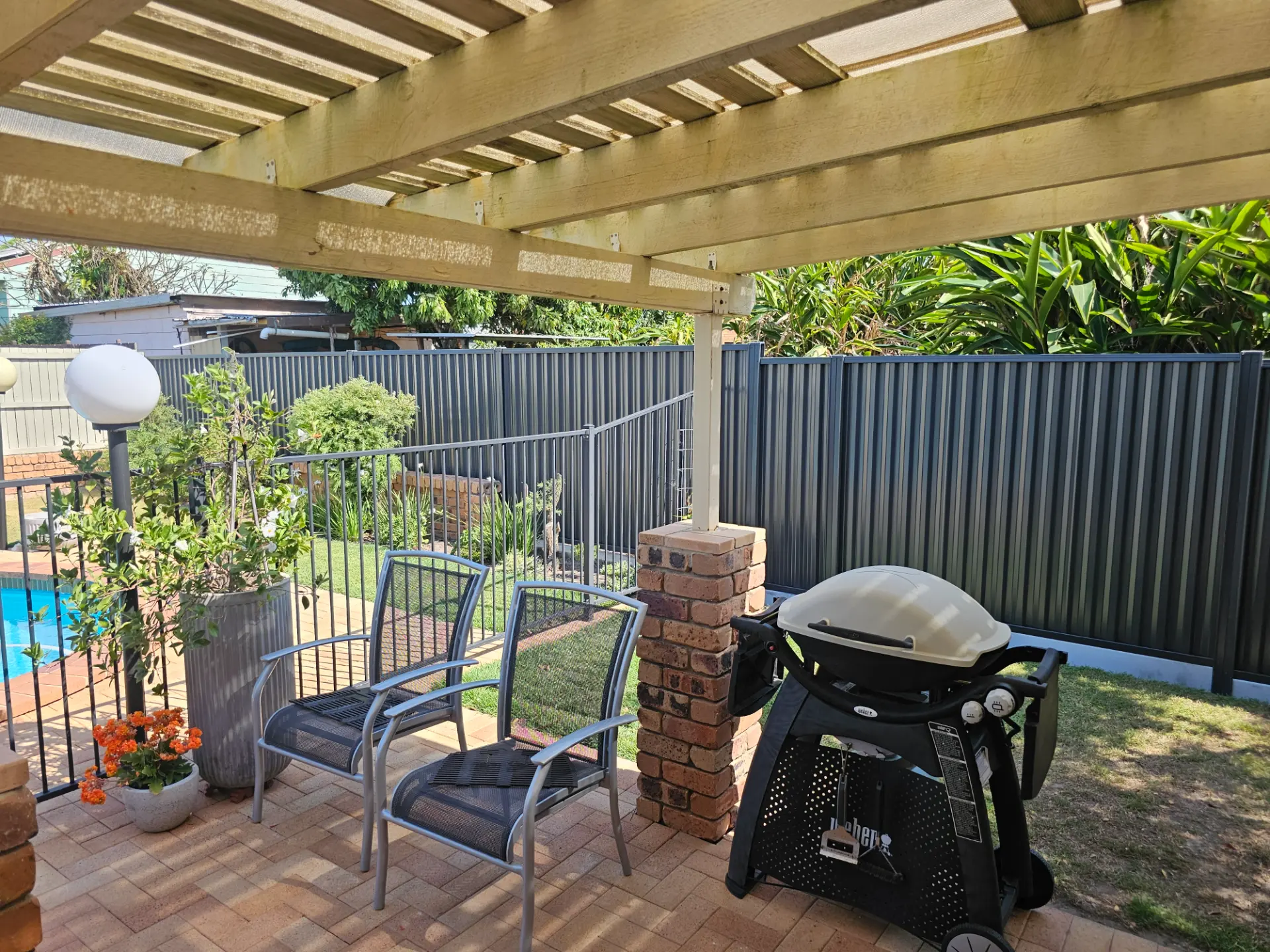
I want to start with something most fencing companies won't say out loud: two Colorbond fences can look identical on the day they go up, and be completely different fences.
Same colour. Same height. Same panels from the same supplier. One of them is dead straight ten years later. The other is leaning, rattling in a southerly, and rusting quietly at the base where nobody looks. The homeowner who paid for the second one didn't do anything wrong. They just couldn't see the part that mattered — and nobody explained it to them before they handed over a deposit.
That's the whole reason I sat down to write this. Not to sell you a fence. To make sure that when you spend a few thousand dollars on one, you actually know what you're paying for. If you read nothing else, read this: with Colorbond, the difference is in the details you can't see once it's finished.
What Colorbond actually is (and why people choose it)
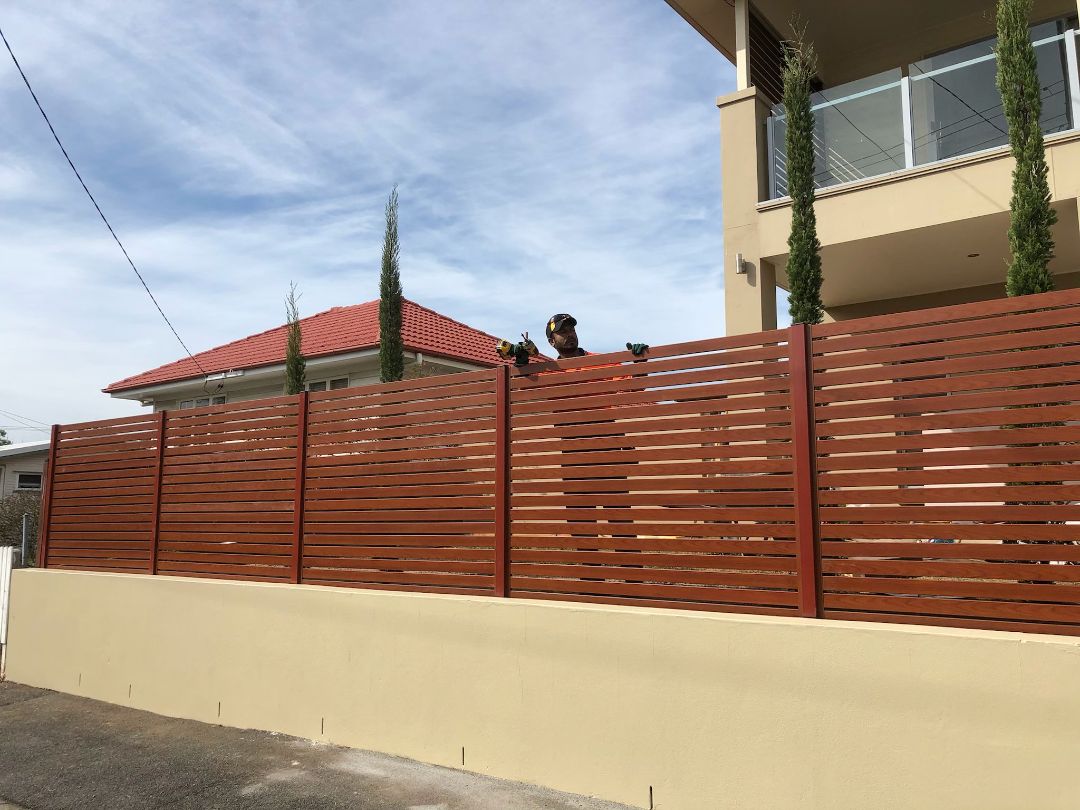
Colorbond is pre-painted steel — the same product that's been on Australian roofs for decades. In a fence, it's steel sheeting slotted between steel posts and rails, powder-baked in a colour so it doesn't need painting.
Here in Brisbane and on the Gold Coast, that combination does a lot of heavy lifting. Our climate is brutal on fences: UV that fades and cracks, humidity that rots timber, summer storms that test every post, and termites that treat a soft pine fence like a buffet. Steel sidesteps most of that. It won't rot, termites have no interest in it, and a hose-down is genuinely most of the maintenance you'll ever do.
For a lot of families, that's the appeal — you install it once and mostly forget about it. It also gives you complete privacy. Because the sheets butt together with no gaps, nobody's watching your backyard through the palings, and the kids and the dog stay where they're meant to.
It's not perfect, and I'd rather tell you the trade-offs now than have you discover them later. Steel picks up wind noise more than timber — a strong gust can make it hum. The look is clean and modern, which suits most homes but can feel a bit stark against a heavily planted, natural garden. And while the steel itself won't rot, Colorbond can rust — almost always at the bottom, where the fence meets wet soil, pooling water, or garden beds piled up against it. Which brings me to the part that actually decides whether your fence lasts.
Where the quality lives
Everything that determines whether a Colorbond fence is still perfect in fifteen years happens in the first few hours of the job, before a single sheet goes up.
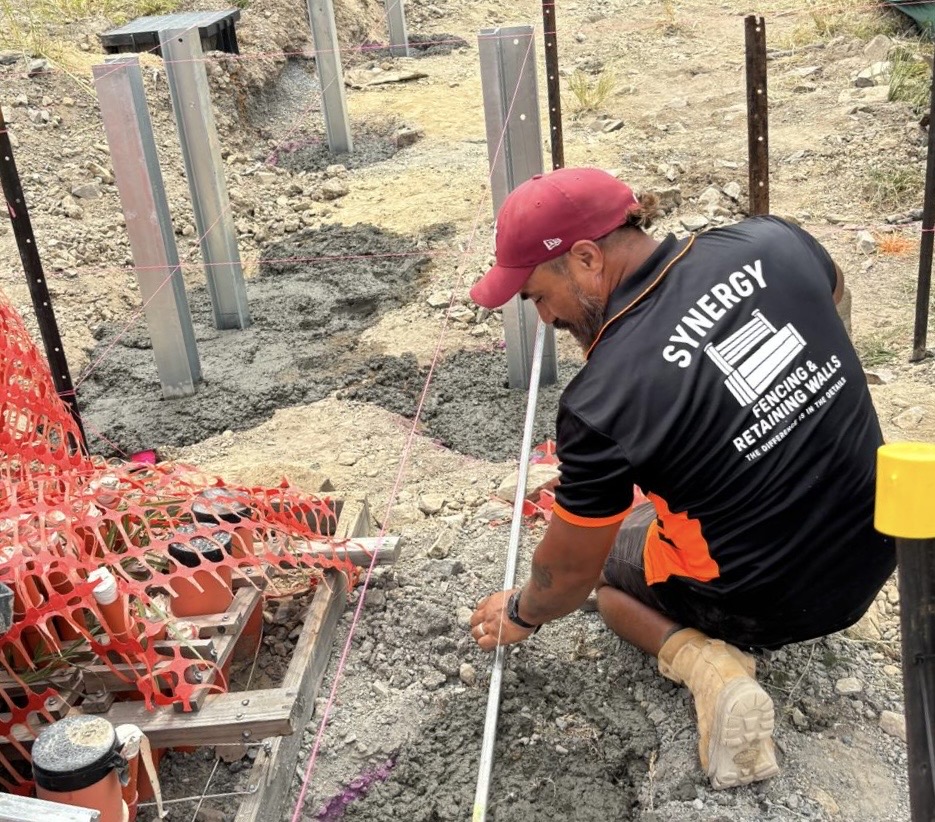
The posts and the footings. A fence is only as strong as what's holding it in the ground. The post holes need to be deep enough and set in enough concrete for our soil and your fence height. Skimp here — shallow holes, not enough concrete, posts spaced too far apart — and the fence will move. You won't see it on day one. You'll see it after the first big wet season, when the ground softens and the whole run starts to lean.
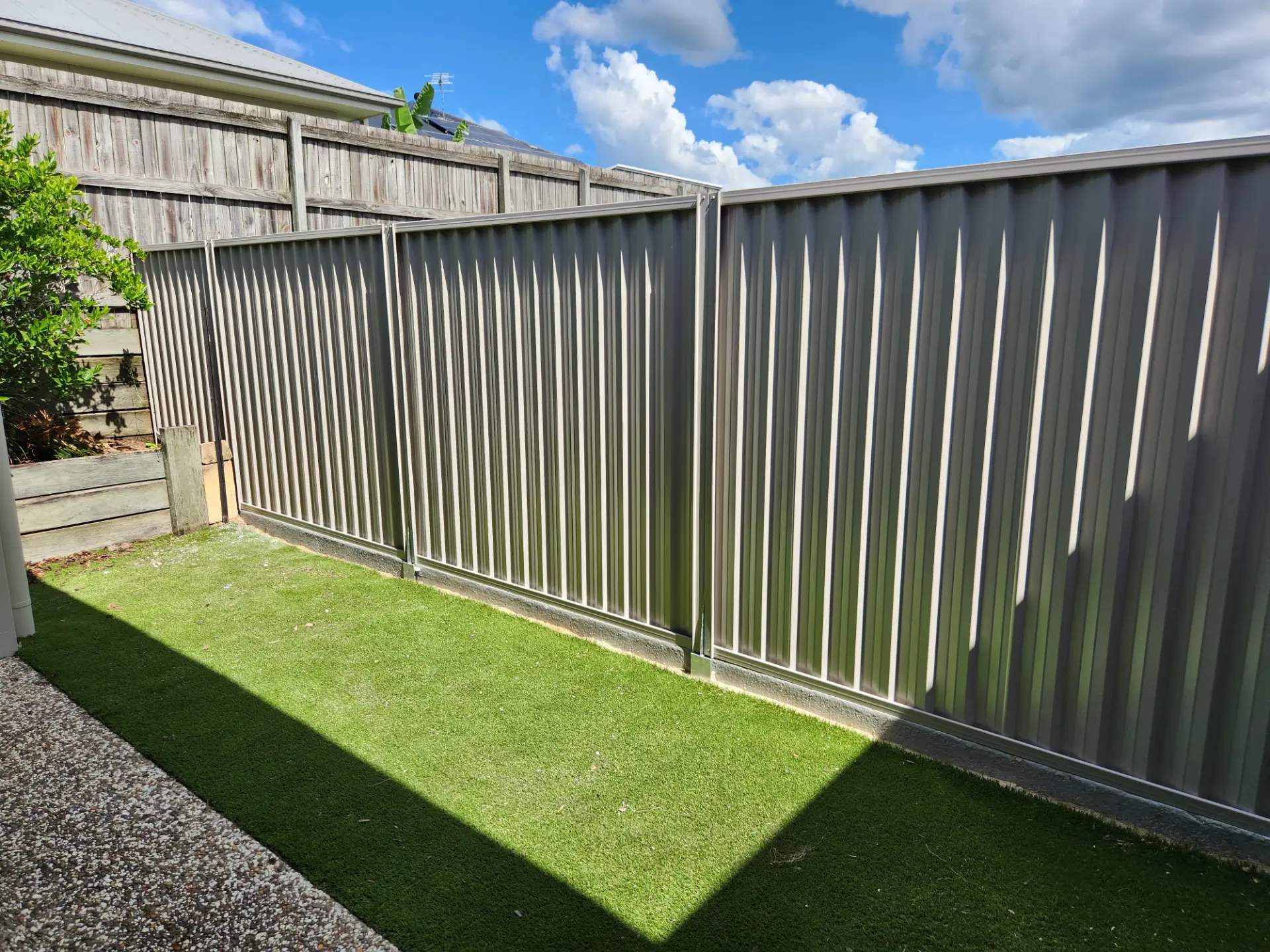
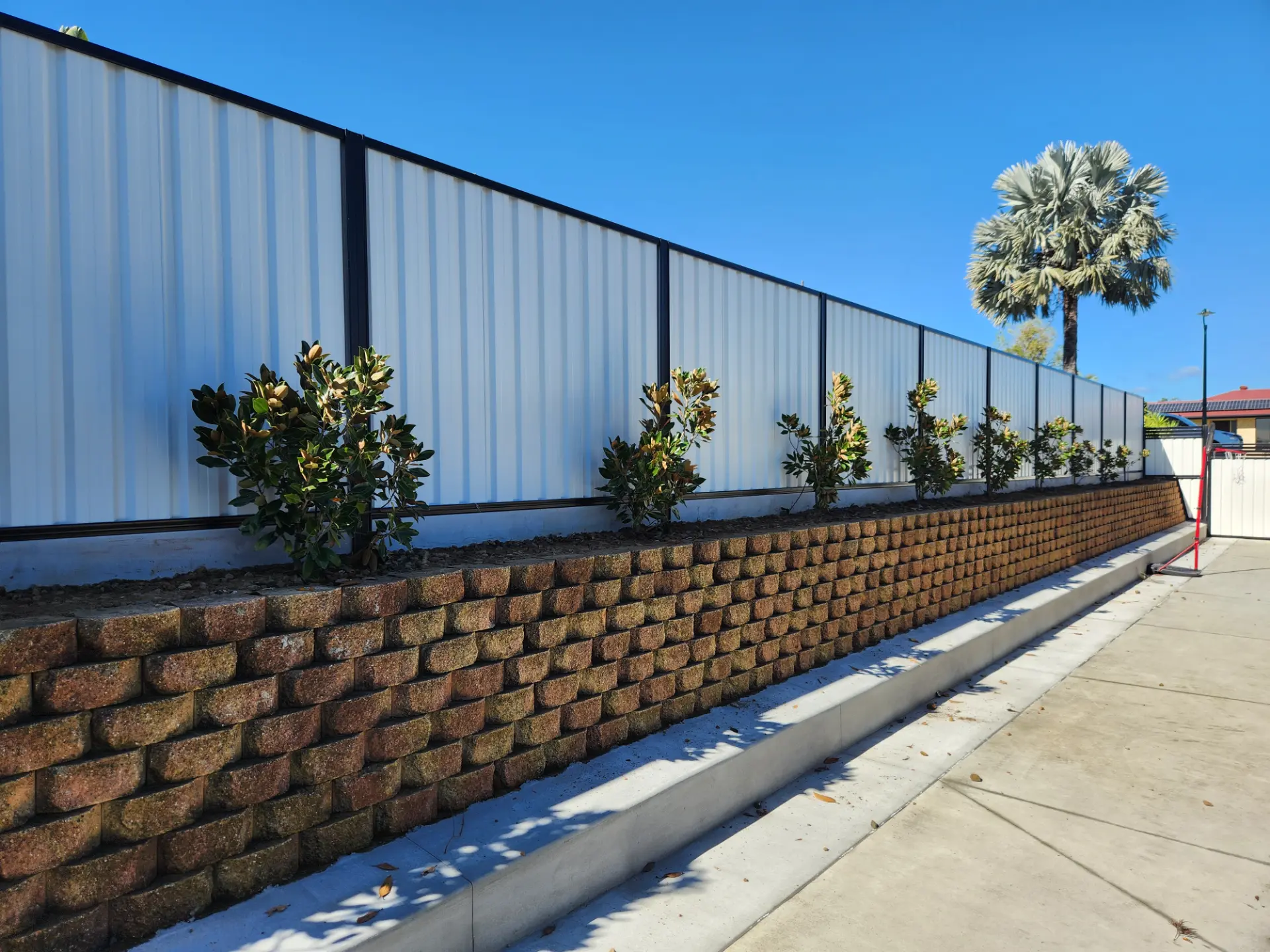
The base of the fence. This is the rust point. On a good install, the bottom of the sheeting sits clear of the dirt, water is directed away, and the fence isn't buried by a garden bed or a lawn that's been built up over the years. Get that wrong and you've created a permanent damp line along the steel. It's the single most common reason a Colorbond fence fails early, and it's completely avoidable.
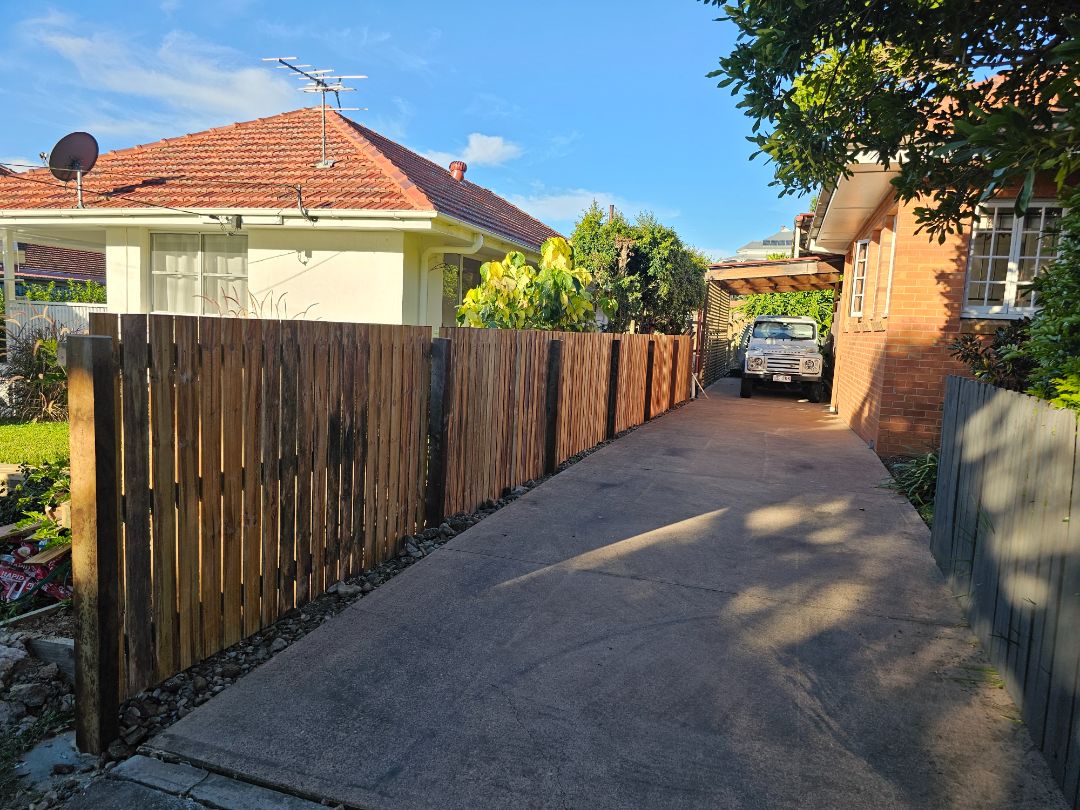
The ground it follows. Brisbane blocks are rarely flat. On a slope, a fence can either "step" down in neat sections or be raked to follow the fall of the land. Done properly it looks deliberate and there are no awkward gaps underneath. Done carelessly you get triangle gaps the dog escapes through and a fence that looks like it's fighting the hill.
None of this shows up in a photo. It shows up in year three, year five, year ten. That's exactly why we quote every job in person and won't price a fence off a Google Maps image — you can't see footings and fall and drainage from a satellite.
What Colorbond fencing costs in Brisbane
Let me give you real numbers, because vague answers help no one.
In Brisbane in 2026, a supplied-and-installed Colorbond fence generally runs about $100 to $200 a metre, with quality installs from a licensed contractor typically landing around $150 to $180 a metre. For a typical suburban boundary of 40 to 45 metres, that's roughly $6,000 to $9,000 all up. If you see Colorbond quoted at $80 a metre, treat it as a warning rather than a win — the old low-price guides are out of date, and a number well under the market almost always means the footings, the removal or the site work have been quietly left out.
A few things move that number, and a good quote will spell them out instead of hiding them:
- Removing your old fence usually adds around $15 to $50 a metre. It's real work and real tip fees — be suspicious of anyone who pretends it's free.
- Sloped or uneven ground typically adds 10 to 30 per cent, because it's more labour and more materials to do it right.
- Going taller — a 2.1m fence instead of the standard 1.8m — adds roughly 15 to 20 per cent.
- Tight access (no side gate, a steep drive, hand-digging instead of using a machine) costs more in labour, and it should be quoted honestly up front.
If one quote is dramatically cheaper than the others, it isn't magic. Something's been left out — the old-fence removal, the proper footings, the extra work your slope needs — and you'll usually meet that missing cost later as a variation or a repair. I've written a separate guide on exactly how to read and compare quotes so you can spot this, because it's where most people get caught.
The questions worth asking before you sign
You don't need to become a fencing expert. You just need to ask a few things that a good contractor will answer happily and a cut-corner operator will dodge:
- How deep are the post holes and how much concrete goes in each one?
- How will you handle the slope and the fall of my block?
- How are you keeping the base of the fence clear of the soil so it doesn't rust?
- Is removal of the old fence included, and rubbish taken away?
- What's included in the price, and what would count as a variation?
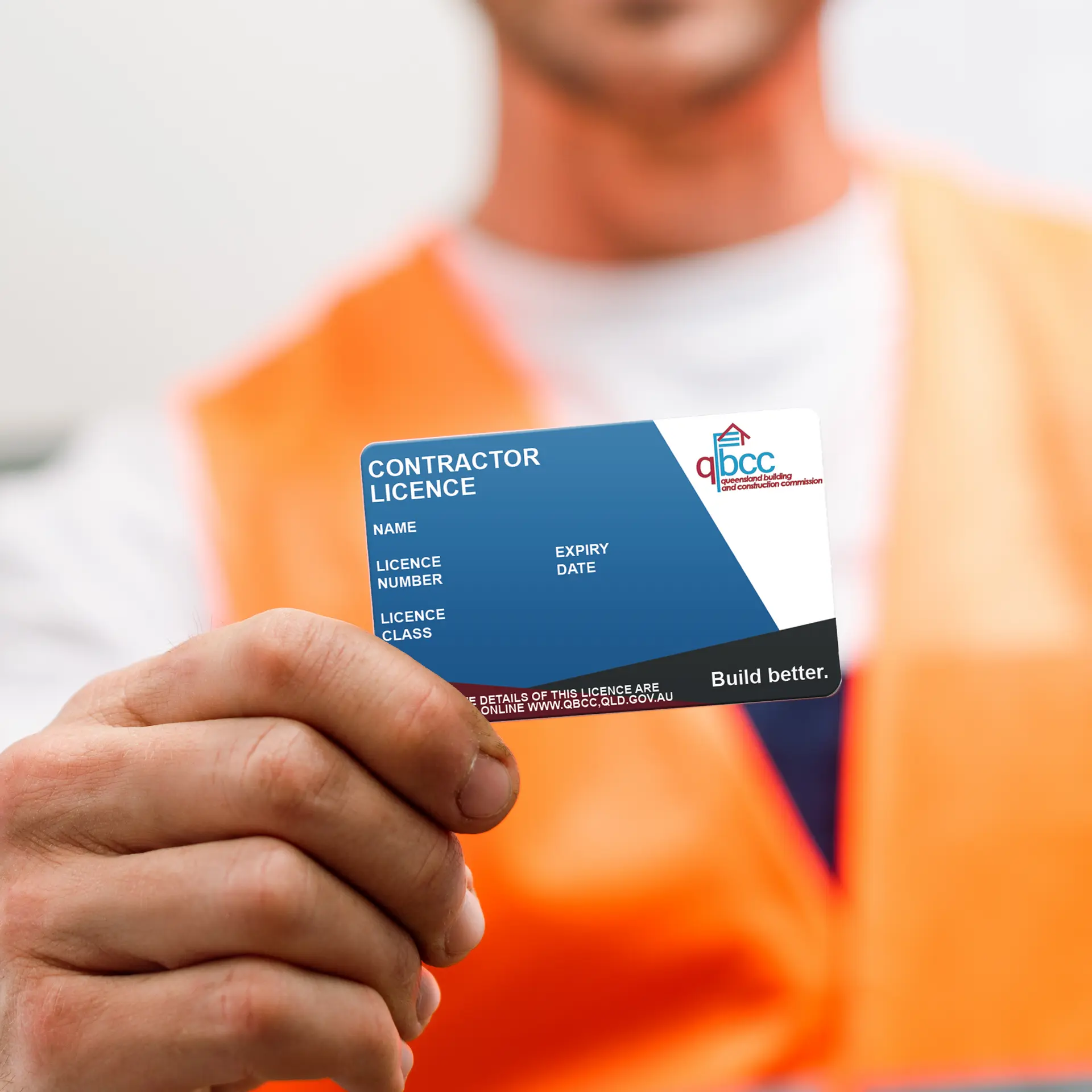
- Are you QBCC licensed, and can I see it?
That last one matters more than people realise. In Queensland, fencing and retaining work over a certain value ($3,300) legally requires a QBCC licence — it's your protection if something goes wrong. Ours is 15416911, and I'd encourage you to check any contractor's licence on the QBCC website before you pay a deposit to anyone, us included. (If you're getting ready to pay a deposit, please read our pre-deposit checklist first — there's a scam doing the rounds where fake operators take deposits and vanish, and a two-minute check protects you from it.)
The honest bottom line
Colorbond is a genuinely great fence for a Brisbane or Gold Coast home. Low maintenance, private, tough in our climate, and it looks sharp for a long time — if it's built properly at the parts you'll never see.
So when you're comparing companies, don't compare the colour brochure. Compare how they talk about the footings, the fall of your land, and the base of the fence. The ones who go quiet on the details are telling you something. The ones who walk your block and explain them are the ones worth having back.
That's the difference, and it's always in the details.
Want a proper look at your place? We quote in person across Brisbane and the Gold Coast and get a preliminary quote back to you within 24 hours. QBCC Licence 15416911.
More Blogs
.webp)
.webp)
.webp)
%20(1).webp)
.webp)
.webp)
.webp)
.webp)
.webp)
.webp)
.webp)
.webp)
.webp)
.webp)
.webp)
.webp)

Ready to start? So Are We.
