

Why the Wet Season Is When Weak Retaining Walls Fail
Retaining walls almost never fail in the dry. Here's what water actually does behind a wall — and why drainage decides everything.

Here's something we see every single wet season: retaining walls that stood fine for years suddenly bulge, lean or let go after a big downpour. It's rarely a coincidence. Water is what breaks retaining walls, and the wet season is simply when there's enough of it.
What water actually does
A retaining wall holds back soil. When it rains, that soil soaks up water and gets heavier — and the water itself builds up behind the wall with nowhere to go. That's called hydrostatic pressure, and it can more than double the load the wall was holding. A wall built without a way to release that water is being pushed on far harder than it looks, and eventually something gives.
Why drainage is the whole game
A properly built wall is designed to let water escape before it builds up — through ag-drain at the base, free-draining gravel backfill behind the wall, and weep holes through the face. Get that right and the pressure never builds. Skip it to save money and the wall looks perfect on a sunny day and fails in the first serious wet — which is exactly why a cheap wall and a good wall can look identical until the weather tests them.
The other half: what's underground
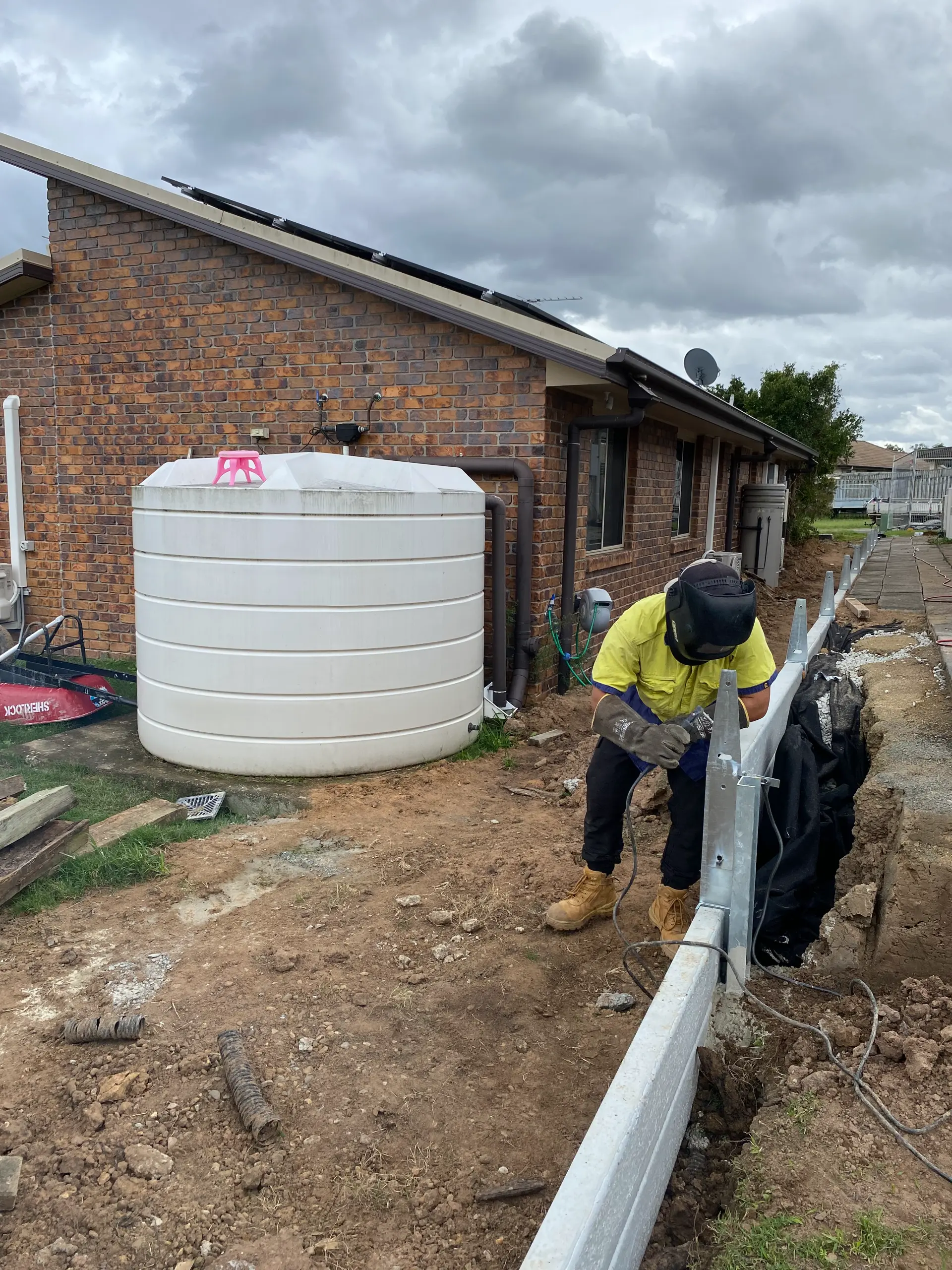
Drainage works alongside proper footings and, in our walls, galvanised steel H-beam posts rather than cut timber buried in the ground — steel below ground doesn't rot the way timber does, so the structure stays stronger for far longer. None of it shows in a photo. All of it decides whether your wall survives January.
If your wall is already showing signs
Bulging, leaning, cracks, or soil and water escaping from the face are all telling you the drainage isn't coping. Don't wait for the next storm — get it assessed. We'll tell you honestly whether it needs drainage work or a rebuild.
The parts you never see are the parts that hold the ground — that's the work we take seriously.
More Blogs
.webp)
.webp)
.webp)
.webp)
.webp)
.webp)

.webp)

.webp)





Ready to start? So Are We.
