

What You Need to Know Before Building a Retaining Wall
Most of what holds a retaining wall up is underground. Walls up to about 1 metre generally don't need building approval but still need proper footings and drainage. Over 1 metre, the wall must be designed and certified by an RPEQ engineer and will usually need approval.
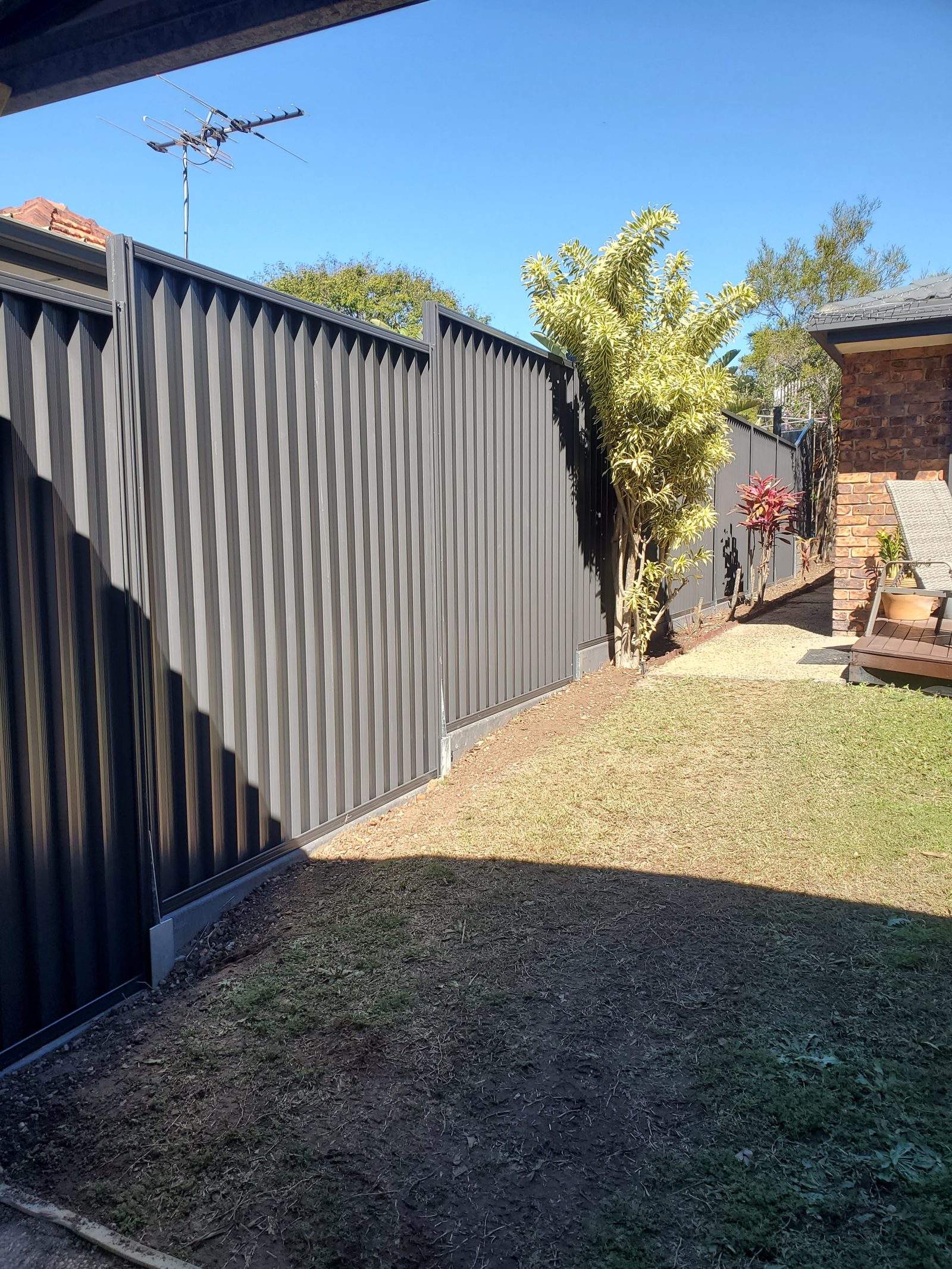
From the street, a retaining wall looks simple. Some posts, some sleepers, done.
But most of what holds a wall up is the part you never see once it's finished. That's also where corners get cut. So here are the real steps, so you know what a proper job involves, and what to ask when you get a quote.
Small wall or big wall?
A standard sleeper is about 200 mm high, so five sleepers is roughly 1 metre. That's an important line in Queensland.
Up to about 1 metre (five sleepers). A wall retaining no more than 1 metre, with no extra load behind it like a driveway or pool, and at least 1.5 metres from a building or another retaining wall, can generally go ahead without building approval. It still needs proper footings and drainage.
Over 1 metre (more than five sleepers). The wall must be designed and certified by a Registered Professional Engineer of Queensland (RPEQ), and it will usually need approval. That means more steps before anyone picks up a shovel.
Your local council can confirm the rules for your property, including things like flood overlays.
Step 1: Check what's underground
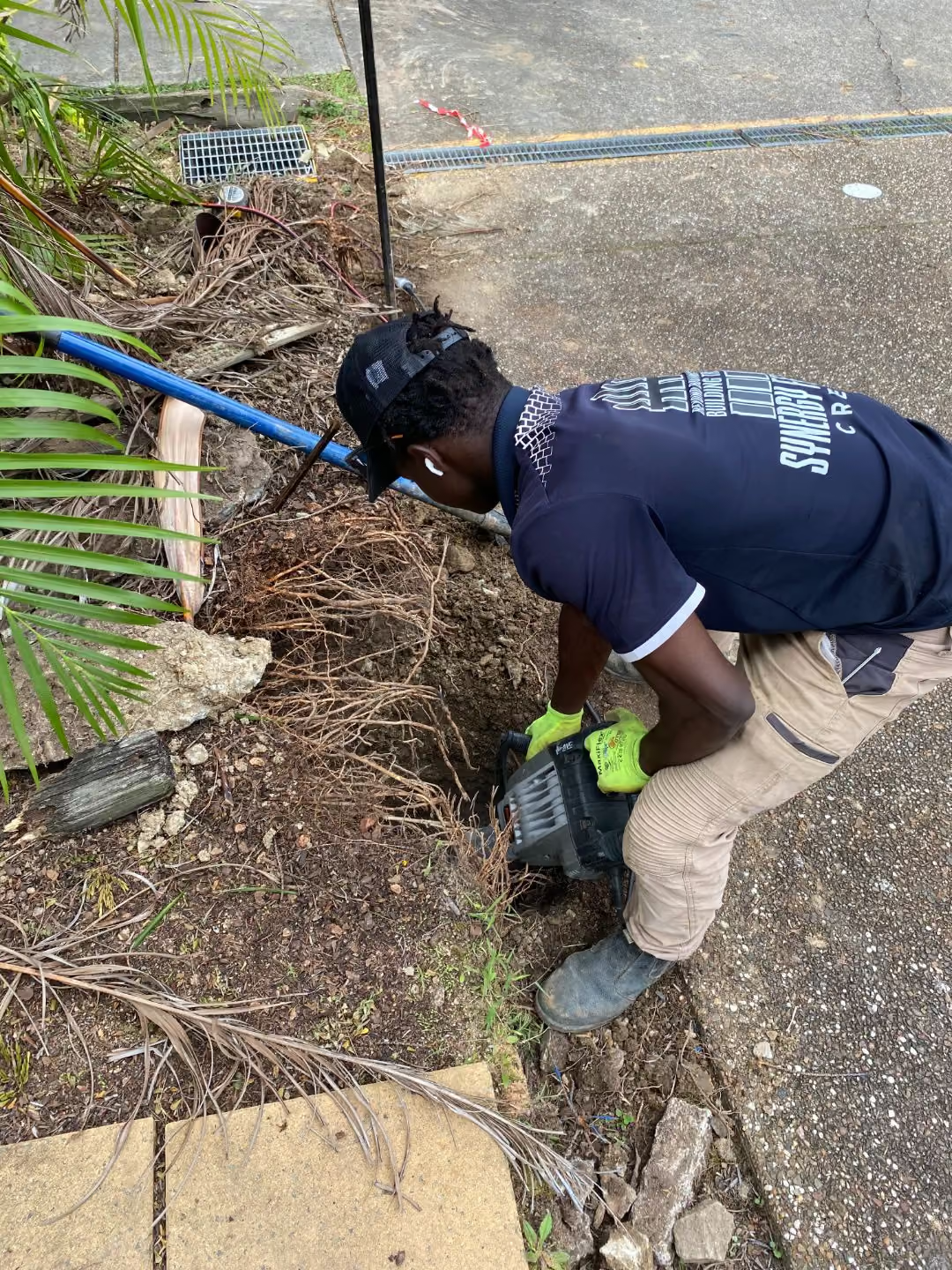
If the wall is near the front of the property, or anywhere pipes and cables might run, we get the services located before we dig. Hitting a water, gas or power line is dangerous and expensive.
We also check for easements, like sewer or stormwater lines running through the yard, because a wall can't always be built over them.
Step 2: Soil testing
On bigger walls, the soil gets tested. Sandy soil, reactive clay and rock all behave very differently, and the engineer needs to know what the wall is holding back.
Step 3: Engineer's design
The engineer uses the soil results to set the post size, post spacing, footing depth and drainage for your wall's height. We get our walls engineered. We don't guess.
Step 4: Council approval, if needed
If the wall needs approval, the engineer's design goes to council or a certifier before work starts. It adds time, but it protects you, and it protects the next owner if you ever sell.
Step 5: Footings
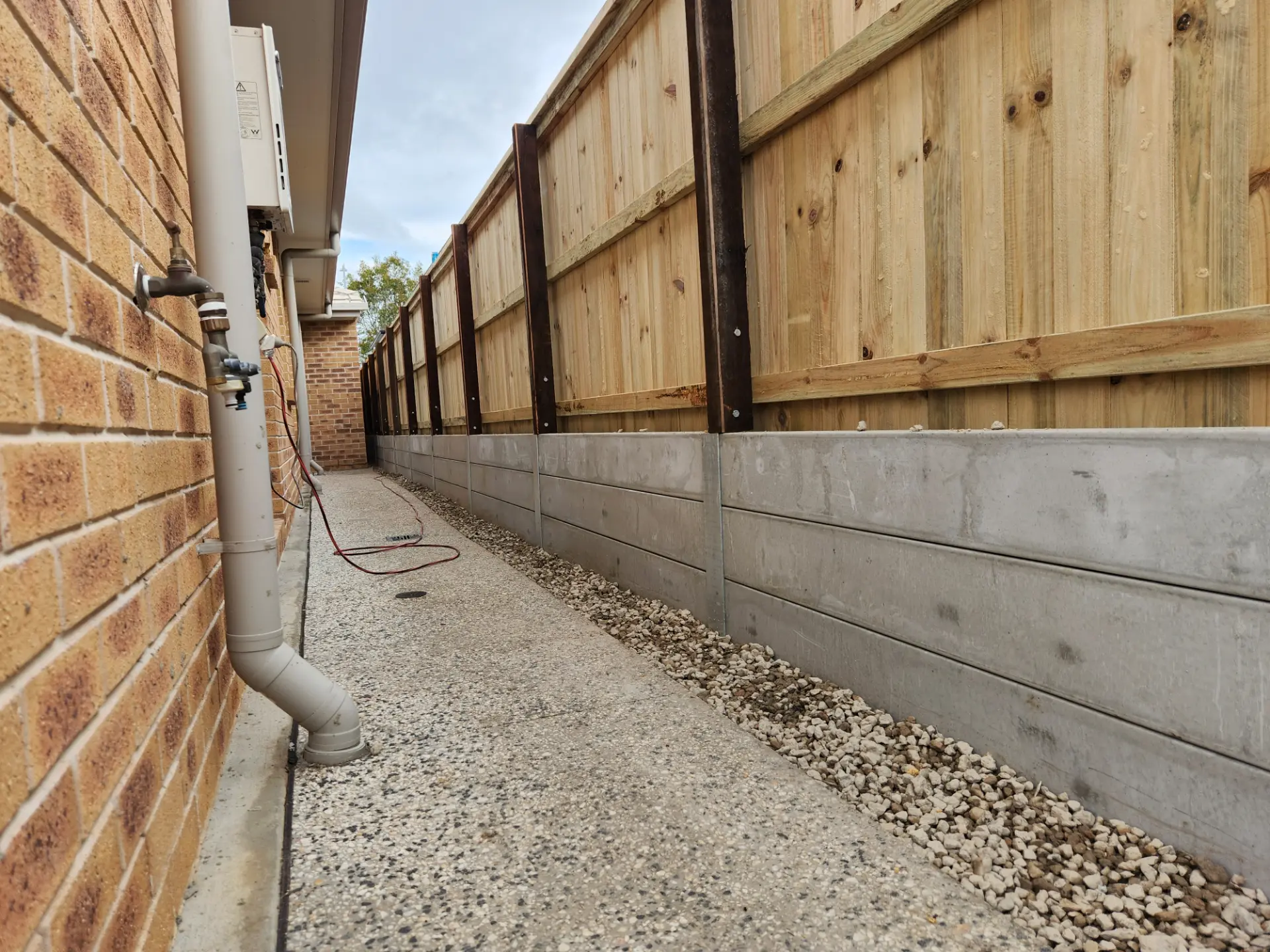
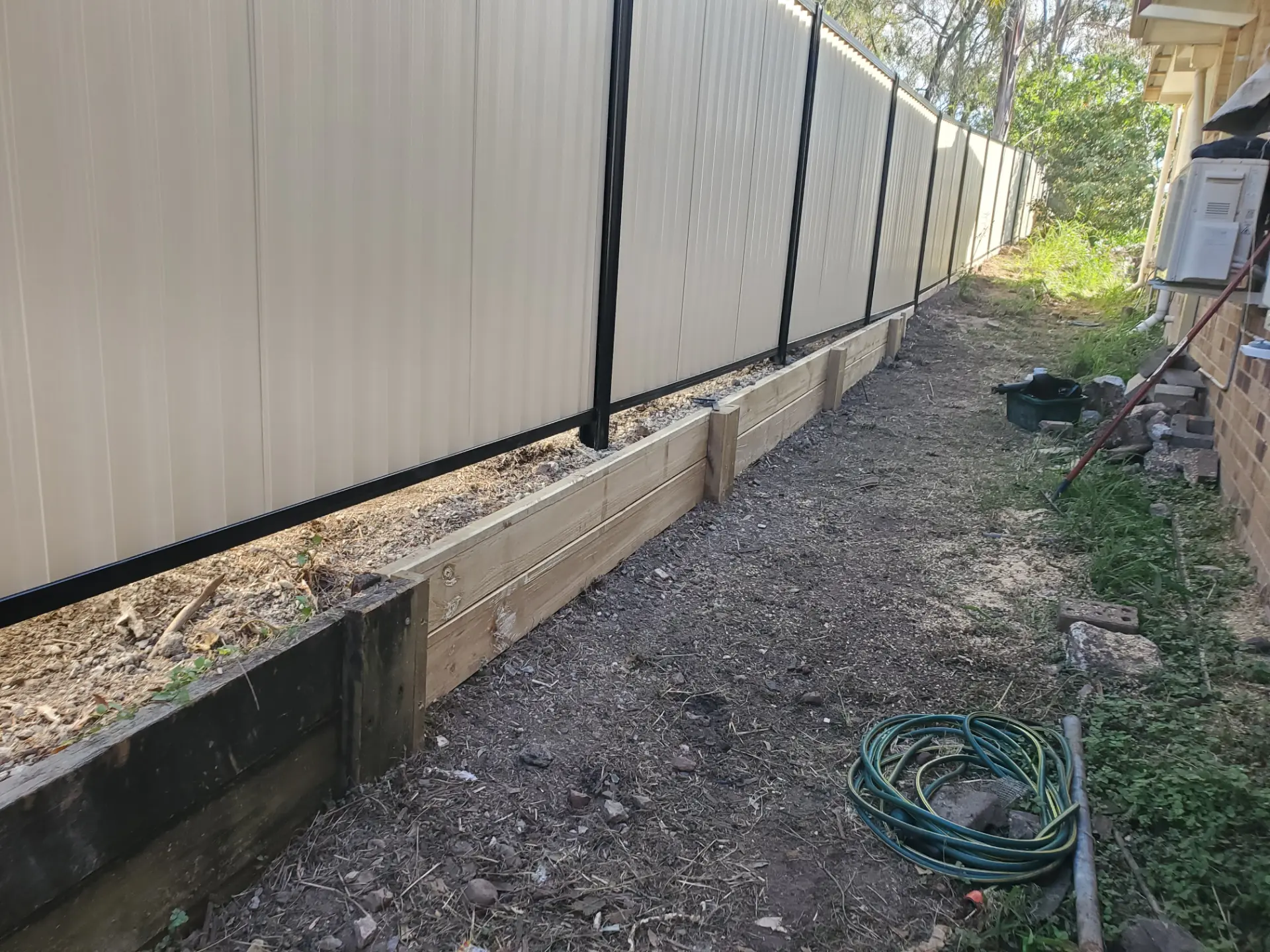
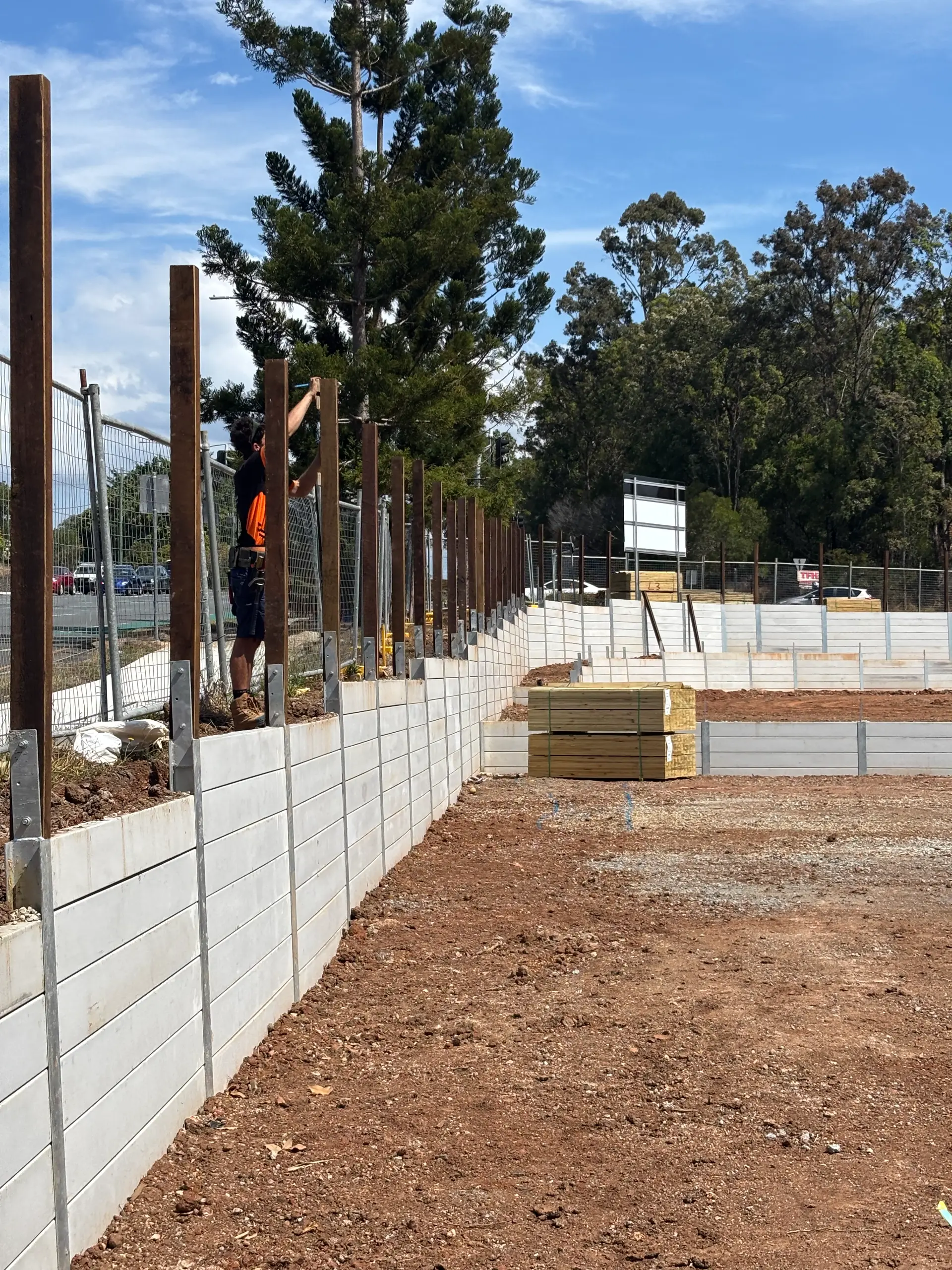
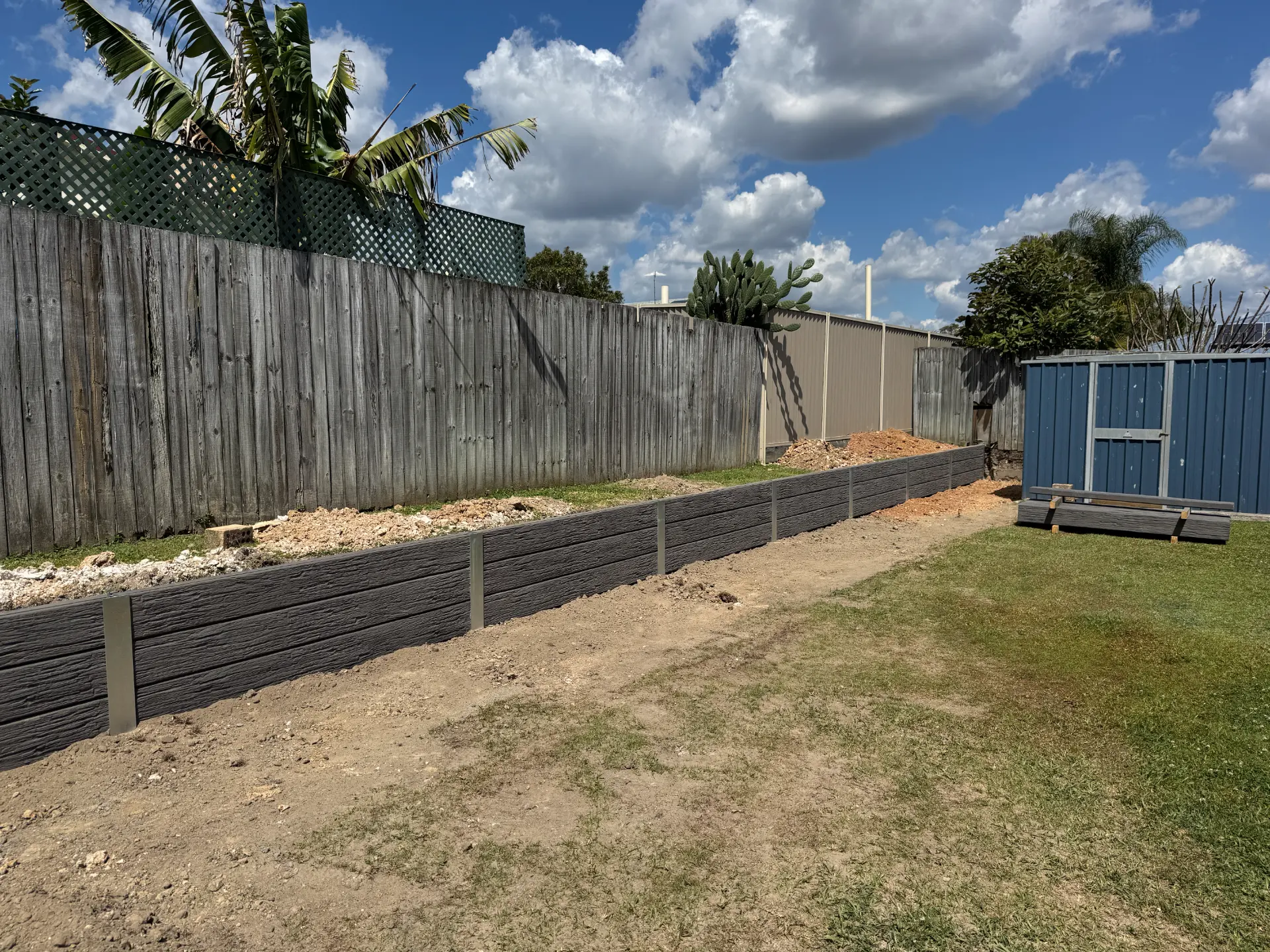
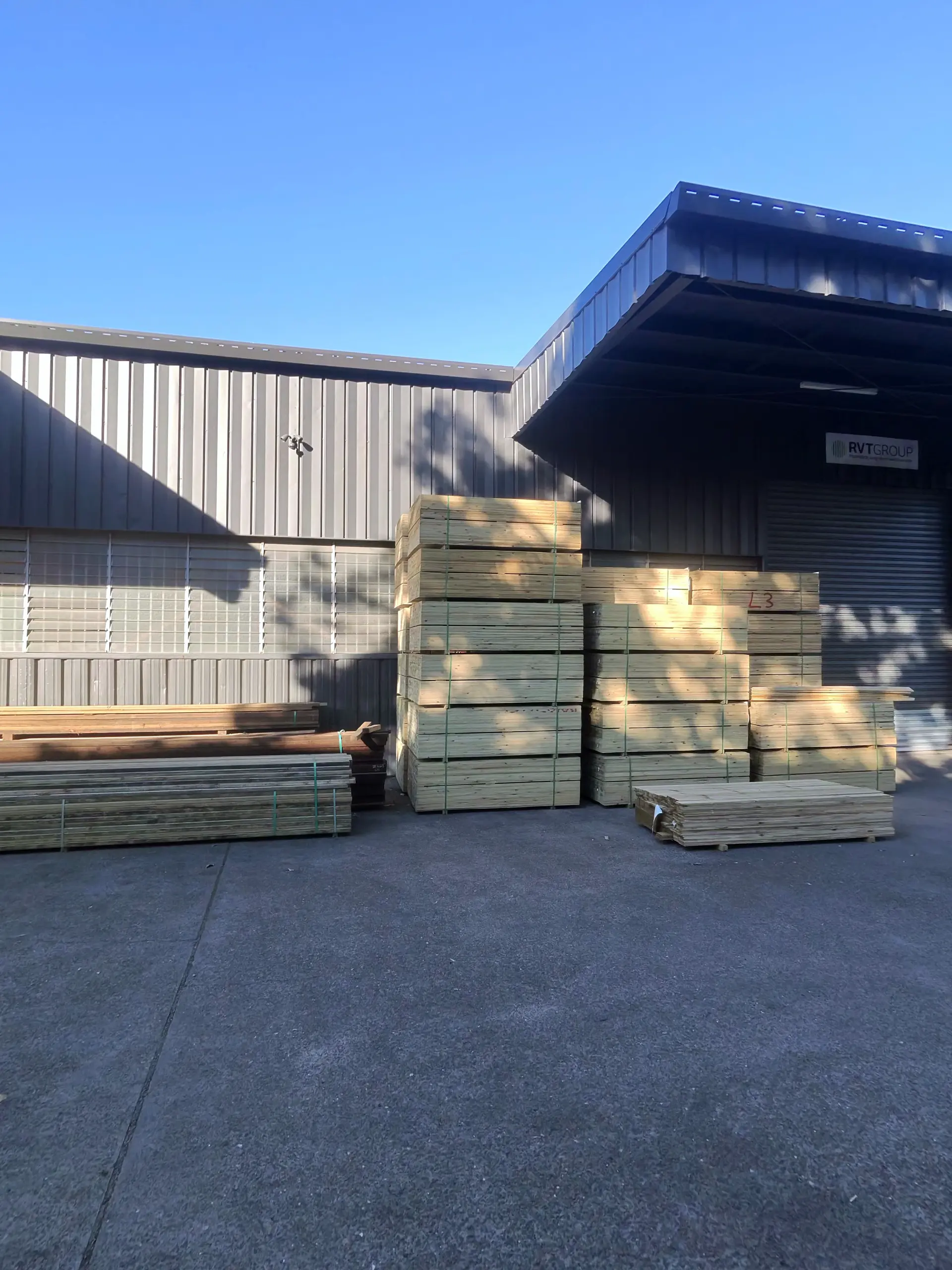
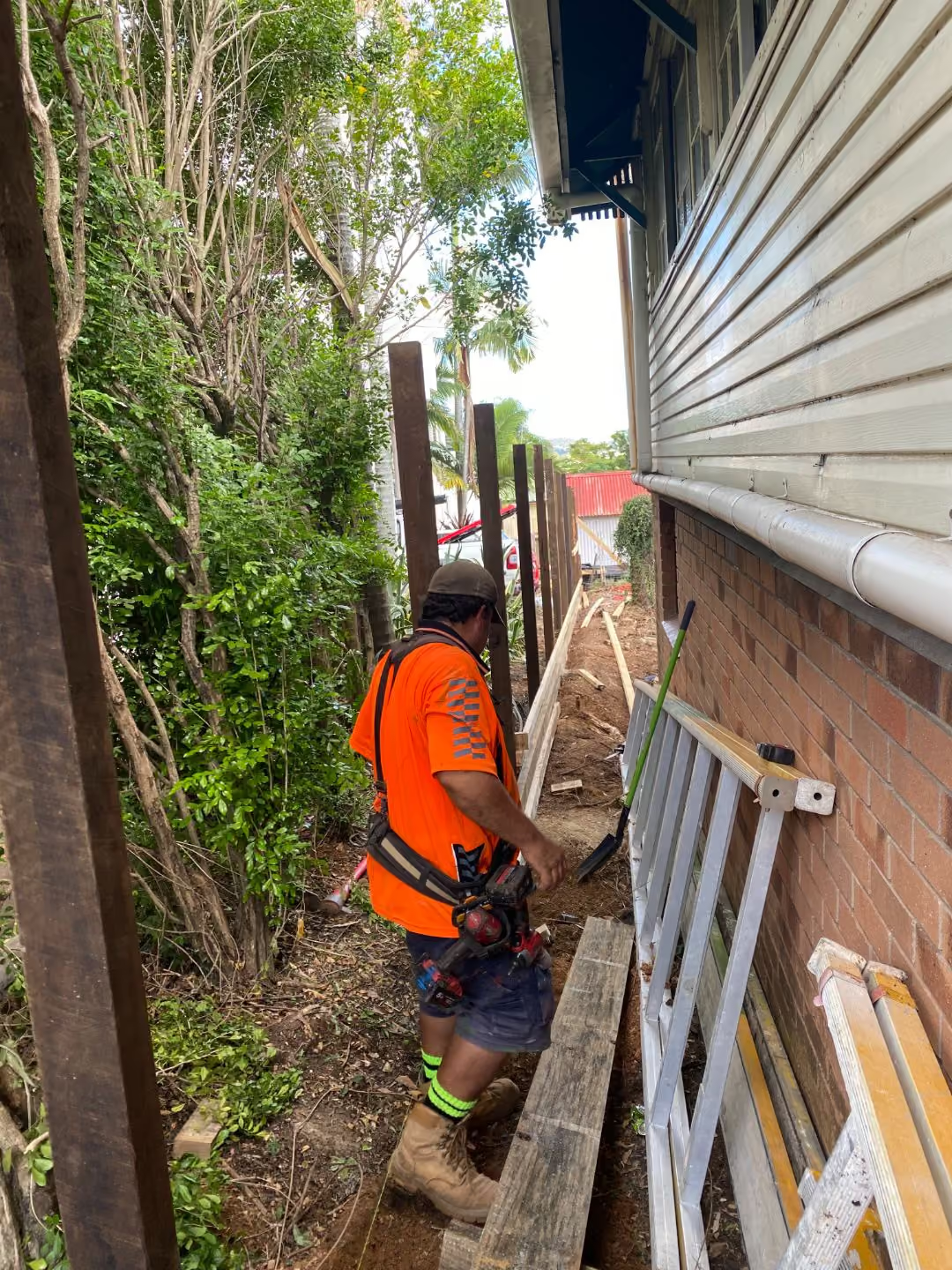
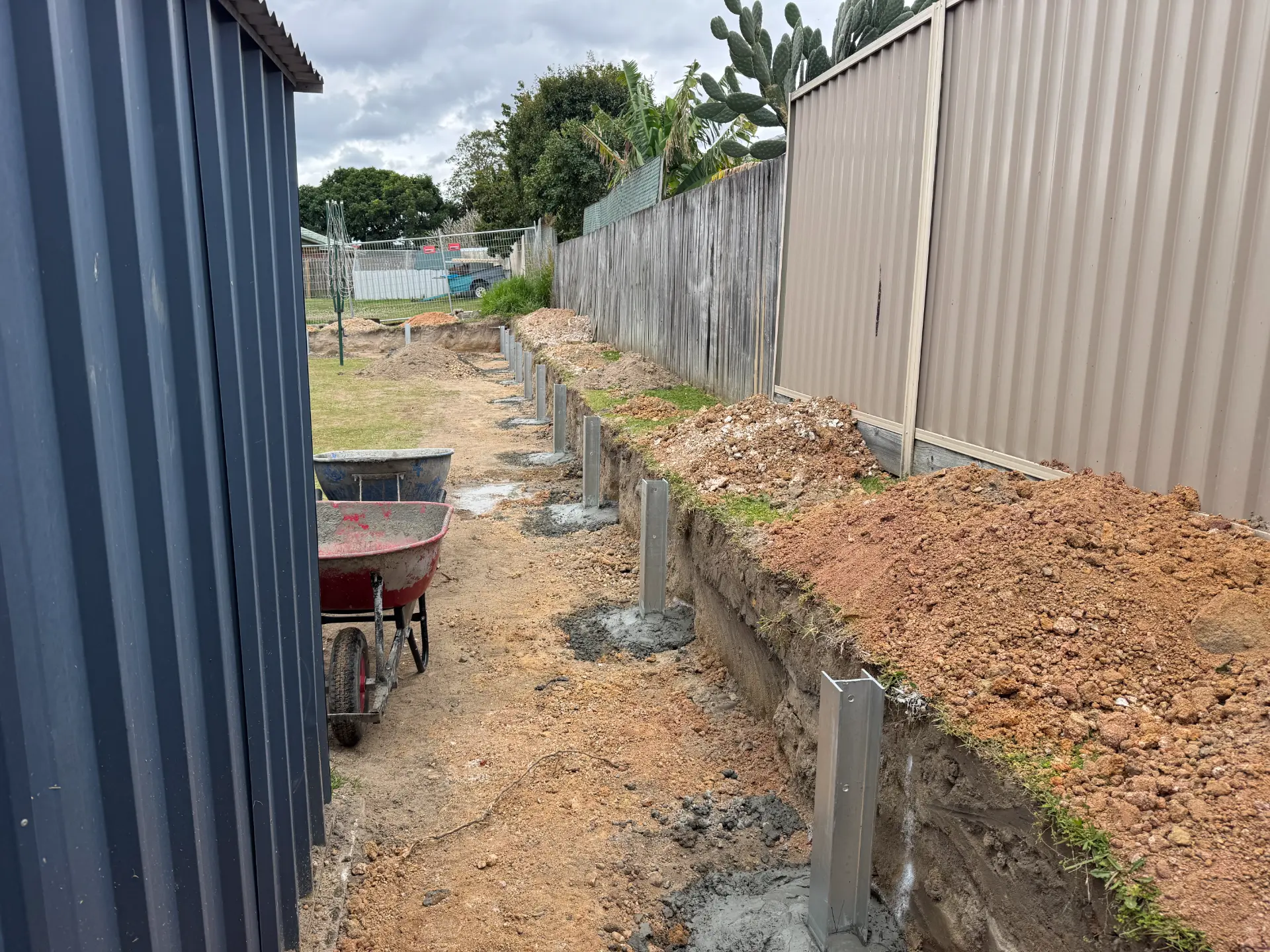
This is the first thing that holds the wall up. Post holes are dug to the engineer's depth, and the posts are set in concrete. We use galvanised steel posts, spaced 2 m apart, so they don't rot in the ground and the sleepers don't bow.
How deep? As a general rule, the footing goes as deep as the wall is high. A 1 metre wall gets a 1 metre footing. Where we can, we go deeper again, around 200 mm extra, so a 1 metre wall gets a 1.2 metre footing. On engineered walls, the engineer sets the depth.
Then we wait. The concrete needs to cure before the sleepers go in and the wall takes any load. Rushing this is how posts get pushed out of line.
Step 6: Batter, the little lean
A good retaining wall isn't built perfectly upright. It's set with a slight lean back into the soil it's holding. That's called batter.
Why? The soil is always pushing the wall forward. Starting it with a small lean back means that over the years, as everything settles, it stays upright instead of tipping out. The engineer sets how much lean the wall needs.
Step 7: Drainage
This is the second thing that holds the wall up, and it's the one most often skimped on.
Water trapped behind a wall makes the soil much heavier, and that extra weight pushes the wall out. Good drainage lets the water escape. Here's how we do it:
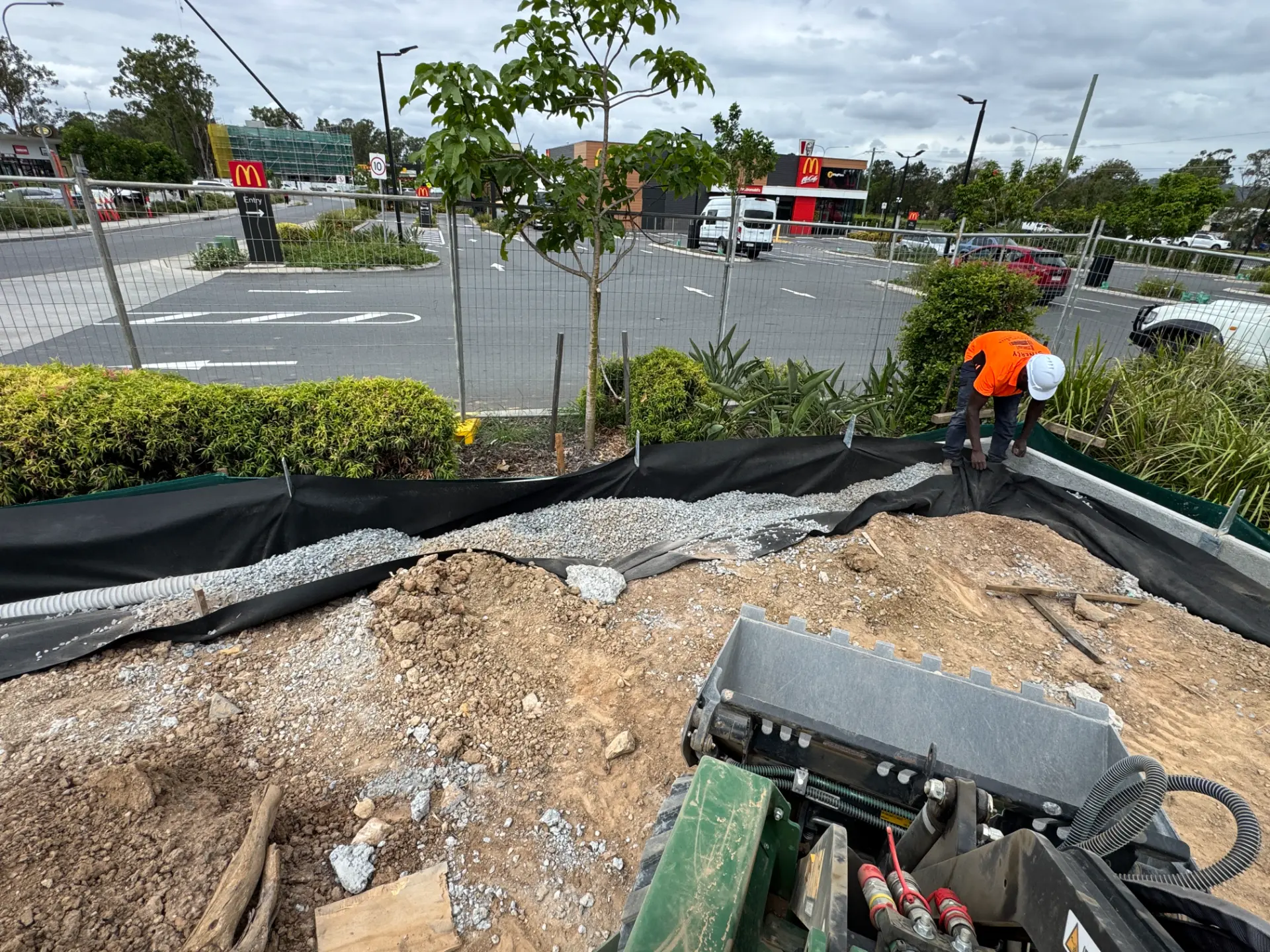
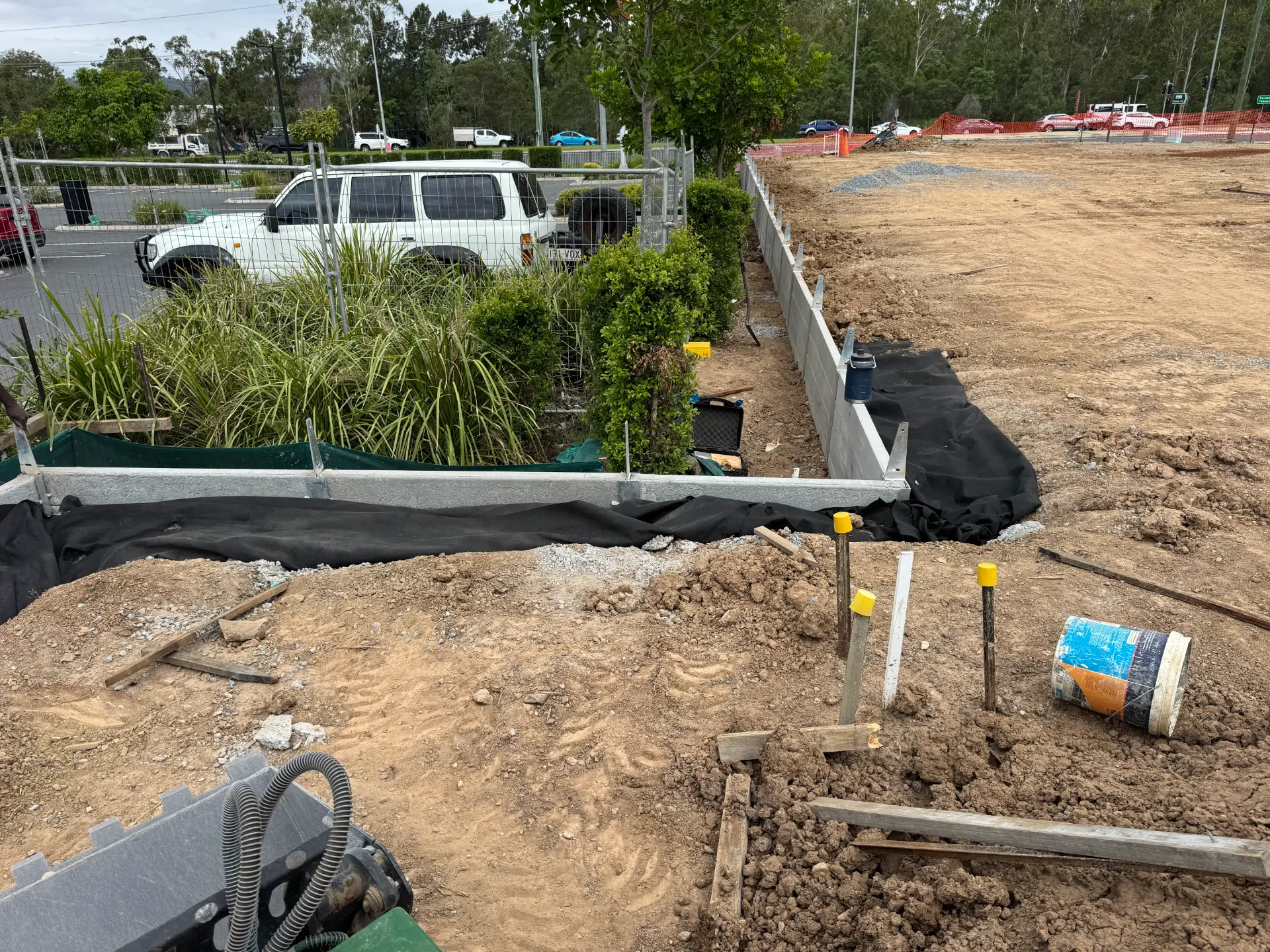
- Geofabric goes in first, lining the back of the wall. It stops soil washing into the gravel and clogging it.
- A socked ag pipe runs along the bottom. It's a slotted pipe in a fabric sock that carries water away.
- Drainage gravel fills behind the wall, up to one sleeper below the top. On a five-sleeper wall, that's 800 mm of gravel. On a six-sleeper wall, it's 1 metre.
- Soil goes on top of the gravel.
The ag pipe also needs somewhere to go. It's laid with a fall so the water runs to an outlet, like a stormwater connection. A pipe with nowhere to drain doesn't do anything.
Finally, the soil on top is shaped so rain runs away from the wall, not straight down behind it.
Where corners get cut
Some builders put in less gravel and fill the rest with soil sooner, stopping the gravel at 450 or 500 mm on a five-sleeper wall. It's cheaper and quicker. But soil holds water, and water is exactly what you're trying to get away from the wall.
The same goes for skipping the geofabric, leaving out the ag pipe, or spacing the posts further apart. You won't see any of it on the day. You'll see it in a few years. (Here's why sleepers bow when posts are too far apart.)
Once it's built
A few simple habits keep your wall healthy:
- Don't point downpipes, sprinklers or garden beds so they pour water behind the wall.
- After the first big storm, have a look. Check the wall is still straight and the drainage outlet is running.
- If you ever see bowing, cracking or the wall leaning out, get it looked at early. Small fixes are much cheaper than rebuilding.
Questions to ask on your quote
- Will the wall be engineered?
- How far apart are the posts, and what are they made of?
- Is geofabric and a socked ag pipe included?
- How high does the drainage gravel go?
- Does my wall need council approval?
- Are you QBCC licensed?
A good builder will be happy to answer every one.
Planning a retaining wall? Call us on 07 2141 7748, get a price online or let's have a chat.
Related posts




Ready to start? So Are We.
