

Replacing an Old Timber Retaining Wall: What Actually Happens
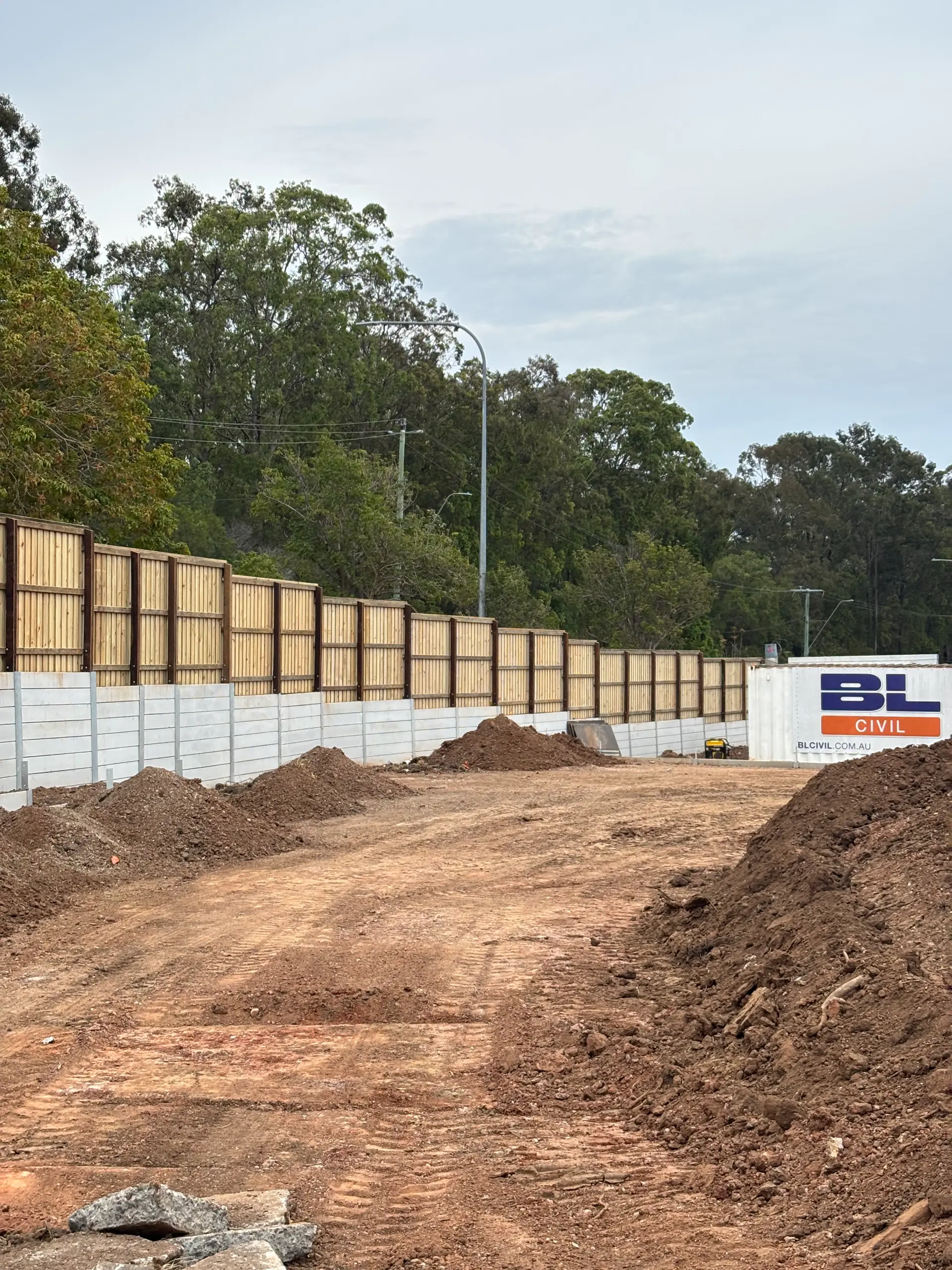
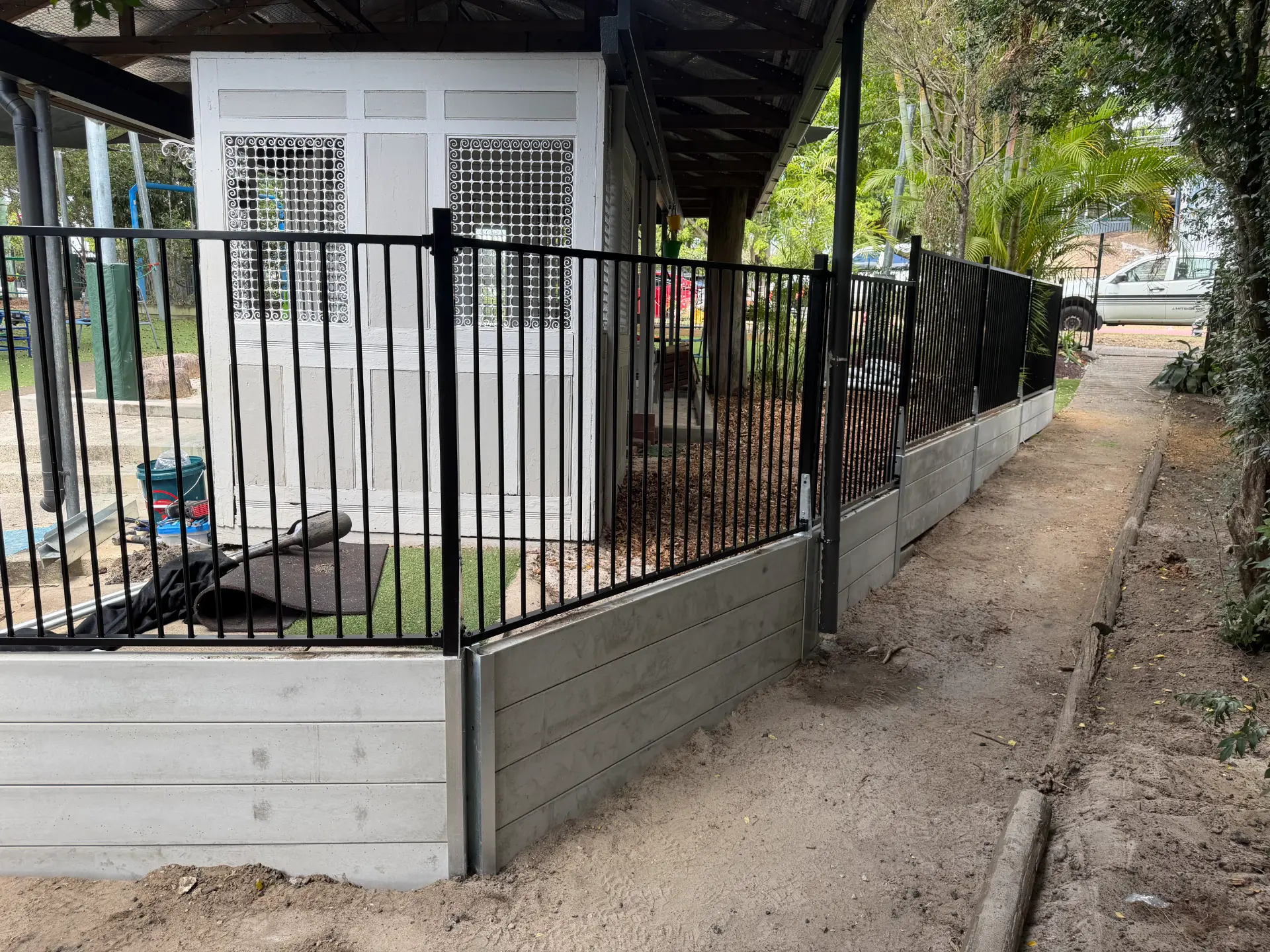
We check the wall, height and access, locate services, get the wall engineered where needed, remove the old timber, set galvanised steel posts in concrete, stack concrete sleepers, install proper drainage behind them, backfill and clean up.
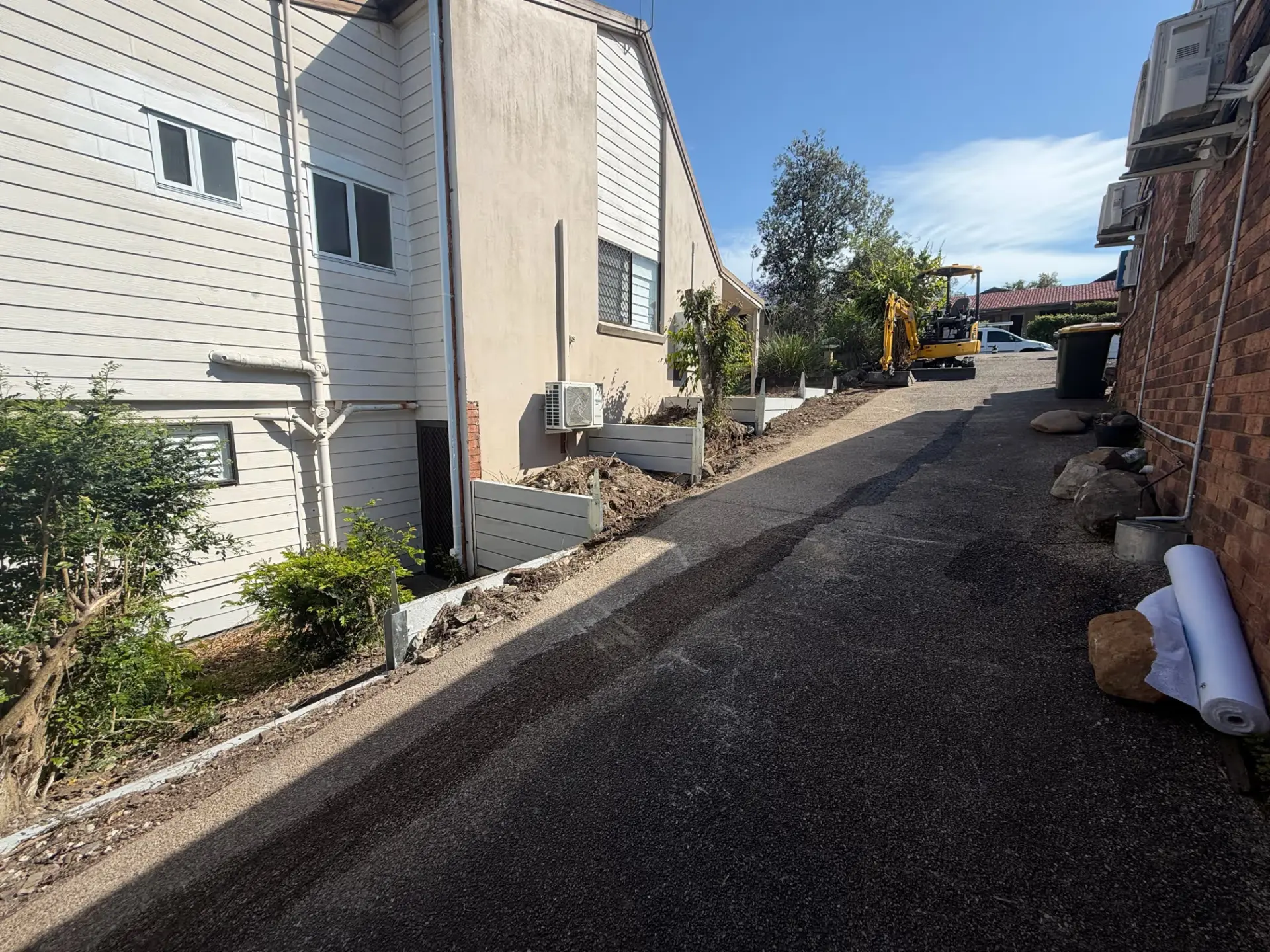
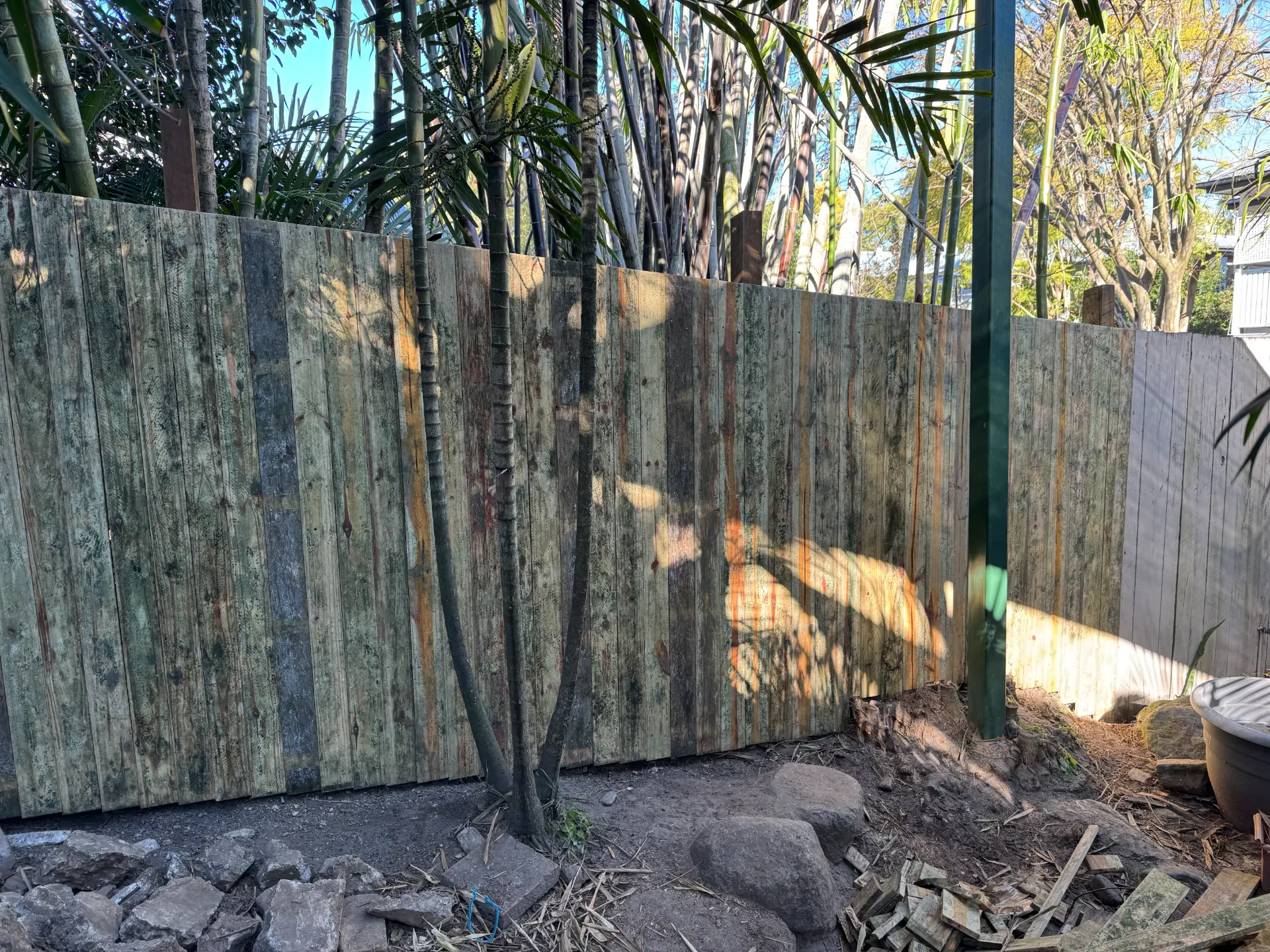
If your house is more than 15 or 20 years old, there's a good chance the retaining wall is timber. The sleepers are grey and soft at the bottom, the posts are leaning, and soil is starting to come through the gaps.
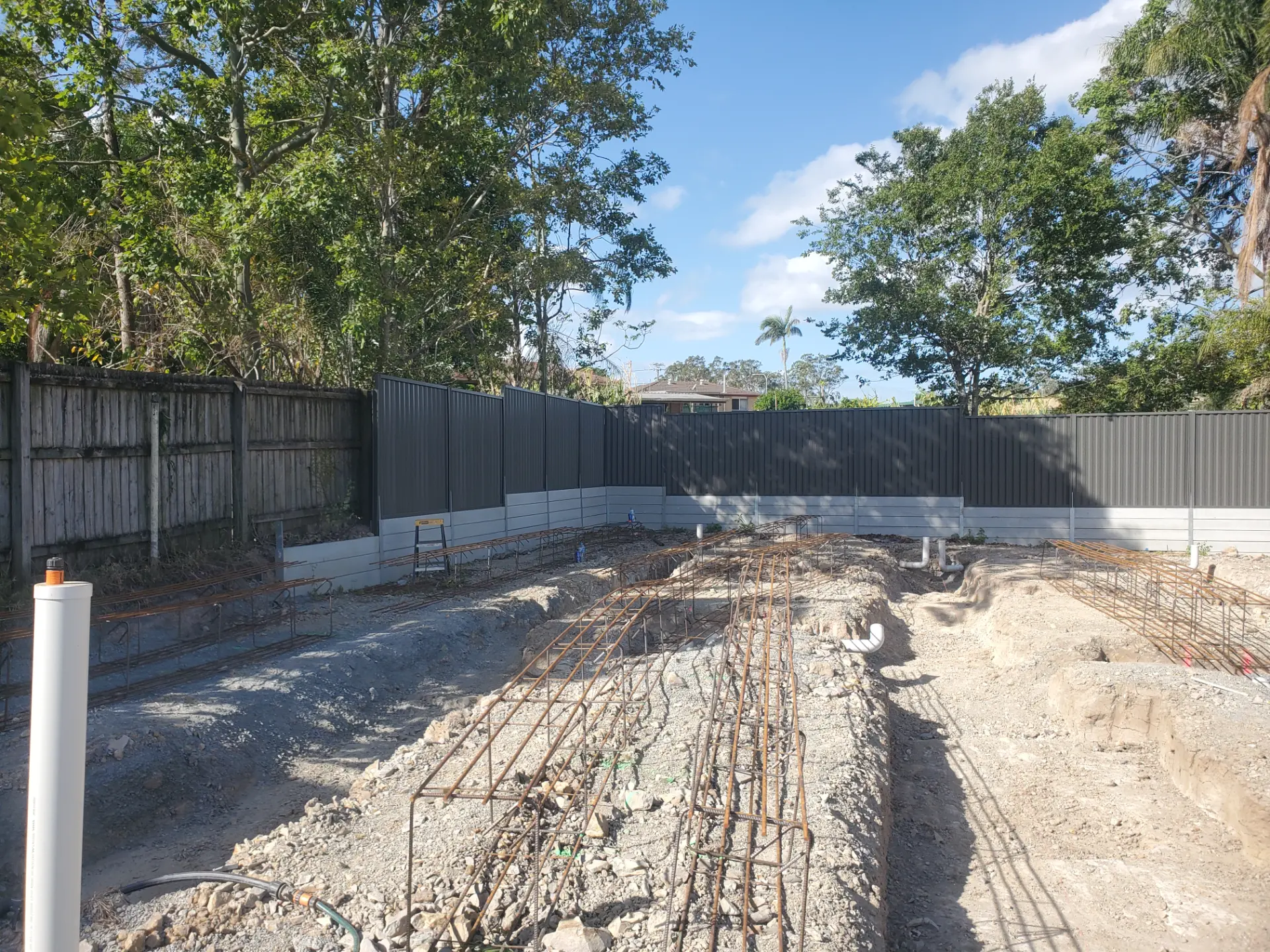
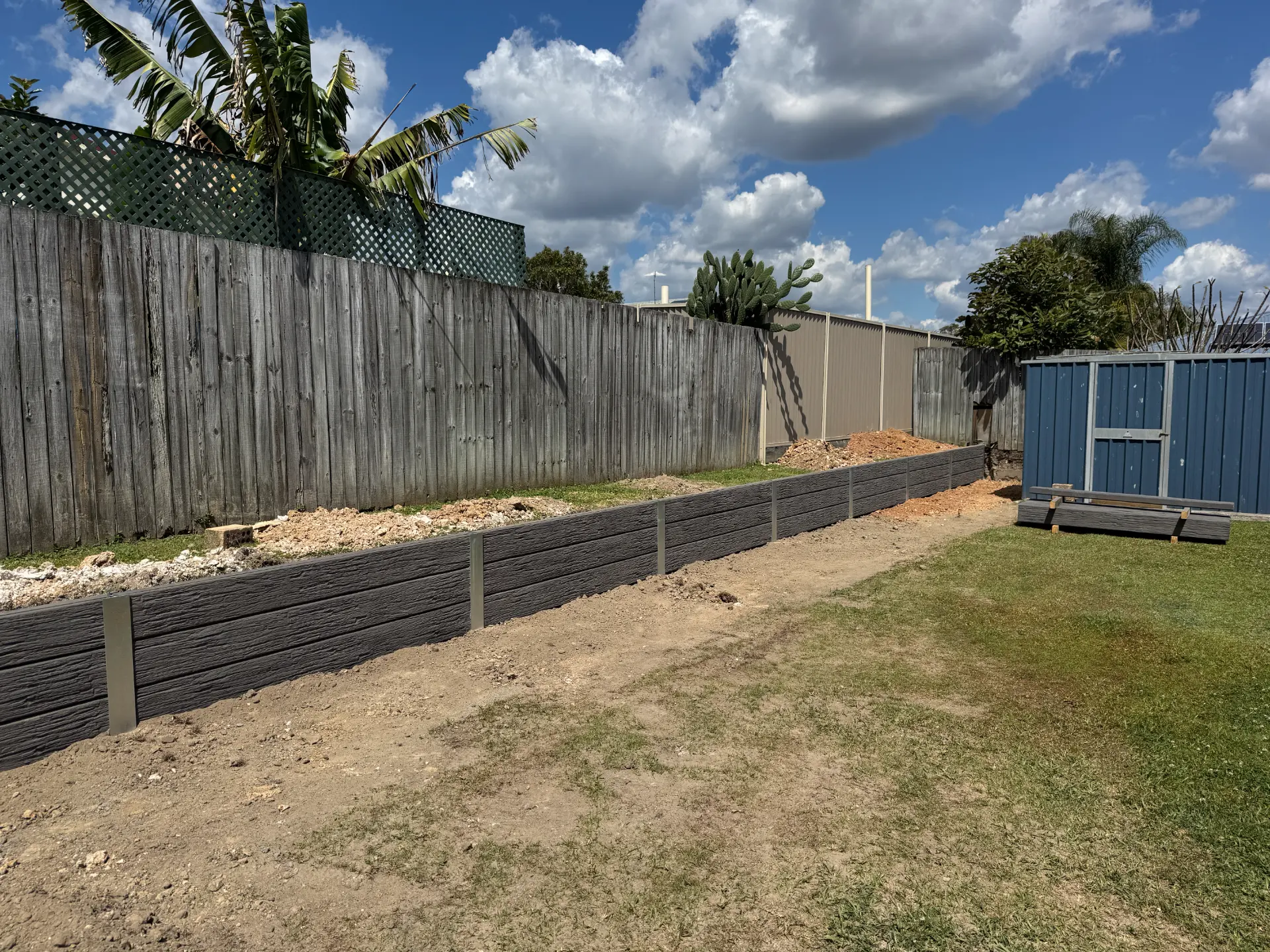
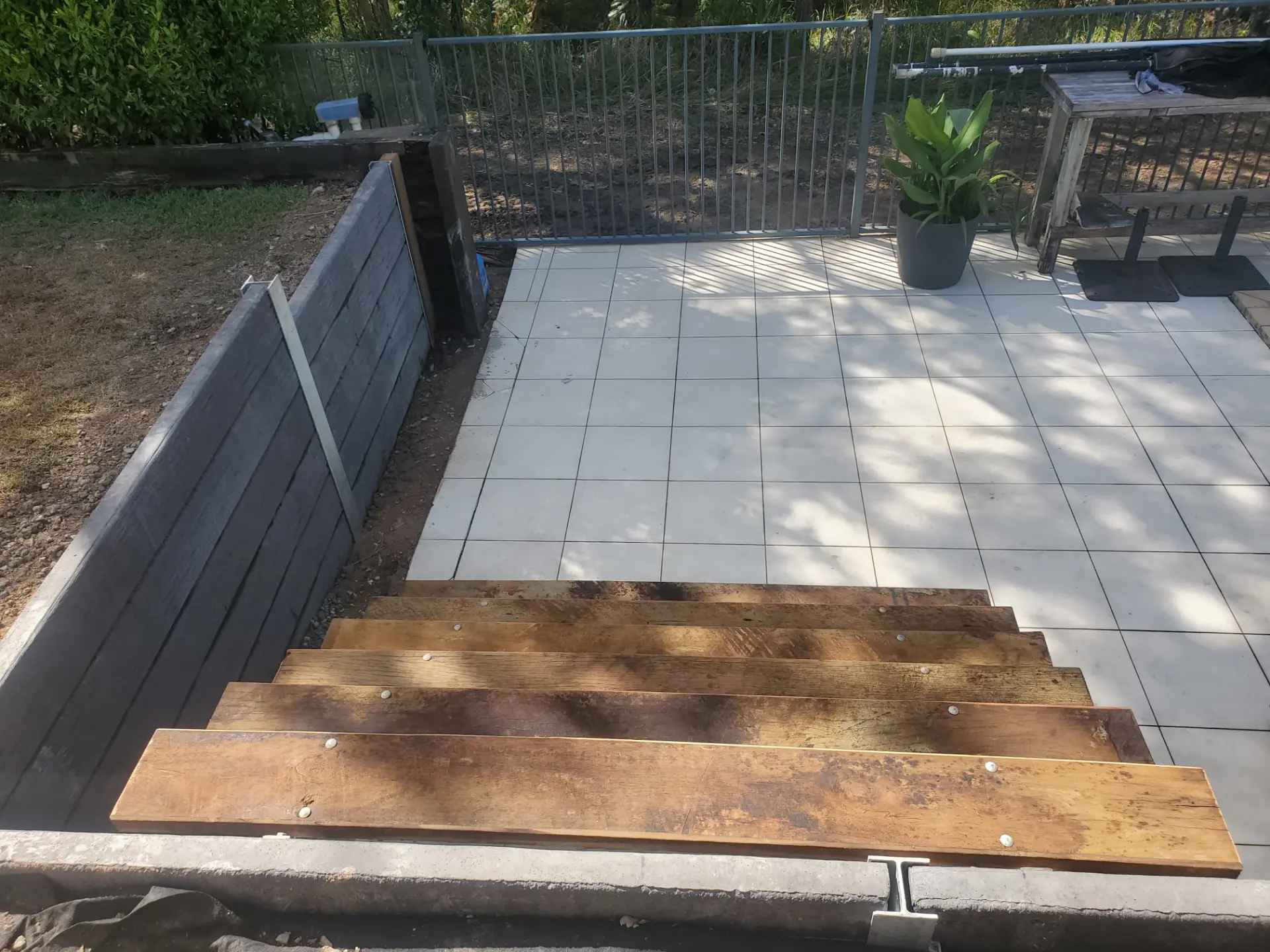
Most of the retaining walls we build are exactly this: replacing an old timber wall with concrete sleepers. Here's what the job actually looks like, so you know what you're signing up for.

1. The site visit
We look at the wall's length and height, what's above it (driveway, fence, shed, pool), how close it is to the house and boundary, and how we'll get in. We also look at how water moves across your yard, because water is what kills most walls. See why retaining walls fail.
2. Engineering and approvals
Our walls are engineered, so post size, spacing and footing depth suit your wall. If the wall needs building approval, we tell you before you commit. See do I need council approval for a retaining wall?
3. Finding what's underground
Before we dig, services are located. Dial Before You Dig covers the street side of your boundary. Inside the property, a private service locator may be needed. It's not optional for us.
4. Taking the old wall out
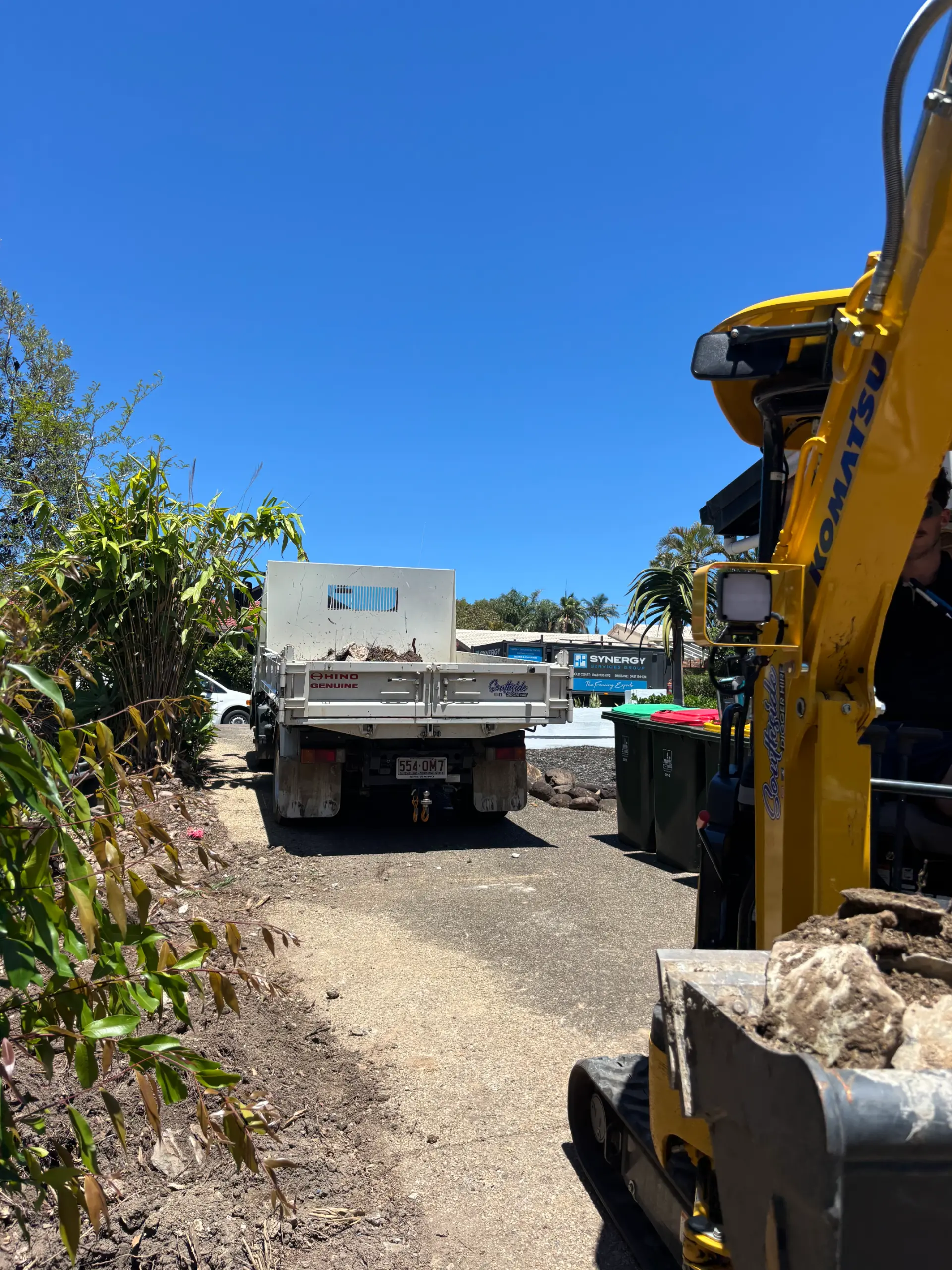
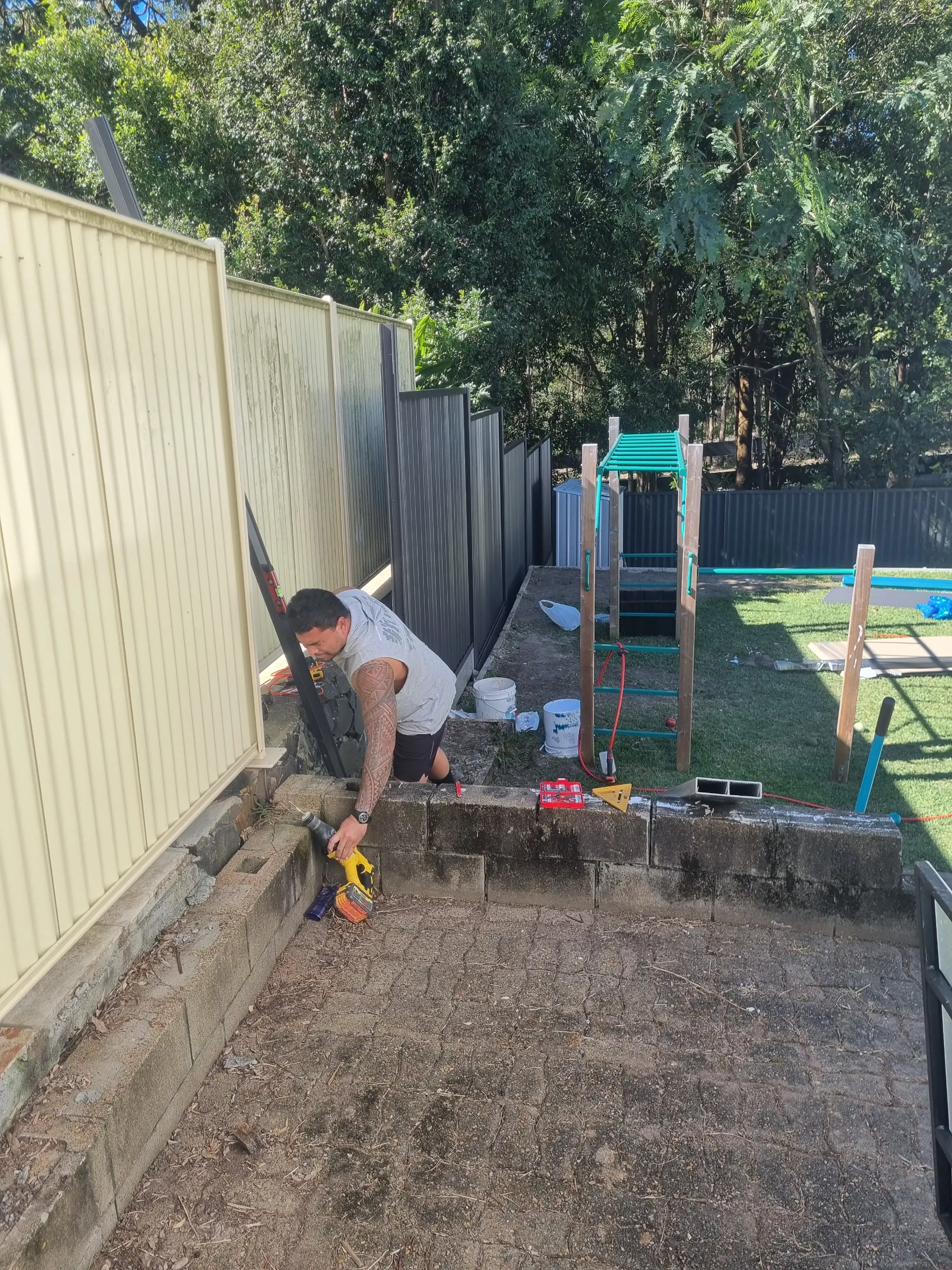
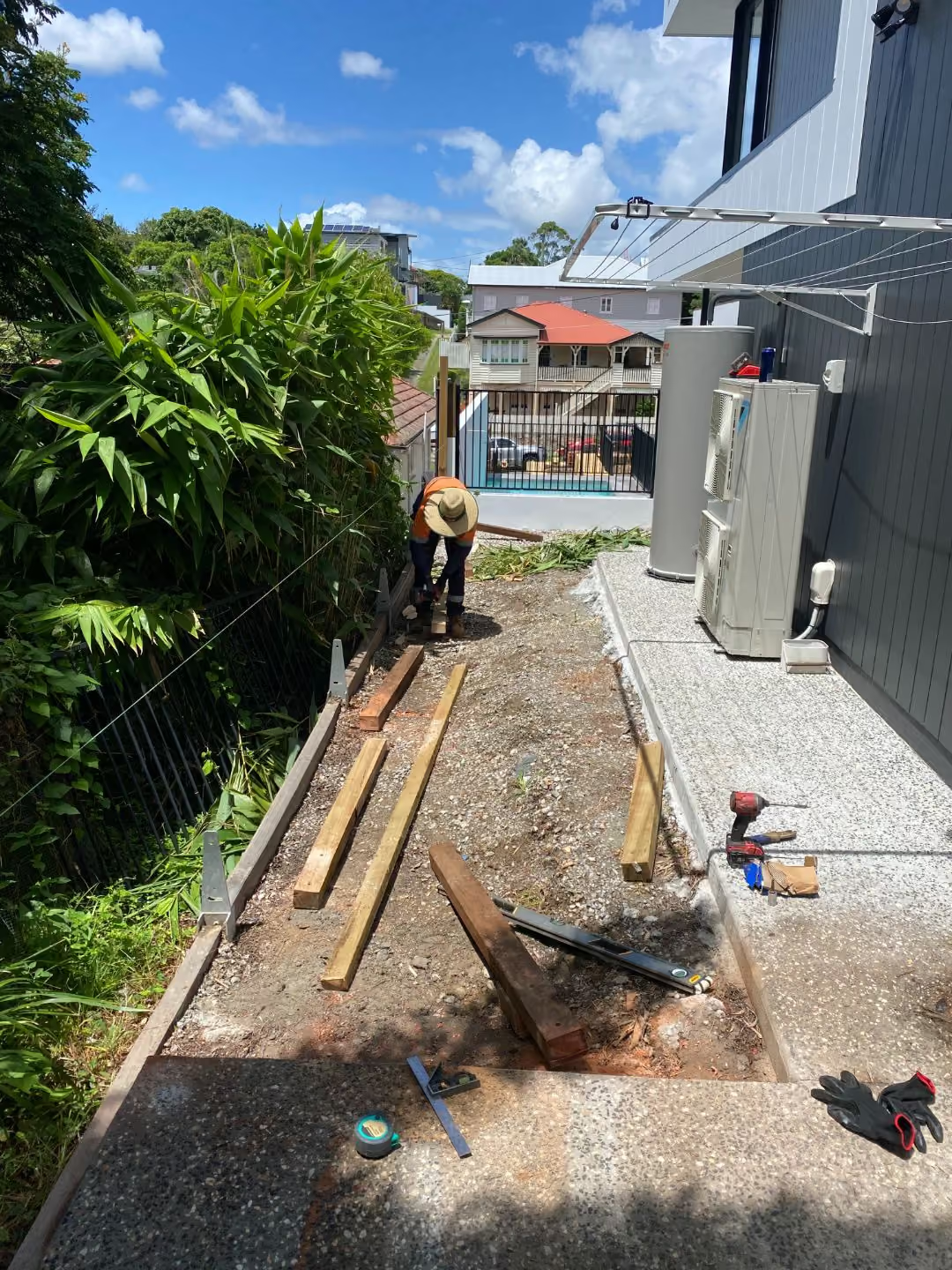
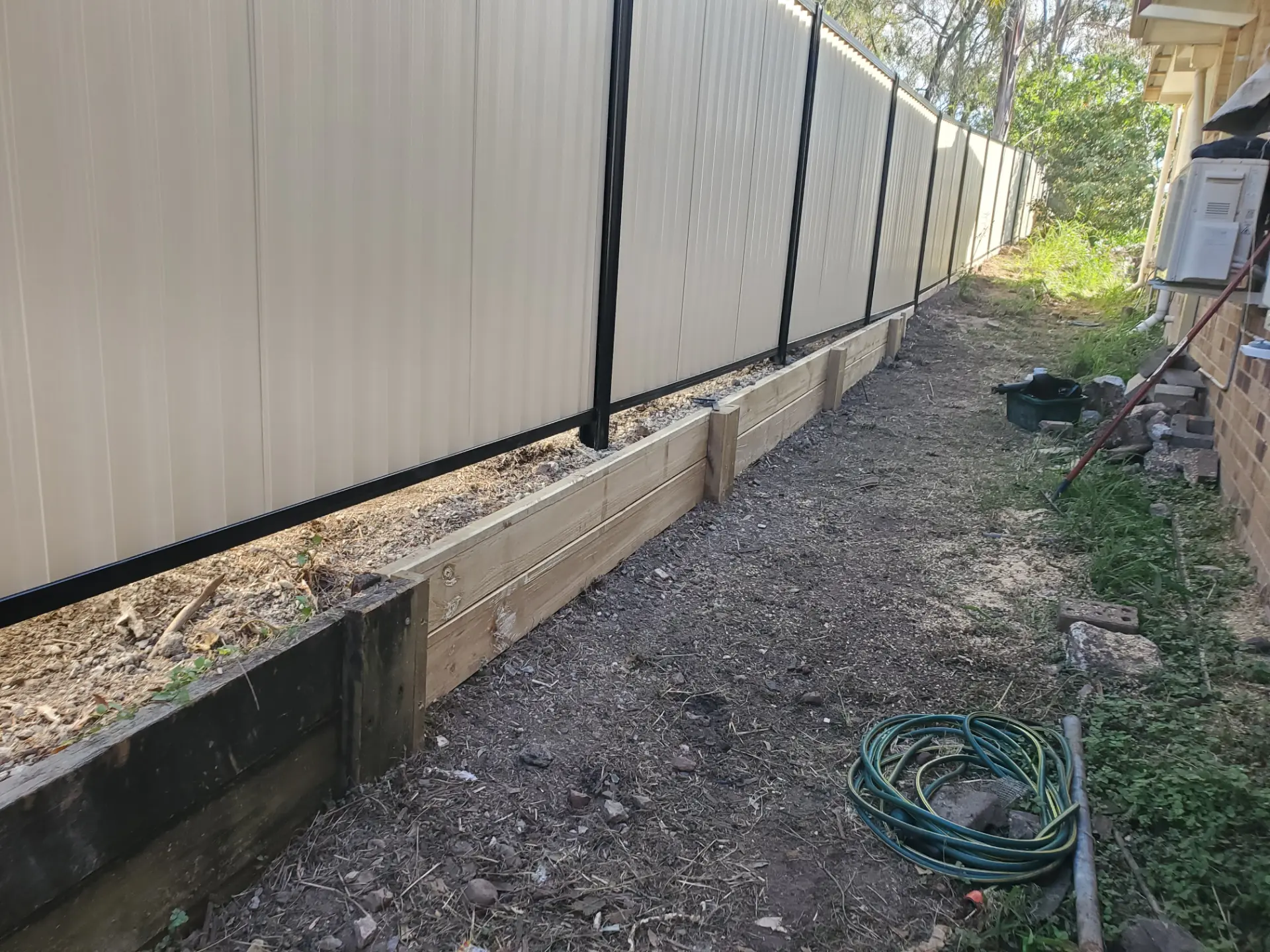
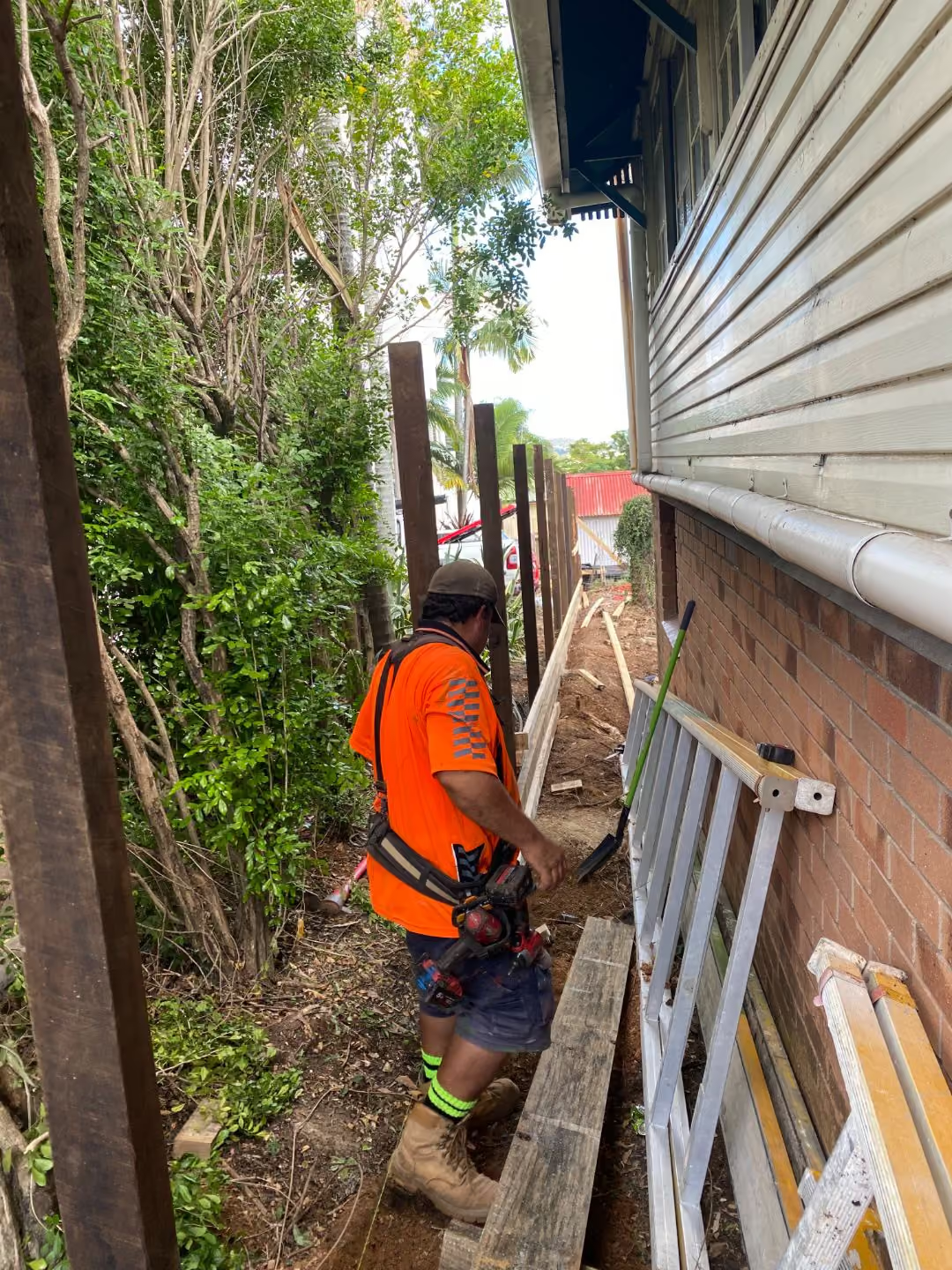
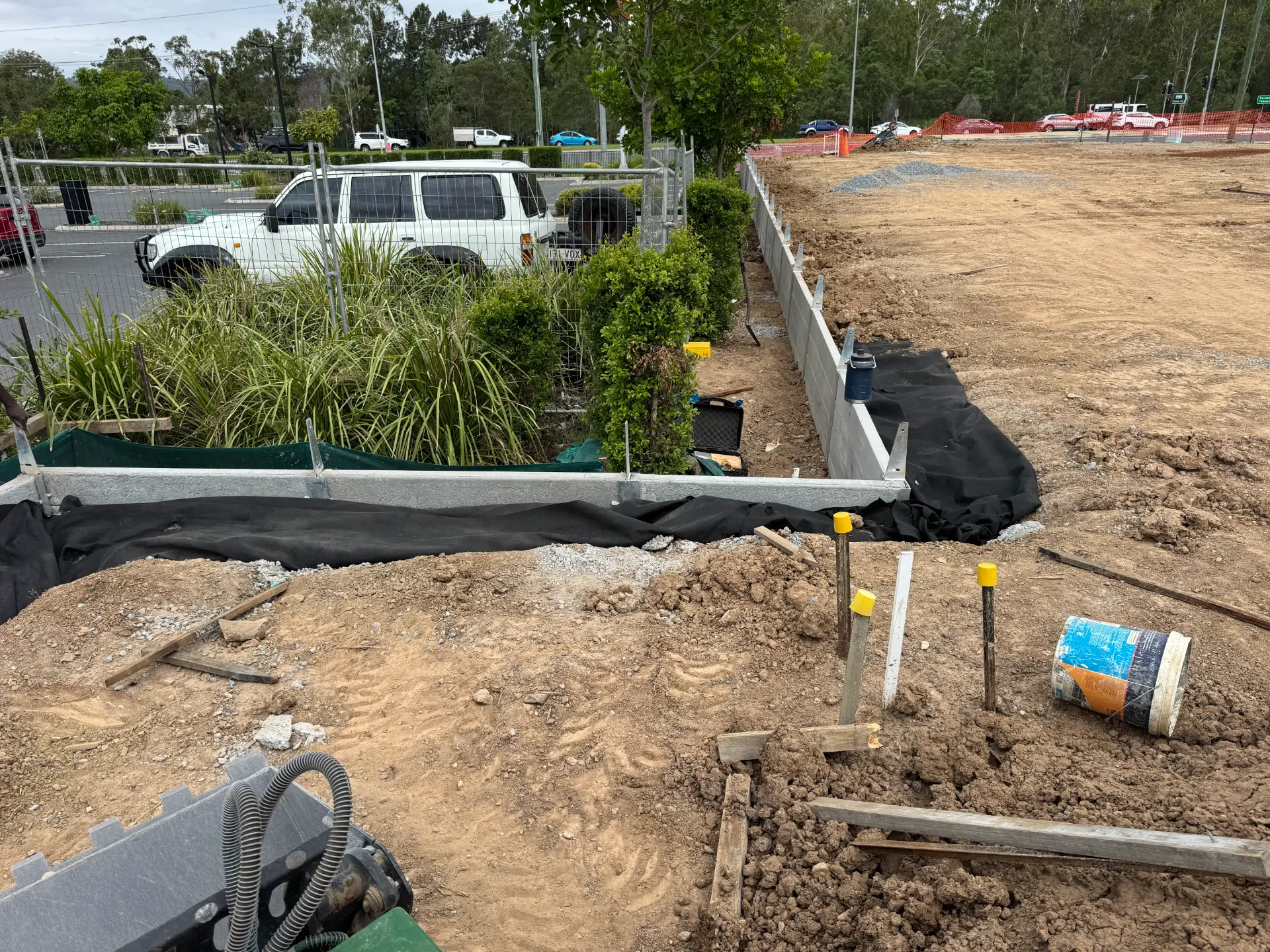
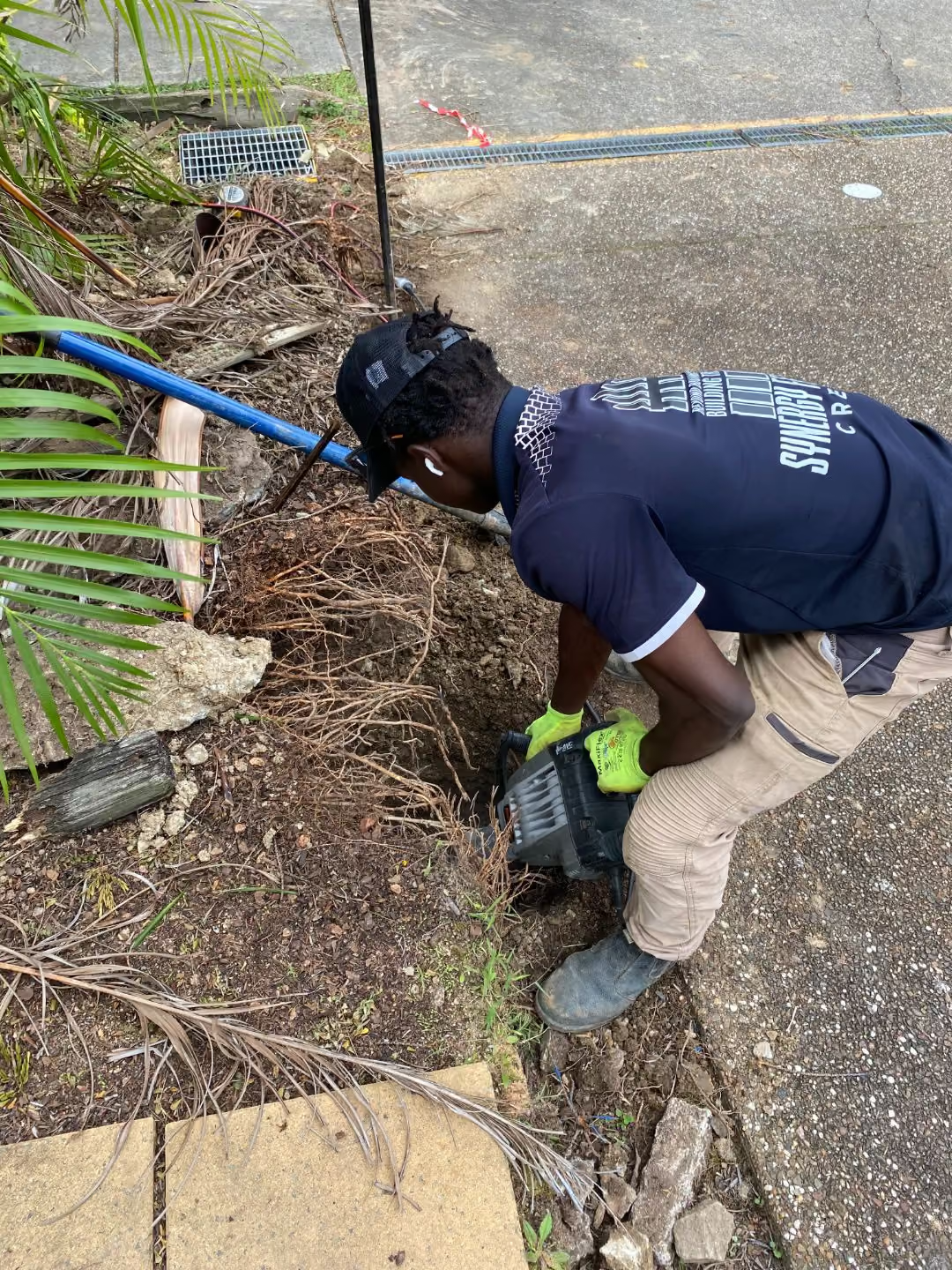
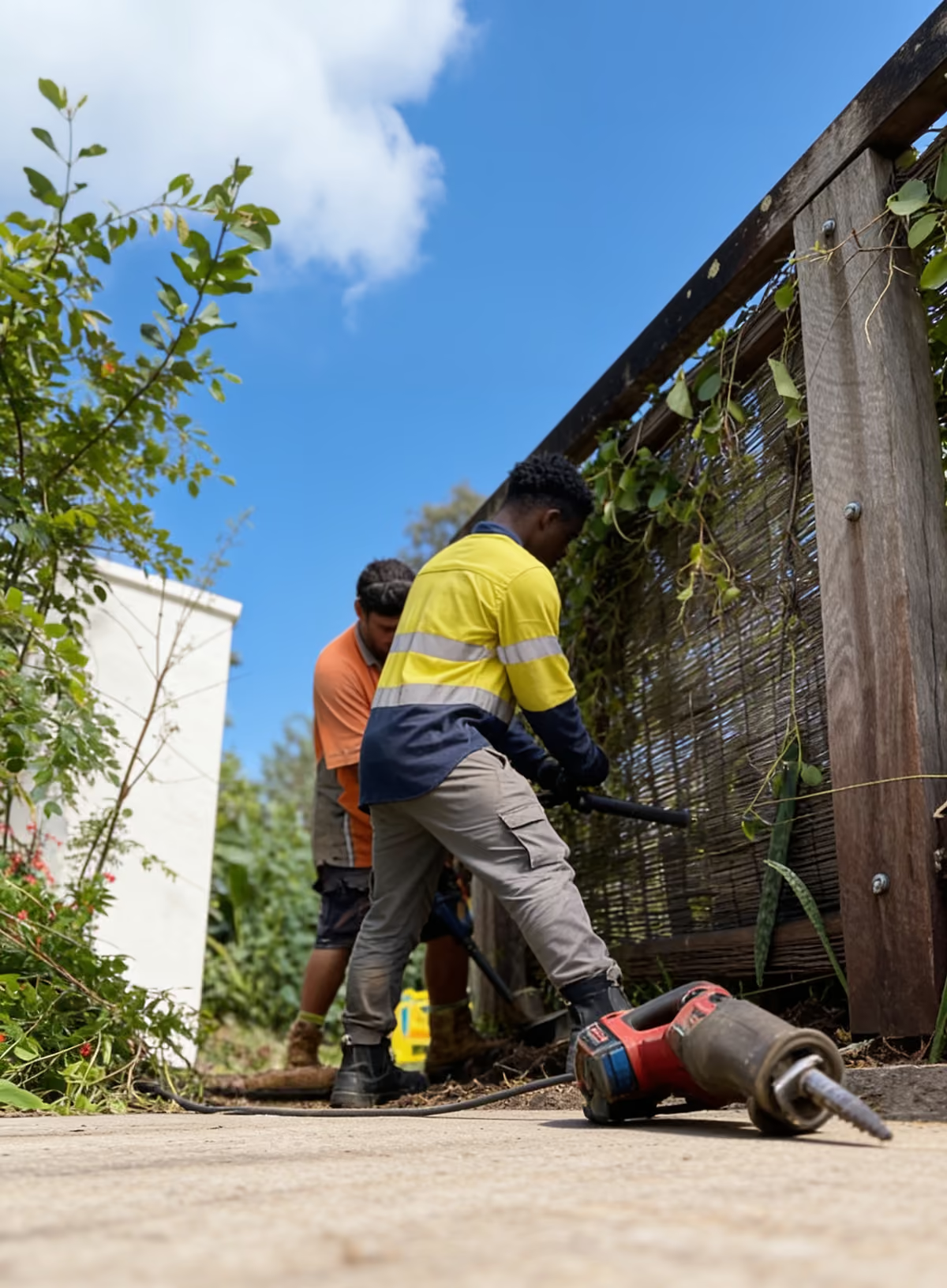
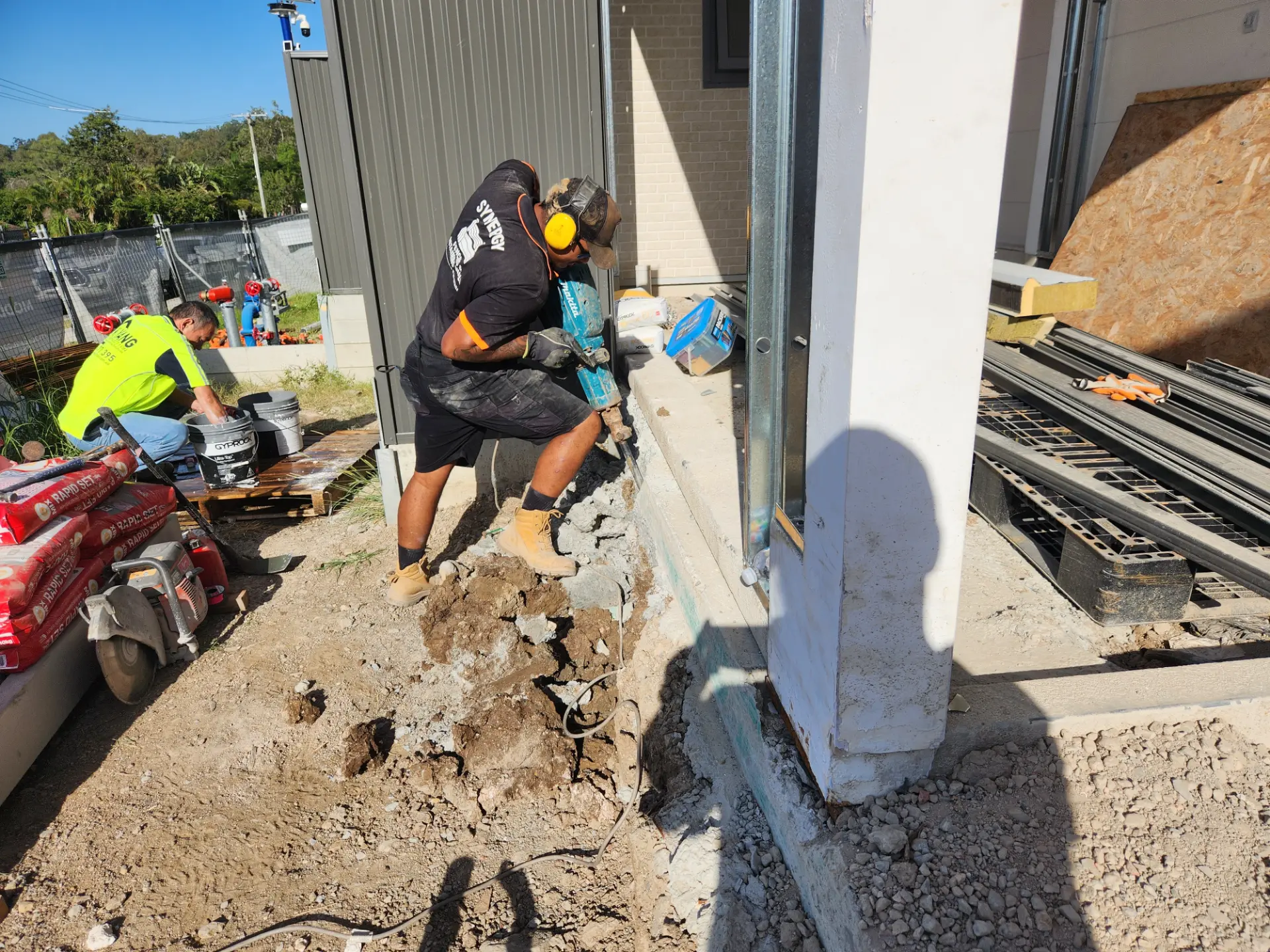
We remove the old sleepers and posts, usually a section at a time so the soil behind doesn't slump. Rotten timber goes in the skip, not in your garden. If there's a fence on top, it's taken down or propped while we work.
5. Posts and footings
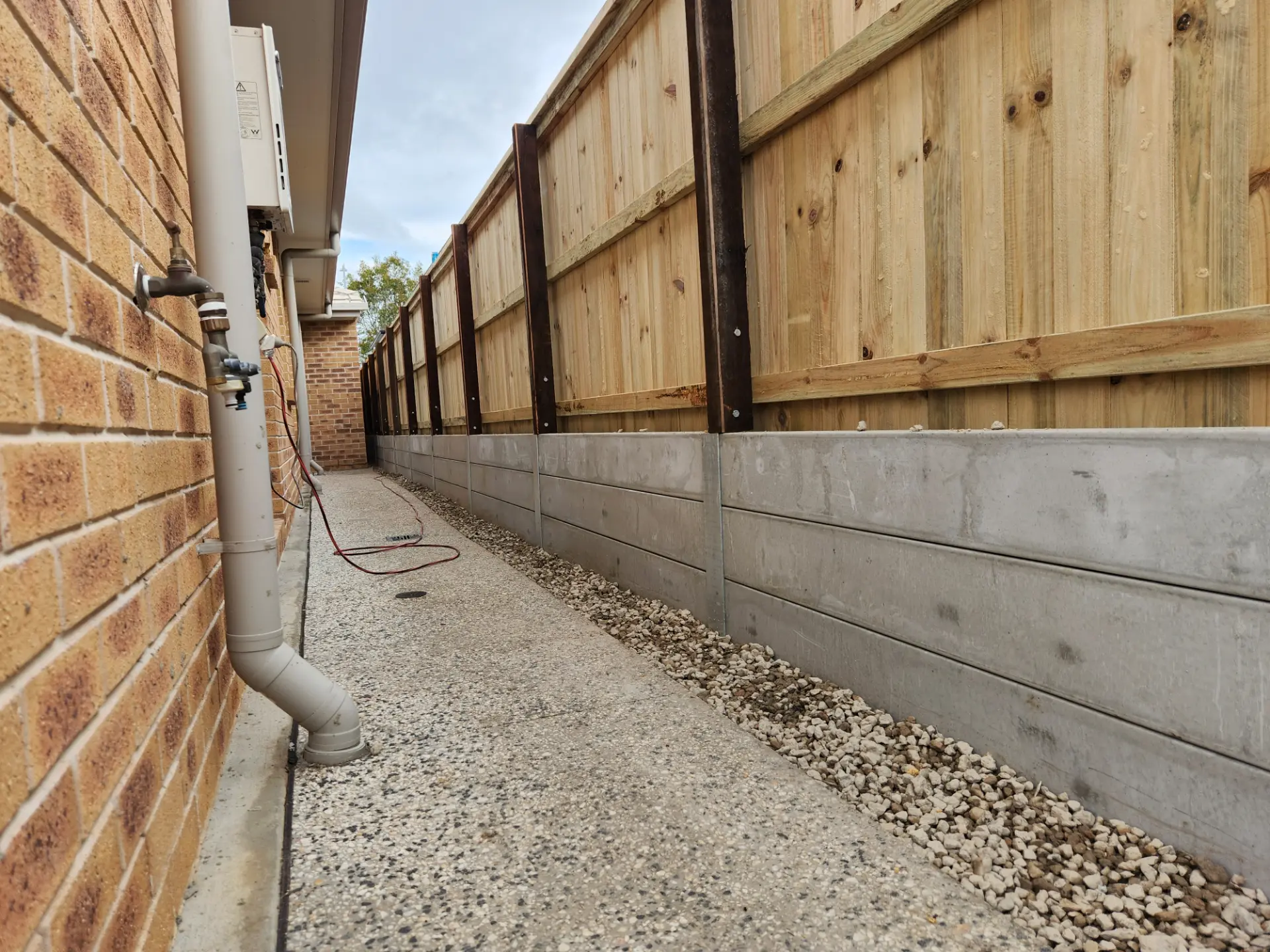
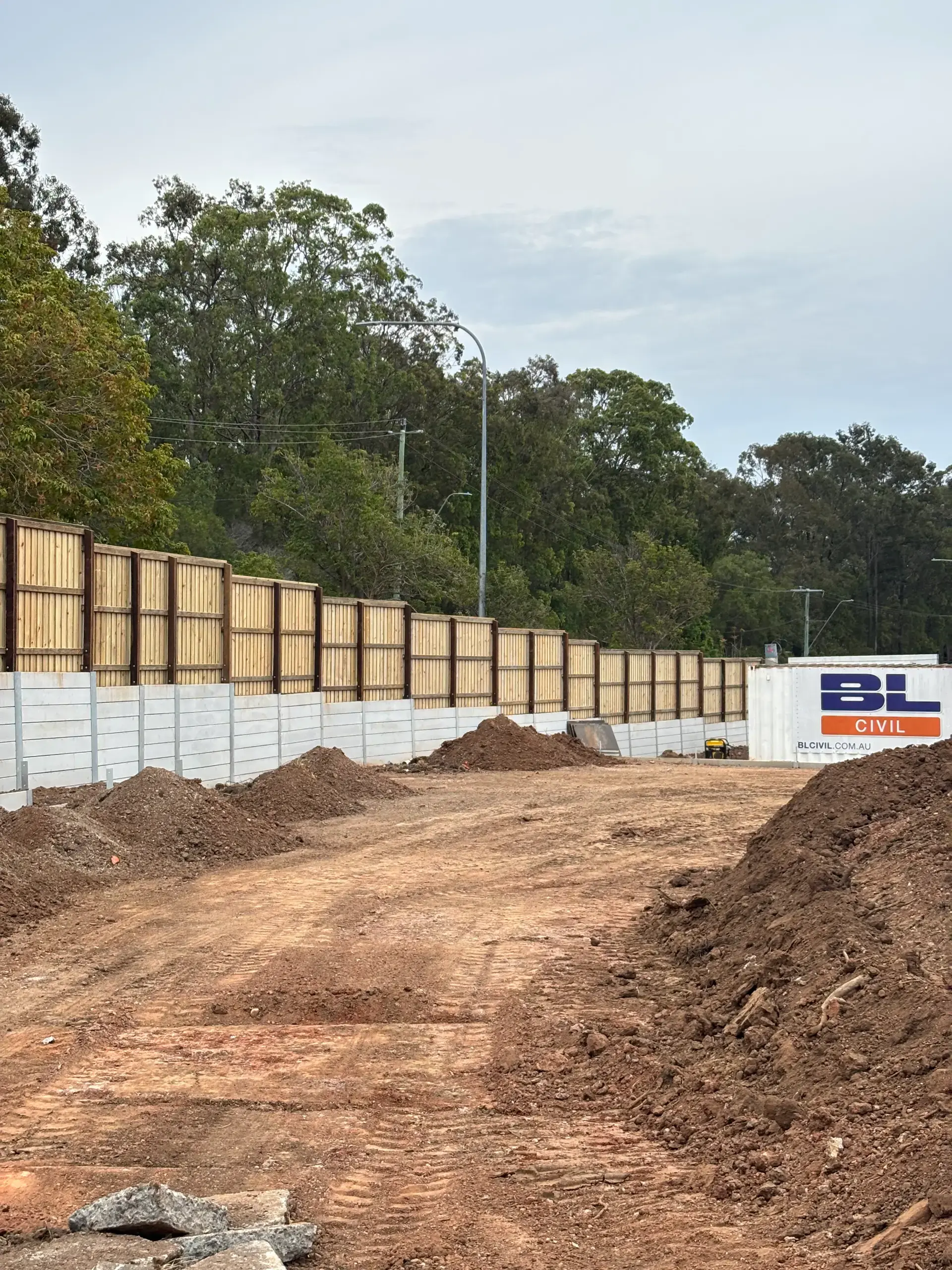
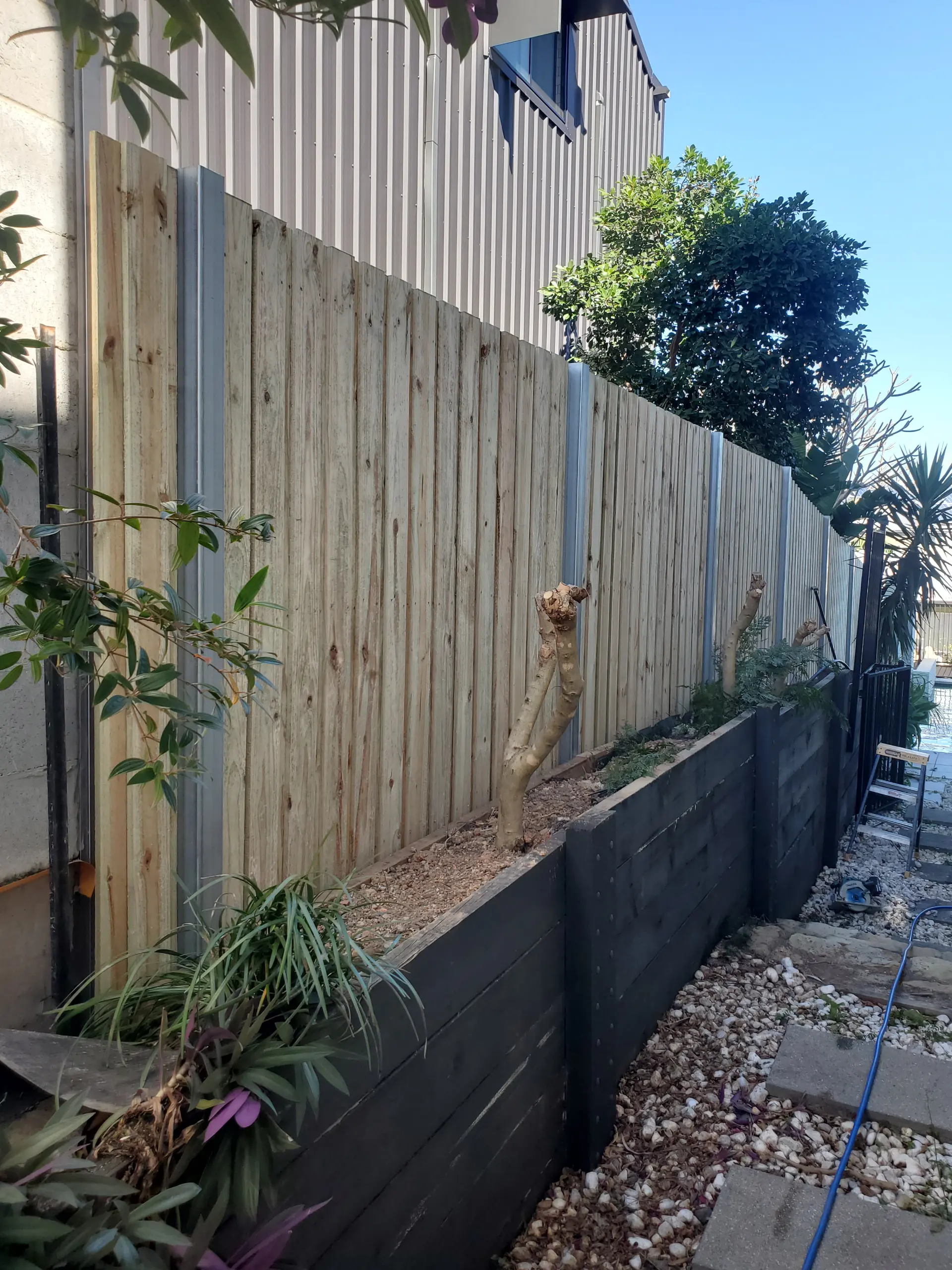
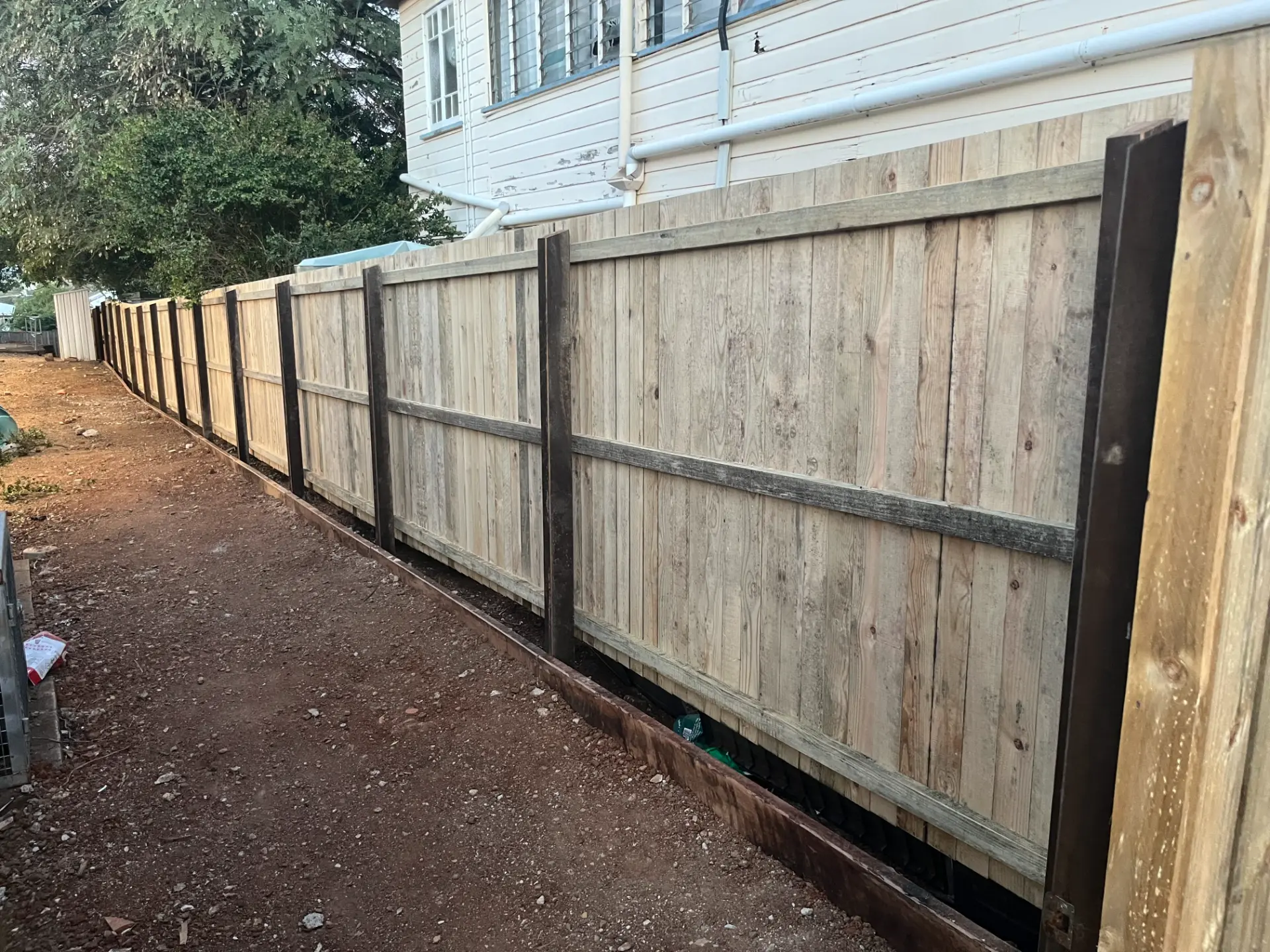
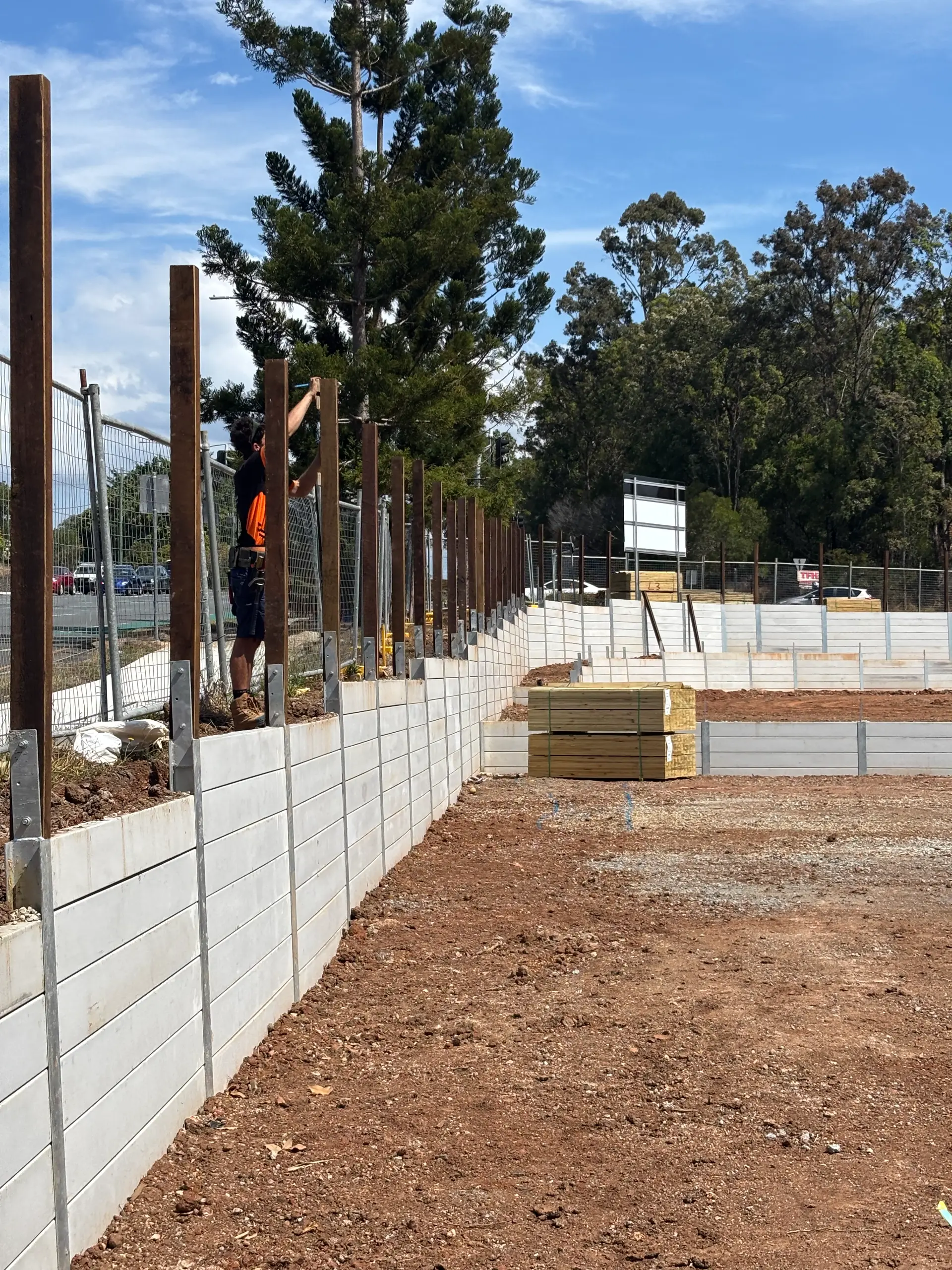
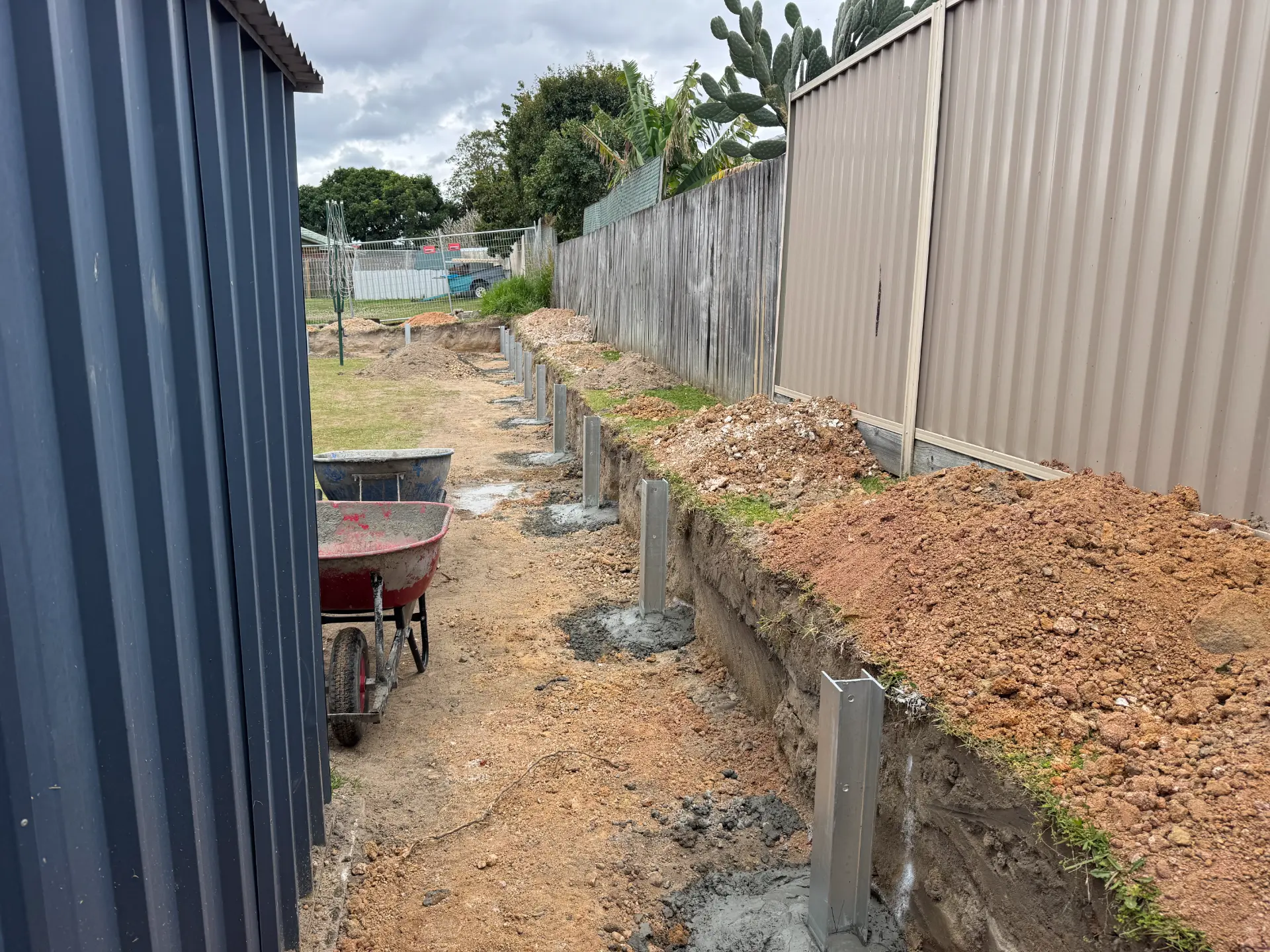
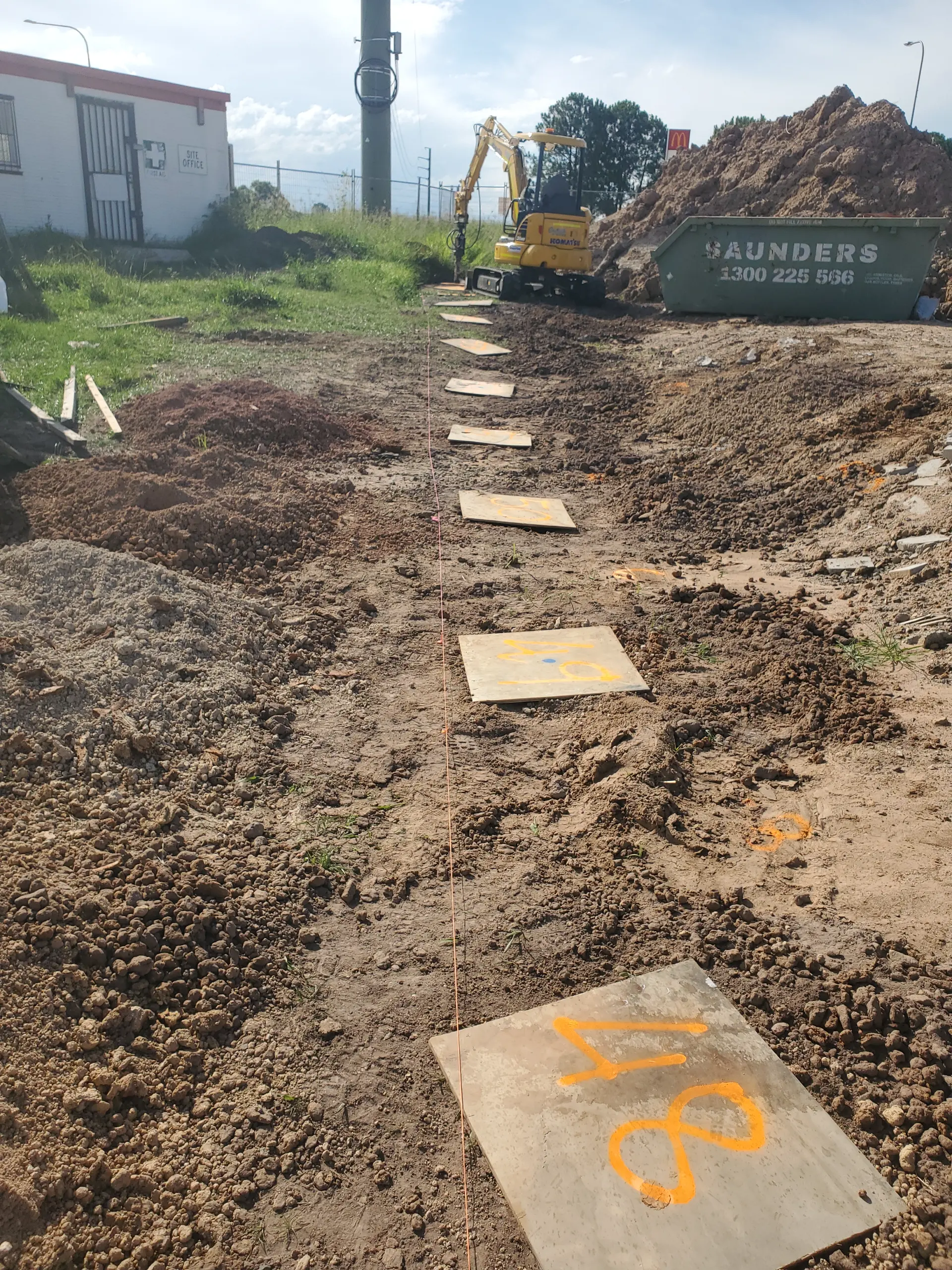
Holes are dug to the engineer's depth and galvanised steel H-beam posts are set in concrete. We space our posts at 2 m, not the more common 2.4 m, because shorter spans bow far less. That's covered in why is my retaining wall sleeper bowing? The concrete then needs time to cure before the wall is loaded up.
6. Sleepers and drainage
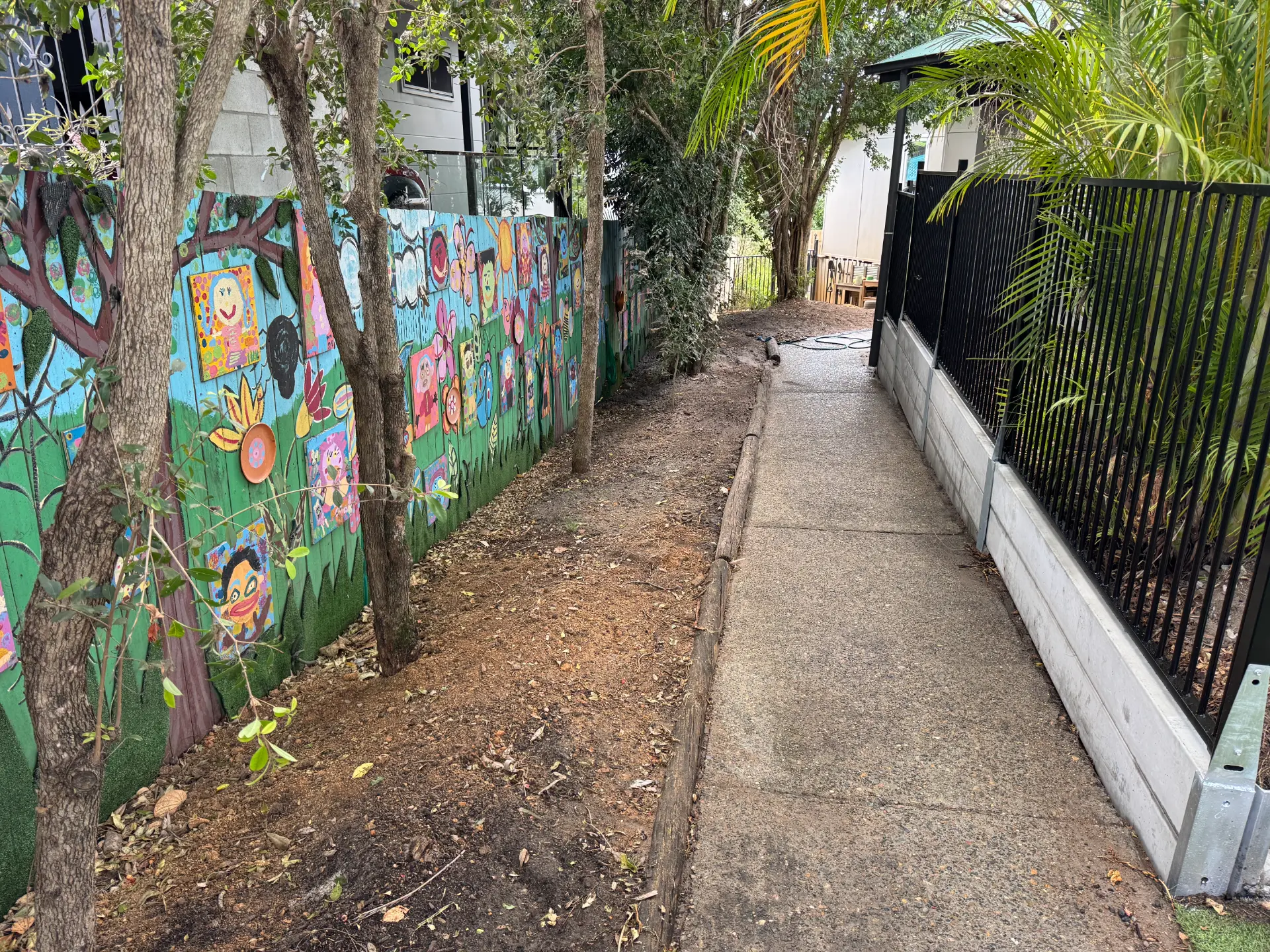
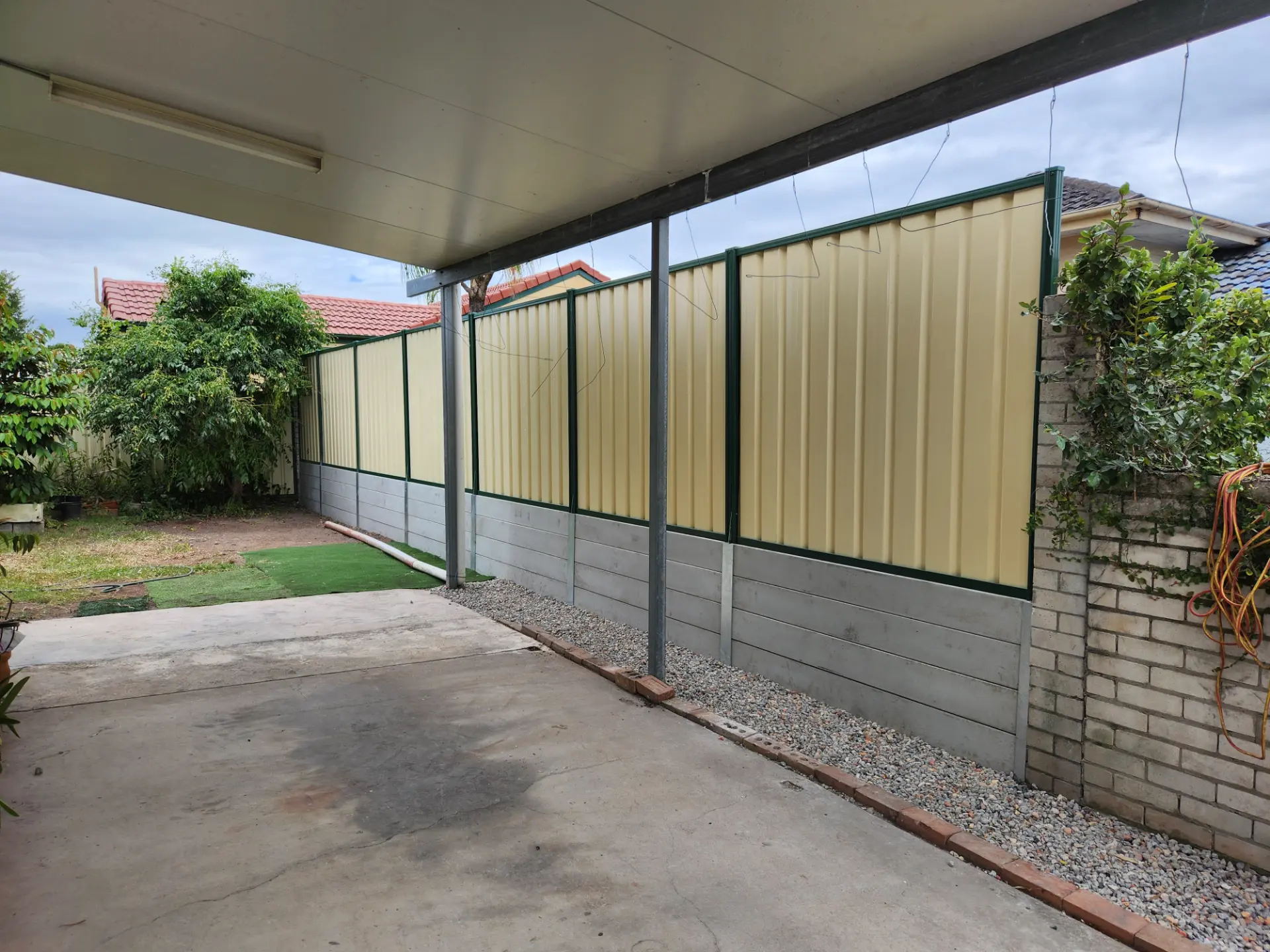
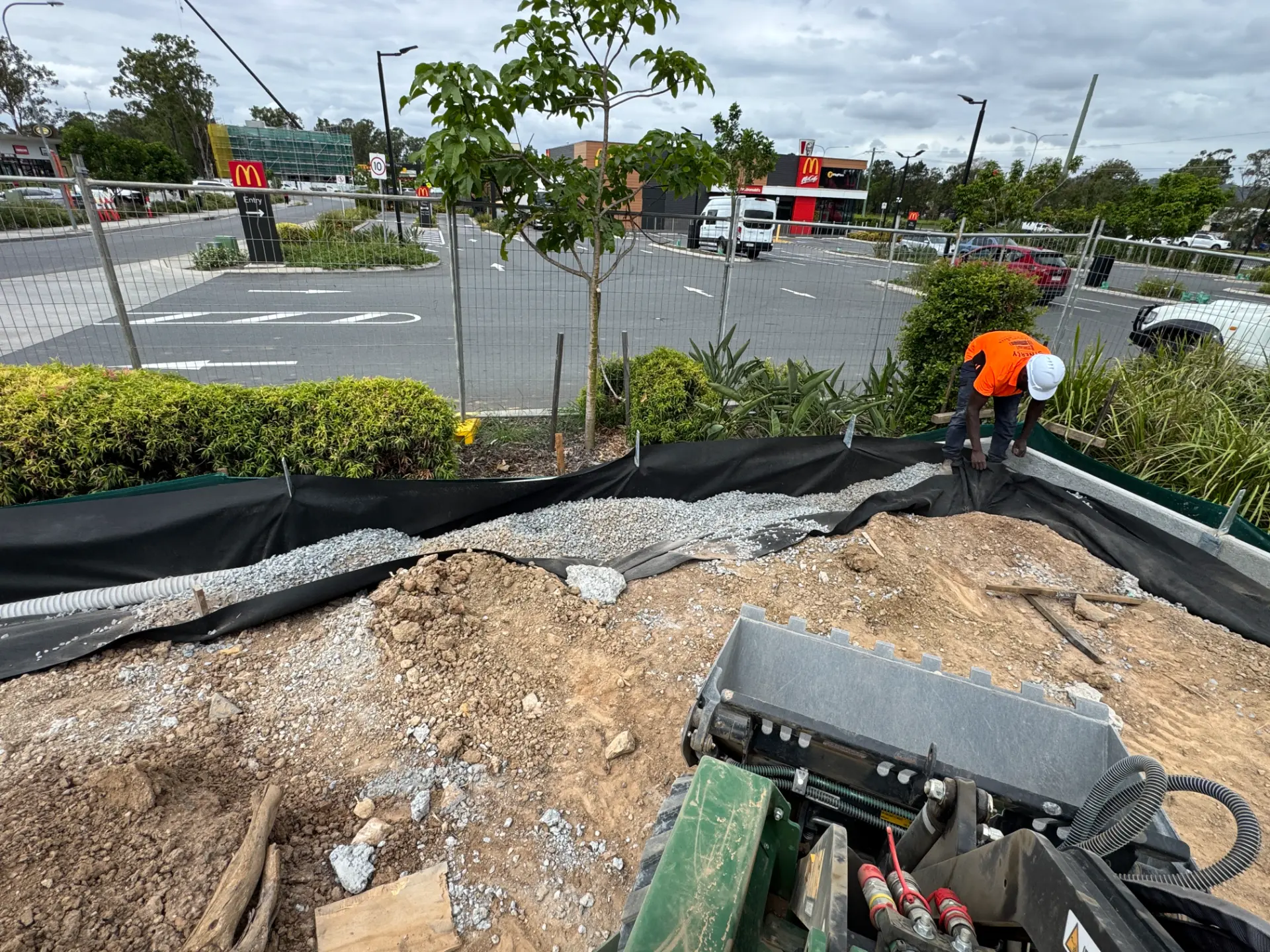
Concrete sleepers slide down into the posts. Behind them we lay geofabric, then socked ag pipe at the base, then drainage gravel up to one sleeper below the top. On a five-sleeper wall that's around 800 mm of gravel. Soil goes on top of that. The ag pipe needs somewhere to discharge, so we plan where the water goes.
7. Backfill and clean-up
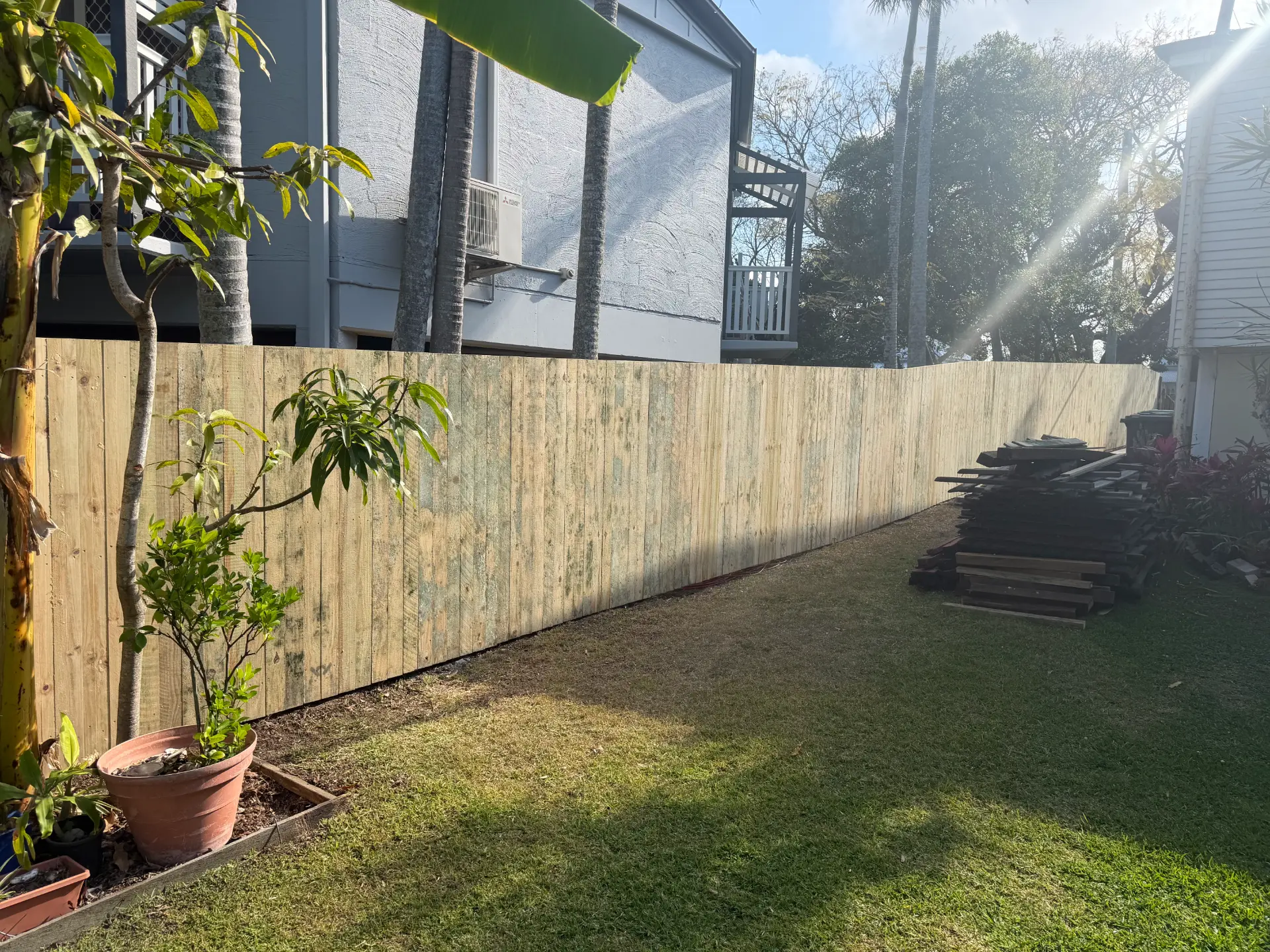
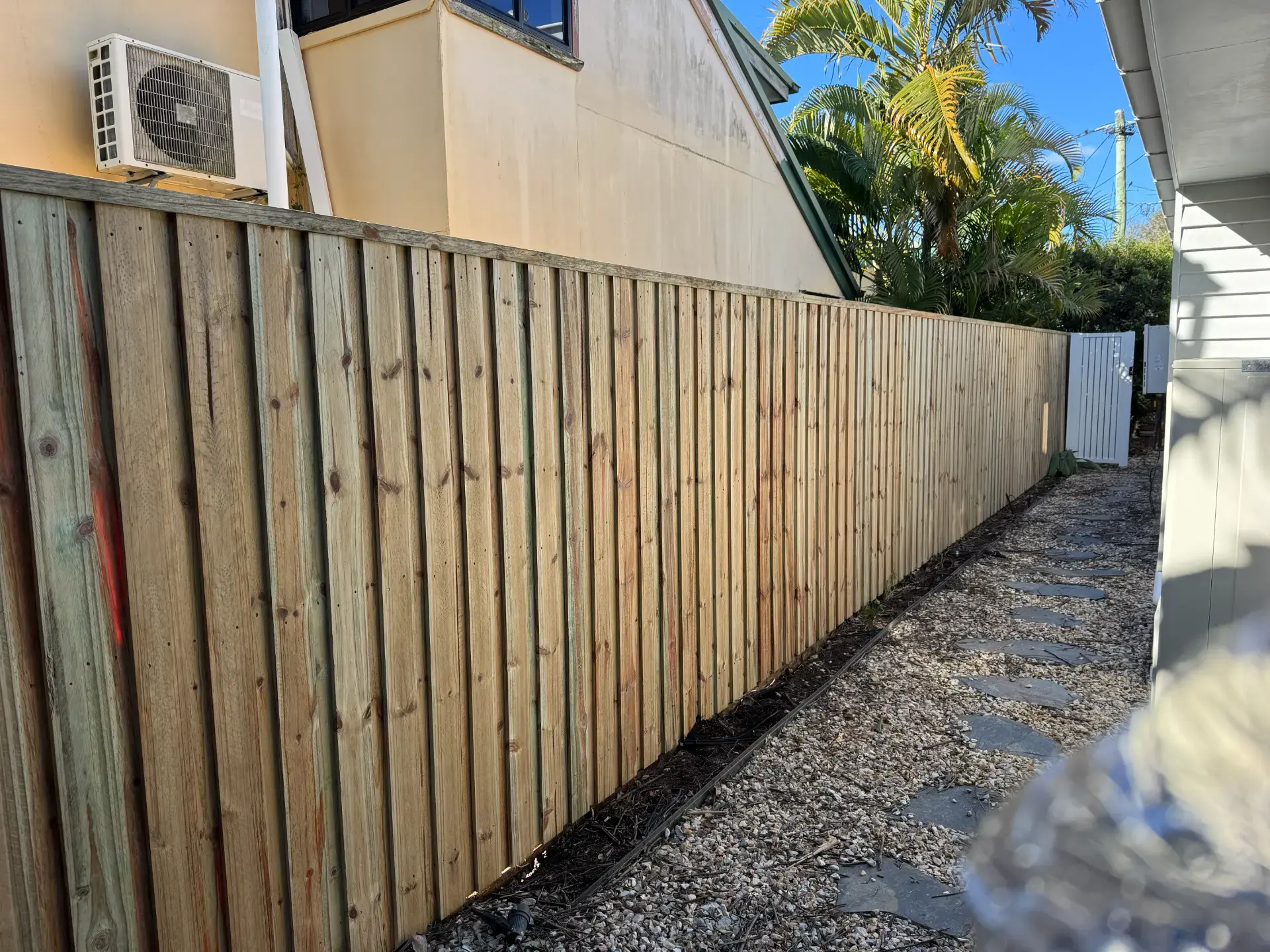
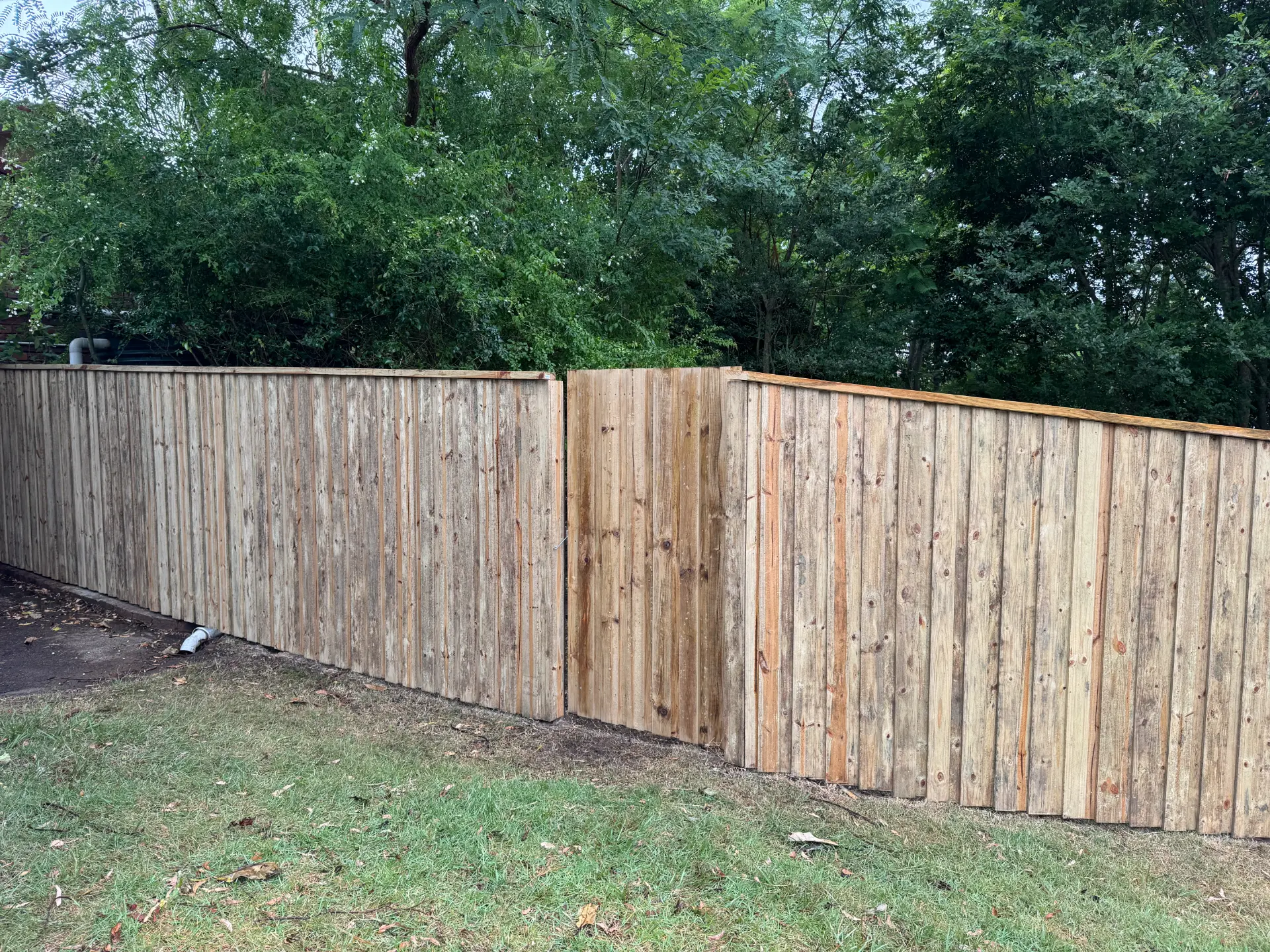
The soil is put back and compacted, the area is tidied, and rubbish is taken away. If a fence is going back on top, it's fixed to the posts designed to carry it.
How long does it take?
A typical residential wall usually takes a few days on site, depending on length, height, access and weather. Rain can push things back, especially while the ground is soaked. We'll give you an honest timeframe for your wall, not a best-case one.
What it means for you on the day
- Expect noise and some machinery if access allows.
- Keep kids and pets away from open holes and the work area.
- Move pot plants, furniture and anything near the wall beforehand.
- Let your neighbour know, especially on a boundary wall.
For more on getting ready, read our prep checklist.
Why not just patch the timber?
Sometimes a few sleepers can be swapped. But once the timber posts have rotted at ground level, the wall has lost what's holding it up. Swapping sleepers on rotten posts is money spent on a wall that's still failing. We'll tell you honestly which situation you're in.
Thinking about your retaining wall? Call us on 07 2141 7748, get a price online or let's have a chat.
Related posts




Ready to start? So Are We.
