

Why Did My New Gate Start Sagging?
A gate hangs off one post, and that post does all the work. Here's why gates drop, and what to ask before anyone builds yours.
In this post:
- Why gates sag, and why it's usually the post, not the gate
- The three most common causes
- What to ask before anyone builds your gate
You've just paid for a new gate. A few weeks later it scrapes the ground. The latch won't line up. You lift it every time you close it.
It's one of the most common complaints I see in fencing reviews. One homeowner paid close to $2,000 for a gate that started dropping almost straight away. Worse, the company kept promising to send someone and nobody came.
I want to explain why gates sag, because once you know the cause, you know what to ask before anyone builds one for you.
A gate is a lever
A fence panel sits between two posts and shares its weight. A gate doesn't. It hangs off one post, and all of its weight pulls sideways on that post every minute of every day.
A wide gate pulls harder. A heavy gate pulls harder again. Every time a kid swings on it or the wind catches it, the pull gets bigger.
So when a gate sags, it's usually not the gate. It's the post.
The three usual causes
The hinge post is too light. A standard fence post is fine for a fence. It's not enough for a wide or heavy gate. The hinge post should be heavier than the rest.
The footing is too small or too shallow. If the concrete around the hinge post isn't big enough or deep enough, the post slowly leans. A few millimetres at the bottom becomes a big drop at the latch end.
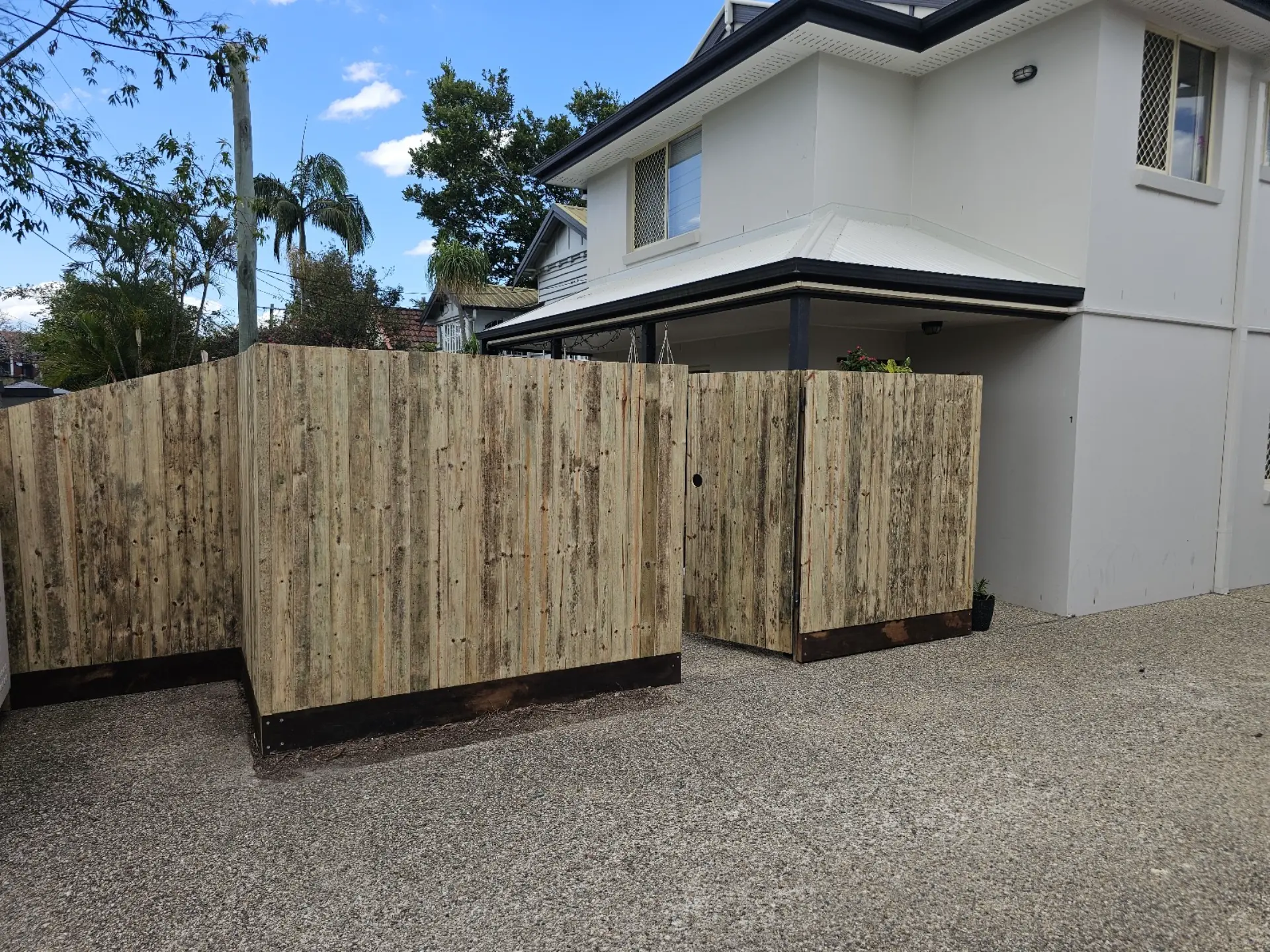
The gate frame isn't braced. A timber gate needs a diagonal brace running the right way, from the bottom of the hinge side up to the latch side. Put it in backwards and it does nothing. Metal gates need a properly welded, square frame.
What we do
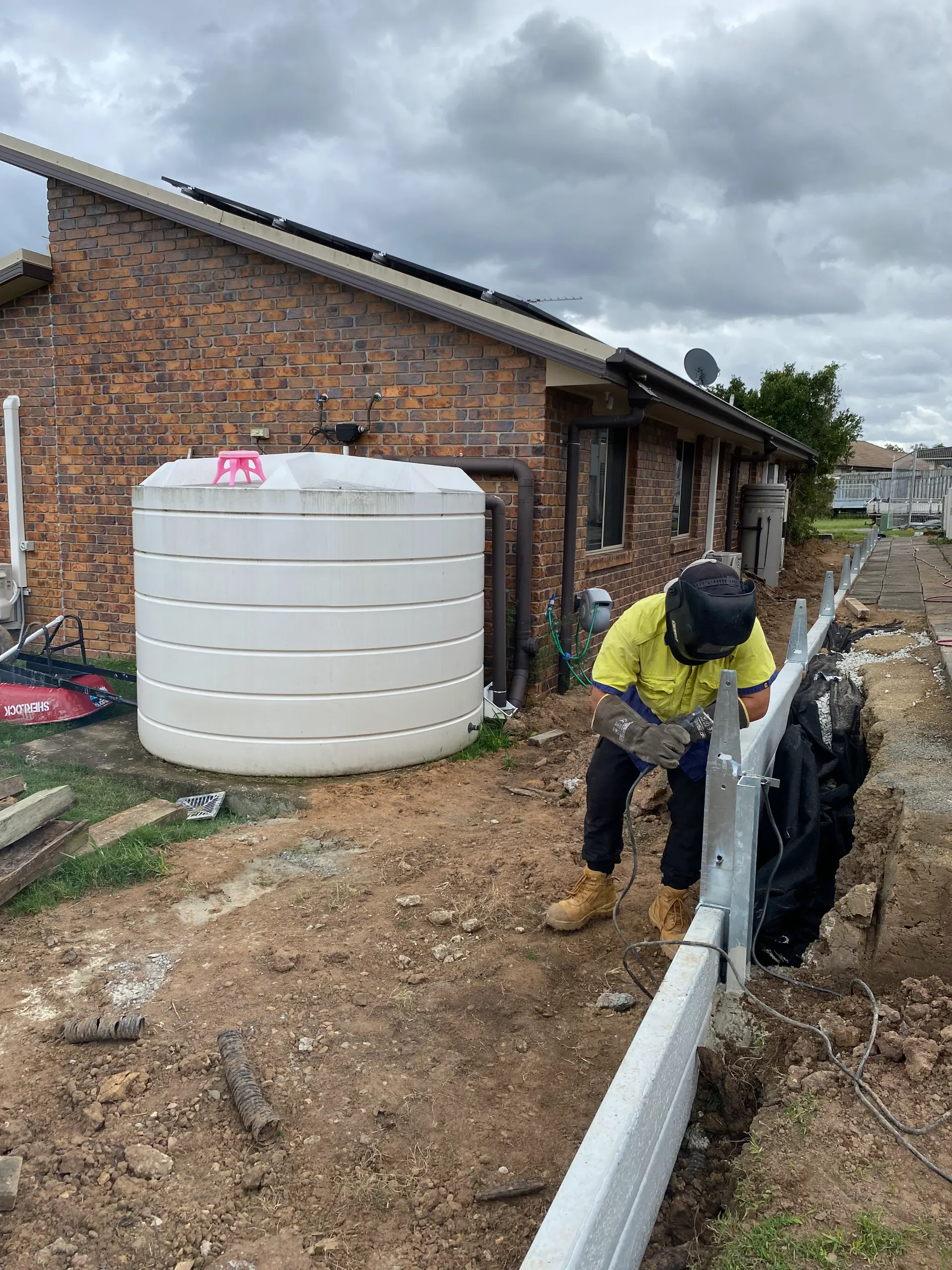
We treat the hinge post as its own job. It gets a heavier post and a bigger, deeper footing than the fence posts around it.
We brace timber gates properly and check every gate is square before it's hung. Then we adjust the hinges, latch and stop before we leave, and we open and close it with you.
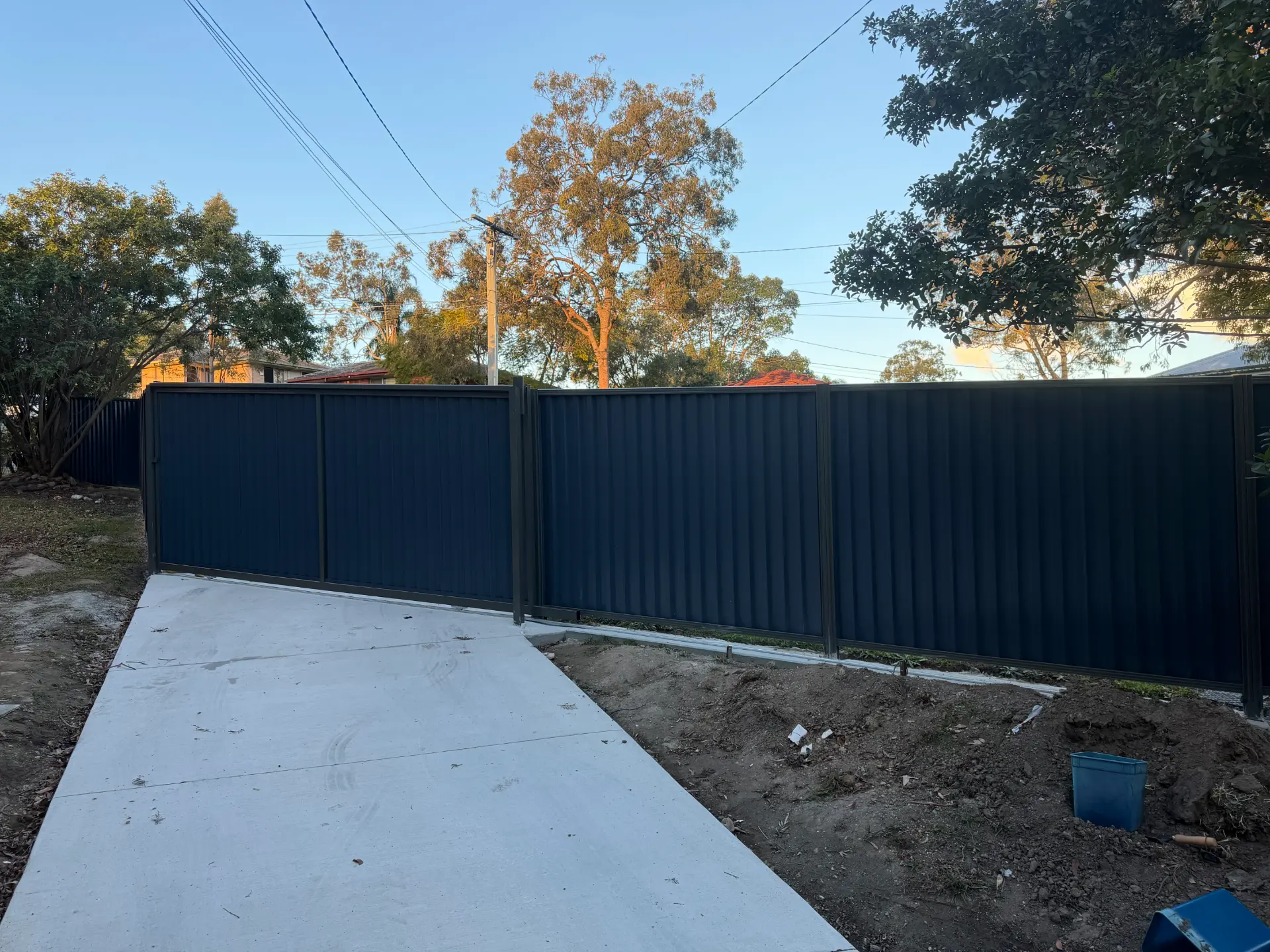
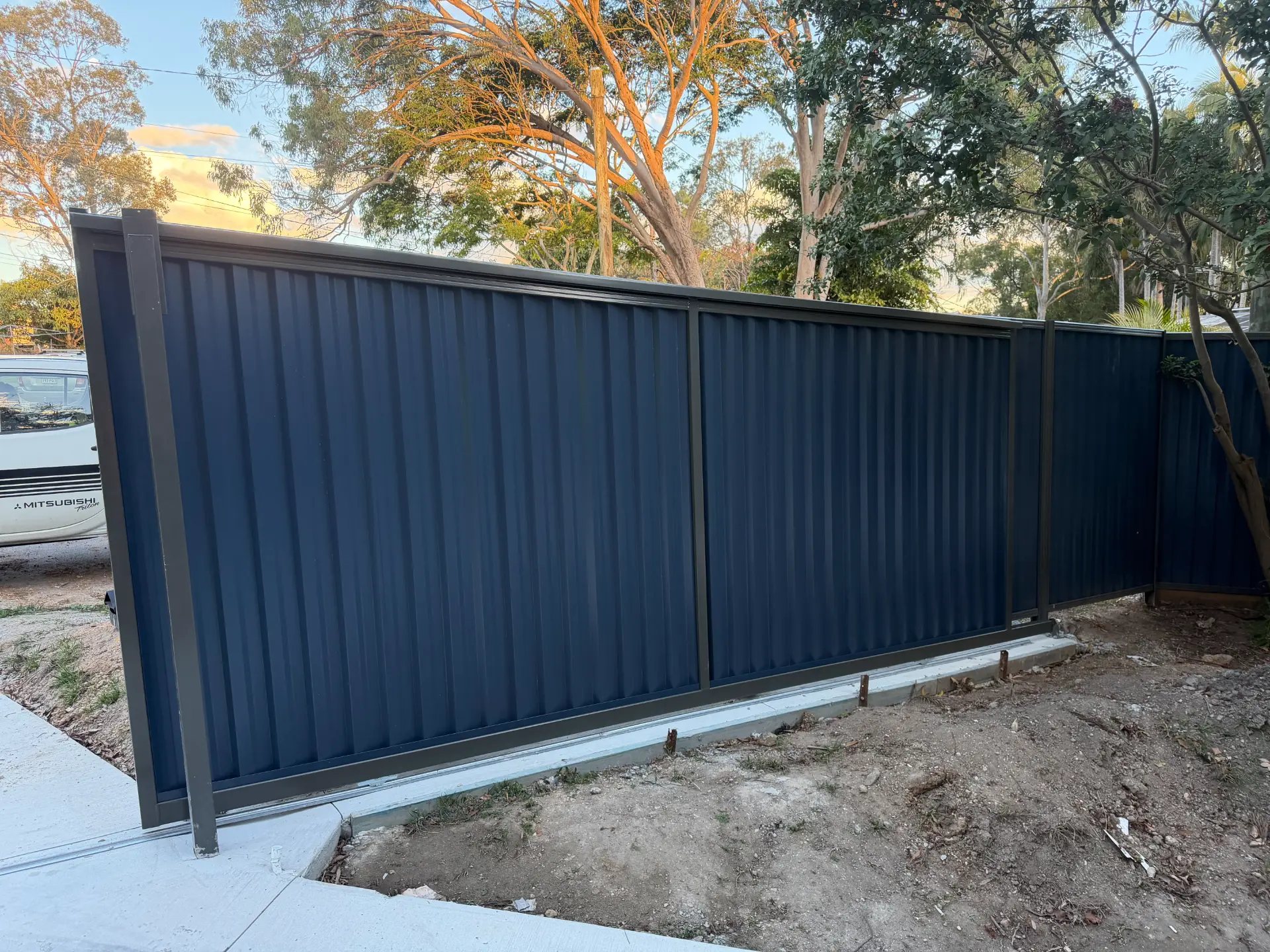
For wide driveway gates, we'll often suggest a double gate or a sliding gate instead. Two smaller leaves put far less strain on each post.
Questions to ask any fencer
- How is the hinge post different from the other posts?
- How big and how deep is the hinge post footing?
- How is the gate braced?
- If it drops in the first year, will you come back and fix it?
That last one matters most. Gates can need a small adjustment once everything settles. A good fencer comes back and does it. If a company goes quiet when you ask that question, you have your answer.
If your gate is already sagging, send us a photo. We can usually tell you straight away whether it's the hinges, the frame or the post.
Common questions
Can a sagging gate be fixed without replacing it?
Often, yes. If it's the hinges or the frame, it can usually be adjusted or braced. If the hinge post has moved, the post needs resetting.
How much does a new gate cost?
As a guide, a single gate is around $1,000 to $1,500 and double driveway gates around $2,000 to $4,000. Larger or custom gates are confirmed on site.
Is a sliding gate better than a swing gate?
For wide openings, often. A sliding gate doesn't hang off one post, so it puts less strain on it. It also needs no swing room.
Keep reading
- The part of your fence you'll never see matters most
- When something goes wrong, who's actually to blame?
- How much does a Colorbond fence cost in Brisbane?
Need a gate that stays put? Call us on 07 2141 7748, get a price online or let's have a chat.
More Blogs


Ready to start? So Are We.
